A significant barrier to achieving energy efficiency during the operation of a building is inadequate metering systems and monitoring plans. Building operators cannot be expected to manage energy if they cannot measure energy use. To improve a building’s energy performance over its operating life, and optimize the energyefficient requirements, the Code requires that the building’s performance be measured.
3Source: BEE India (https://beeindia.gov.in/sites/default/files/3Ch9.pdf)
Metering is about having information that allows energy managers to analyze and track changes in energy demand and, therefore, to manage their energy use more effectively. Energy metering is not a new concept and has been used by large energy-intensive building for many years to monitor energy consumption.
Meters are commonly used in buildings, but submeters might not be. Submeters help monitor energy end uses such as air conditioning, lighting, plug loads and renewables. Such data helps in optimizing energy use during operations and troubleshoot issues effectively when necessary.
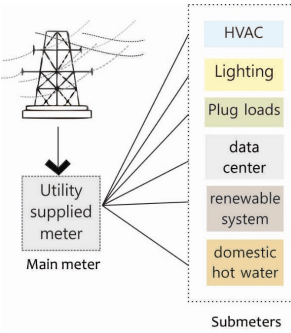
Figure 7.23 Submetering
For example, failure in a cooling equipment might spike the energy use for cooling, but would not impact lighting energy use. When the energy data is combined, it is difficult to identify the reason for the increase in energy use.
Submetering is one of the best practices in the field of energy management. Some of the benefits of submetering are listed below
Provide actual data of energy consumption by an end-use (no estimates)
Opportunity for the energy manager to make informed decision for performance improvement
Check the wastage of energy
Better maintenance of equipment
As per the Code, the main meter should be able to record energy, demand and power factor. The Code requires that submeters be provided for certain specialized applications such as façade lighting for shopping complex, commercial kitchens in hospitality building and data center in large commercial buildings. The requirement for submetering has been made mandatory in the Code with the intent of providing opportunity for efficient monitoring during operations ensuring energy efficiency over lifetime of the building.