Transformers work on the principle of mutual induction similar to the concept of magnetic induction. It consists of an iron core around which coils are wound. The current flowing in
one coil induces a voltage in the adjacent coil in proportion to the ratio of turns in the two coils. Primary coil is the one connected to the AC power supply from the grid. Secondary coil is connected to the load supplied to the building. Thus, a step-down transformer has a larger number of turns in its primary winding than in its secondary winding, and a step-up transformer has the reverse.
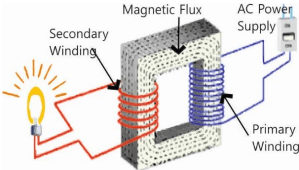
Figure 7.17 Transformer working principle
The amount of mutual inductance that links one coil to another depends very much on the number of turns in each coil.
Transformers are available in single-phase or three-phase construction. Transformer power capacity is rated in kilovolt-amperes (kVA).
Transformers Are Used to Step the Voltage UP or Down
Heat is generated by the passage of current through the transformer coils due to the resistance. This heat is transferred to the unit’s cooling medium. There are two types of transformers based on the cooling medium.
1. Liquid-immersed transformers
2. Dry-type transformers
Liquid-immersed transformers
In this type, oil is used for insulation as well as coolant purpose to dissipate heat generated in
core of the transformer. Hence these are also called as oil-filled transformers.
Dry-type transformers
In dry type transformer, windings with core are kept within a sealed tank that is pressurized with air. These are relatively lighter in weight and easier to maintain. Dry transformers are preferred in the places like hotels, hospitals, shopping malls where fire safety is very important.