Compliance shall be documented, and compliance forms shall be submitted to the authority having jurisdiction. The information submitted shall include, at a minimum, the following:
(a) Summary describing the results of the analysis, including the annual energy use (kWh) of chilled water plant (chillers, pumps and cooling tower) and annual chilled water use (kWrh) for the Proposed Design, and software used.
(b) Brief description of the project with location, number of stories, space types, conditioned and unconditioned areas, hours of operation.
(c) List of the energy-related building features of the Proposed Design.
(d) List showing compliance with the mandatory requirements of this code.
(e) The input and output report(s) from the simulation program including an energy and chilled water usage components: space cooling and heat rejection equipment, and
other HVAC equipment (such as pumps). The output reports shall also show the number of hours any loads are not met by the HVAC system the Proposed Design.
(f) Explanation of any significant modelling assumptions made.
(g) Explanation of any error messages noted in the simulation program output.
The total system efficiency shall be calculated as follows:
𝑇𝑜𝑡𝑎𝑙 𝑆𝑦𝑠𝑡𝑒𝑚 𝐸𝑓𝑓𝑖𝑐𝑖𝑒𝑛𝑐𝑦 𝐶ℎ𝑖𝑙𝑙𝑒𝑑 𝑤𝑎𝑡𝑒𝑟 𝑝𝑙𝑎𝑛𝑡 𝑢𝑠𝑒 (𝑘𝑊ℎ)二𝐶ℎ𝑖𝑙𝑙𝑒𝑑 𝑊𝑎𝑡𝑒𝑟 𝑢𝑠𝑒 (𝑘𝑊𝑟ℎ)
Low-energy Comfort Systems
Alternative HVAC systems which have low energy use may be installed in place of (or in conjunction with) refrigerant-based cooling systems. Using low energy reduces the need for fossil fuel which consequently reduces the greenhouse gas emissions. Further, using non-fluorinated refrigerants helps mitigate global warming. Considering the viability of low energy systems to provide comfort should be the first step towards achieving energy efficiency. Once this is assessed, any residual cooling loads could be met using refrigerant-based systems.
For example, a large museum building can be zoned such that the non-exhibit spaces could use a low energy radiant cooling or evaporating cooling system (as per the climate) since the intent is to provide comfort for occupants. Whereas, the exhibit spaces could be conditioned using chillers since stringent climate control is essential for preserving the artefacts. This can reduce the overall plant size resulting in an energy efficient system.
The approved list of low energy comfort systems1 is given below:
(a) Evaporative cooling
This system forces hot outdoor air over a wet media. The water evaporates by removing the heat from the air while adding moisture. This system is efficient in a hot-dry climate where the addition of humidity provides comfort. Moreover, this is a 100% outdoor air system. Thus, this system uses water as a cooling system and few fans and pumps which makes it a lowenergy comfort system. This system can also be provided for a large scale building such as schools where the cool air can be supplied through ducts.
(b) Desiccant cooling system
A desiccant is a substance, either solid or liquid, which absorbs water molecules from air and dehumidifies it. The desiccant, initially used to absorb moisture from the air, is later regenerated by heating the desiccant so that it releases the absorbed moisture. This phase change cycle is a continuous process that drives the operation of desiccant systems. Research projects are underway to make the application more viable.
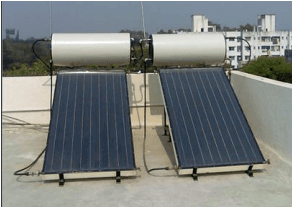
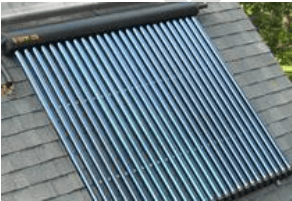
(c) Solar air conditioning
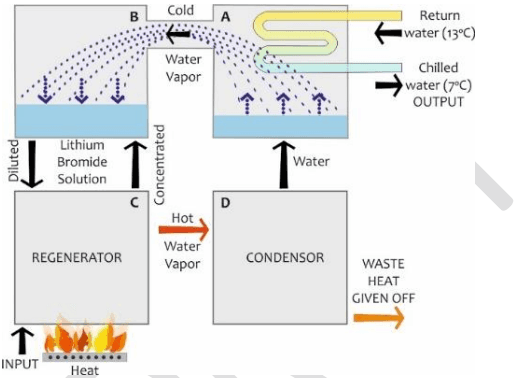
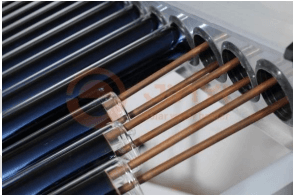
Cooling loads in India peak during the hot summer season when solar radiation is available in abundance. Thus, application of solar cooling technology uses a renewable source of energy to reduce the cooling loads when air conditioning demand is at its annual high. Principle behind the functioning of solar cooling is the use of solar heat/ thermal energy to re-generate the refrigerant in absorption chiller or desiccant in a desiccant chiller.
(d) Tri-generation (waste-to-heat)
Trigeneration is the simultaneous production of three forms of energy—typically, cooling, heating and power—from only one fuel input. In a typical trigeneration system, gas fired generators are used to produce electricity. This process generates waste heat, which is then directed to the chillers and boilers. In this system, absorption chillers are used to produce chilled water for space cooling. Boilers generate hot water for space heating and other purposes. Since electricity is produced on-site, it minimizes the green house gas emissions and transmission losses that occur when using electricity from the grid.
(e) Radiant cooling system
The guiding principle in this system is heat transfer through radiation. Radiant systems are installed in combination of large thermal mass to facilitate absorption and radiation. Radiant cooling systems consist of coils embedded within the structure. These coils carry chilled water generated either through conventional electric chiller systems or low energy chilled water generation systems like absorbent chillers, desiccant chillers. Chilled water in the coils cools down the slab or panels which in turn act as heat sinks for sensible heat loads of internal spaces.
Application of radiant systems is limited to areas which have high latent load and chances of air leakage from humid areas are high.
(f) Ground source heat pump
A Ground Source Heat Pump (GSHP) system heats and cools building by using earth as a heat source or heat sink. The system either extracts thermal energy out of the ground or transfers thermal energy from buildings to the
1This is not an all-inclusive list. The updated list of low energy comfort systems is available at BEE website (https://www.beeindia.gov.in/).
ground. Heat could be pumped in during summers to the ground, where the temperature is lower than the ambient temperature. This system is more suitable for composite climate as continuous pumping of heat to ground could make the ground saturated
(g) Adiabatic cooling system
Adiabatic cooling is a cooling process that provides air cooling by expanding or compressing the pressure of air or a substance. This cooling process changes air pressure without losing or gaining heat.
As per the Code, buildings using low energy comfort system must still comply with all the mandatory requirements as applicable. As per the Code,
Such systems shall be deemed to meet the minimum space conditioning equipment efficiency levels of §5.2.2, but shall comply with all other applicable mandatory provisions of §5.2 as applicable. Wherever applicable, requirements of §5.3 and §5.3.12 will be complied with.
Buildings with an approved low-energy comfort system installed for more than 50% of the cooling and heating requirement of the building shall be deemed equivalent to the ECBC+ building standard prescribed in § 5.2.2.
Buildings having an approved low energy comfort system installed for more than 90% of the cooling and heating requirement of the building shall be deemed equivalent to the SuperECBC building standard prescribed in §5.2.2.
Considering the potential of low energy system sometimes thermal storage may be used for limiting maximum demand, by controlling peak electricity load through reduction of chiller capacity, and by taking advantage of high system efficiency during low ambient conditions.
Thermal storage would also help in reducing operating cost by using differential time-of-the day power tariff, where applicable.
The storage media can be ice or water. Water needs stratified storage tanks and is mostly viable with large storage capacity and has an advantage of plant operation at higher efficiencies but requires larger storage volumes. In case of central plant designed with thermal energy storage, its location shall be decided in consultation with the air conditioning engineer.
For roof top installations, structural provision shall take into account load coming on the building/structure due to the same. For open area surface installation, horizontal or vertical system options shall be considered and approach ladders for manholes provided. Buried installation shall take into account loads due to movement of vehicles above the area.