Improving the socio-economic conditions of women and minorities and providing basic amenities to them for improving the quality of life of the people and reducing imbalances in the identified minority concentration areas is a vital component in the planning process. This chapter deals with the problems and issues faced by Women, SC and ST, Senior Citizen, Differently abled and Transgenders in the city.
Women
Women play a vital role in decision making on development of the society, health-seeking, family planning and resolving economic issues for the family as a whole. Empowerment of women is an active and multidimensional process enabling women to understand their full identity and potential in every sphere of life. Promotion of empowerment of women and gender equality is one of the eight-millennium developmental goals. City planning has a key role in providing opportunities for unlocking the different potentials of women and to bring them forefront to engage them in the multi-sector development.
According to India Skills Report by United Nations Development Programme (UNDP), there is a surge in women employees in workplaces in the country. They are entering into all aspects of the job sector which were considered unreachable for women earlier. The report also found that more and more women are focusing on self-earning. The report states that the presence of women is more in IT sector. There are 64.65 percent male employees and 35.5 female employees in this sector. Women also have a large presence in banking, finance and insurance sector (31.31%). There are 521218 women workers in Kerala with 32,133 women out of 78,087 are employed in IT sector.
According to India Skills Report by United Nations Development Programme (UNDP), there is a surge in women employees in workplaces in the country. Even though the literacy rates are fairly equal, work participation rate of women is only 20%, which is much below the male work participation rate of 56% in Ernakulam District as per the Department of Economics and Statistics, Government of Kerala. Lower women work participation rate may be due to various factors ranging from deep – rooted patriarchal norms and traditional gender role which often limit women’s access to education and employment opportunities. Gender – wise work participation rate of Ernakulam district is as shown below:
Kochi Municipal Corporation
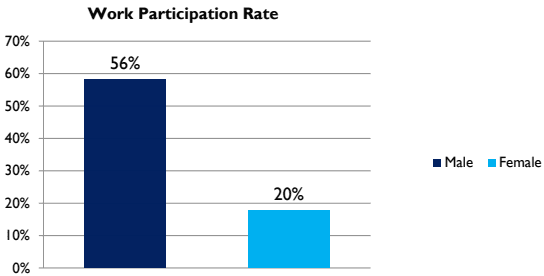
Figure 20:1 Gender-wise Work Participation Rate
Source: Department of Economics and Statistics, Government of Kerala
As Kochi is the Commercial hub of Kerala, it provides huge employment opportunities. Women who work in the city engage in different dimensions of work varying from entrepreneurship to domestic work.
‘We Mission Kerala’ is an initiative that aims to identify, promote and provide support to existing women entrepreneurs for scaling up their business ventures. The mission is targeted at developing a new culture of entrepreneurial thinking among women in Kerala. The mission is being executed in association with Kudumbashree, MSME-DIC and CII and is expected to provide a complete range of support for women entrepreneurs. KSWDC (The Kerala State Women’s Development Corporation Ltd) is operating for the betterment of women in Kerala.
Many workers including women commute to Kochi on a daily basis in and around the city. In a survey conducted among workers who are engaged in five different sectors (construction sector, retail sector, IT sector, office staff and domestic works) who commute to Kochi on a daily basis from outside shows that the women domestic workers and workers in the retail sector largely depend on public transport. The domestic workers form a group, which usually starts journey-to-work early in the morning. The workers in the retail sector usually commute to their home from workplace during night. Kochi is considered the largest employer of domestic helpers in the State. It is estimated that around two lakh women earn their living by working as domestic helpers in apartment complexes, houses, high-rises, and hospitals in the city.
Office staff and IT professionals are better off socially and economically than the other categories. Office staff includes those working in private and government establishments and a good section of them commute in their own vehicles. The commuting behaviour of IT professionals is different from other categories of workers. They earn more and are more likely to use private transport. In many IT firms, the employers provide transport facility to
Kochi Municipal Corporation
the staff. This group also practices carpooling to some extent. Moreover, the work timings are different from other sectors and include night shifts. There is also flexible-timing in some of the IT firms.
By keeping 80% women staff, Kochi metro sets an example of women empowerment. They are employed in different works from ground staff to operators and loco drivers.