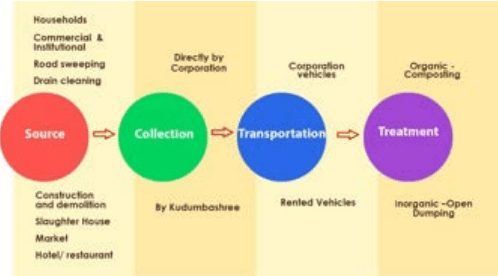
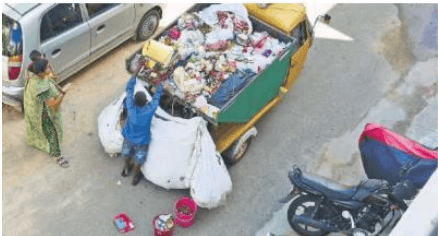
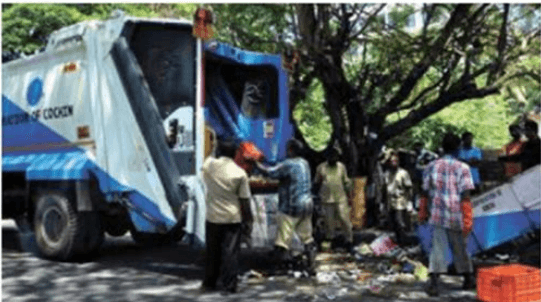
The increasing purchasing power is indirectly leading to increasing waste generation, including plastic and e-waste. The existing solid waste management system is limited to the wards in old corporation area; even among this many wards and households are not covered. Street sweeping is done only in certain central areas. The dwindling number of Kudumbasree workers volunteering for these activities has reduced the efficacy. Dumping points are not cleared regularly, waste bins are not placed at all points and the bins placed are open so that the waste is being spread by dogs and birds. Shops/stalls are not provided with separate bins; hence usually, they throw the waste to streets or drains. The non-biodegradable waste is disposed without any treatment and no scientific land filling is practiced resulting in pollution of the surrounding areas. Besides, decentralizing the waste management with appropriate technologies wherever possible is an imminent need as the centralized waste treatment facilities are not sustainable in the long run. The technical and administrative machinery of the LSGIs need to be strengthened to guide and manage the decentralized and centralized solid waste management measures.
On-going Projects
11.7.1 CSML Projects
CSML has aimed at making Kochi a healthy and clean city. The main goal adopted has been 100% compliance of SWM Rules 2000. Activities proposed include expeditious implementation of Waste to Energy project; Universal source segregation; Exploitation of decentralized waste treatment potential fully and Smart monitoring.
11.7.2 Decentralized Waste Management System for Apartment Complexes- A Public Private initiative in Kochi
It is an initiative started in 2007 to solve the problem of garbage disposal in residential colonies with focus on health, hygiene and safety, a joint initiative carried out by Corporation of Kochi and Kerala Builders Forum later called CREDAI. As part of its Social Responsibility program, CREDAI has launched CREDAI Clean City Movement. The CREDAI Clean City Movement is the authorized service provider to “Suchitwa Mission”, Government of Kerala, successfully
Kochi Municipal Corporation
implementing an Eco Friendly solid waste management system in High Rise and Commercial Complexes across the State. 90% of apartments in the city of Kochi are covered by this scheme.
To manage the solid waste the following approach was adopted in high rise apartments to implement an eco-friendly solid waste management system:
A suitable technology was identified and approved by Clean Kerala Mission, Government of Kerala and the implementation of this decentralized system of waste management in few apartment complexes on a trial basis was started in 2007.
Planning and formulation of strategy and a dedicated team for implementation of the decentralized system for the high rise apartments.
• Setting up of source segregated door to door collection system of waste in each of the apartment complexes.
Establishment of the Bio-Bin system to process the bio-degradable waste to produce and utilize the compost on site within the apartment complex.
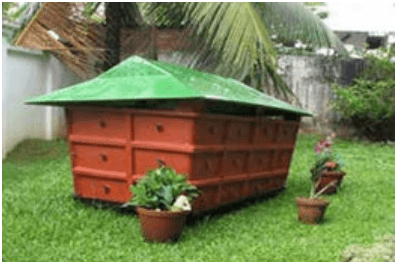
Bio bins installed in apartment complexes by CREDAI
Establishment of a recycling and plastic shredding unit by Corporation of Cochin and managed by CREDAI. Currently 350 apartment complexes in Kochi are covered under this initiative. Decentralized system in apartment complexes led to employment opportunities for economically weaker section especially women for operationalizing and monitoring of the unit.
The initiative of CREDAI in the apartment complexes is a self-sustainable working model showcasing the viability of decentralized waste management system. Onsite operation and maintenance of the composting system as well as other expenditures are being met by the collection of user charges at the rate of Rs. 100-150/- as well as sale from the recyclables.
Kochi Municipal Corporation
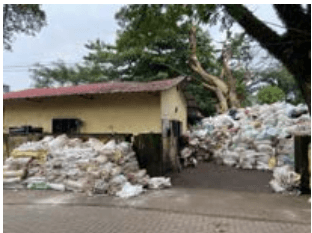
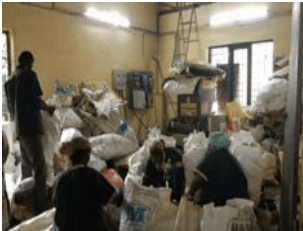
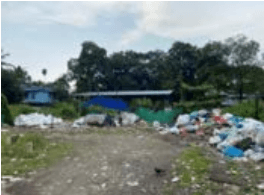
Photos showing resource recovery facility at Ravipuram maintained by CREDAI
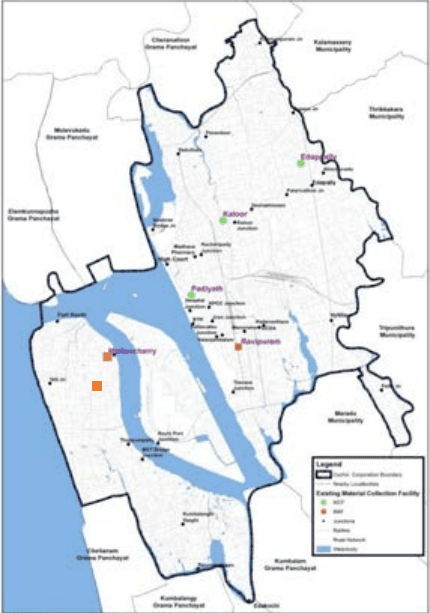
CREDAI clean city movement along with Kochi Corporation is also running a Resource Recovery Facility at Ravipuram (Opposite to Ravipuram crematorium) that has bailing and shredding unit in it. The collection and segregation of non – bio waste is being done here, from where the recyclable materials are sold to the end buyers. The facility also has a shredding unit which runs rarely due to the decreasing number of buyers of shredded plastic.
11.7.3 Kochi Waste to Energy Project
This project is a scientific initiative for carbon reduction through sustainable MSW management solution. A waste-to-energy plant was mooted as a long-term solution to manage Kochi’s garbage. This being a centralised waste management measure, the cost of procuring energy will be higher. According to the proposal for this project, unsegregated waste will be dried using bio driers (to remove all moisture from the waste), and then will be converted to energy through gasification.
"How waste become a recovery energy"
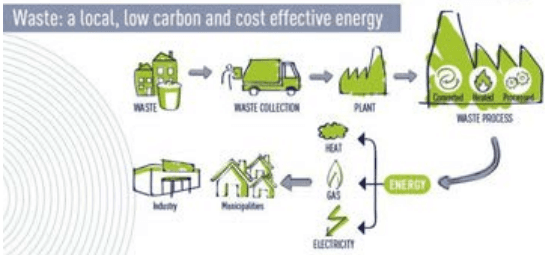
Process of waste to energy conversion
Kochi Municipal Corporation
The plant with a capacity of treating 300 tonnes of solid waste per day, can generate 5 to 6 MW of electricity per day. The WTE plant will have production capacity of 5 MW for the Ernakulam cluster of local bodies. The cluster comprises the Kochi Corporation and municipalities including Thrikkakara, Thripunithura, Kalamassery, Eloor, Maradu, Aluva, Perumbavoor, Angamaly, North Paravur, Muvattupuzha, Kothamangalam, Piravom, and Koothattukulam.
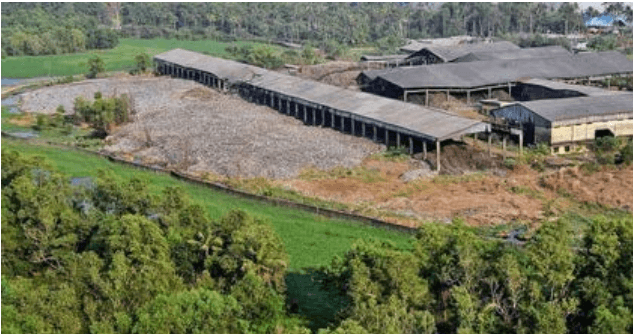
With frequent fires posing a threat at the Brahmapuram waste treatment plant and with the intervention of National Green Tribunal (NGT), the Kochi corporation is also gearing up to remove legacy waste from the site by bio-mining. Bio-mining is the technique of extraction and segregation of minerals and useful materials from the mounds of waste. The legacy waste would then be treated scientifically for removing the undigested organic matter. Then the remaining waste would be sorted. Reusable materials like plastic, glass, rubber, matals etc will be given to those industries or agencies which use them as raw materials and the non-biodegradable materials will be capped in scientific manner, A drone study carried out by NIT – Kozhikode found that about 5.51 lakh cubic metres of waste lying at the Brahmapuram plant.
The firm selected for the work will have to bio mine the existing legacy waste and recover the entire area at Brahmapuram plant. It should ensure recovery of the land by cutting and levelling it to the maximum possible extent, aimed at getting a relatively flat land after bio mining. Zonta Infratech, the private firm which is to carry out the bio mining, has submitted the project implementation plan and social impact assessment (SIA) report to the state government, pollution control board (PCB) and Kochi Corporation. The project is awaiting the necessary clearances.
Encouraging segregation and storage of bio-degradable and non-biodegradable waste at source itself will reduce the problems connected to solid waste disposal to a considerable extent. Steps are to be taken to reduce the quantity of solid waste. Presently the Corporation is mainly depending on Brahmapuram Waste Treatment plant for the Waste disposal. So, decentralization of disposal sites for solid waste should be implemented and self-help methods for disposal of bio degradable solid waste at source itself shall be promoted. Methods of decentralized waste management measures should be implemented within the corporation limits itself. Gradually the dependence on Brahmapuram Solid Waste treatment plant needs to be reduced. The LSGI has to be strengthened to manage solid waste with regular monitoring and levy of user charges. More land fill sites/ waste treatment sites should be identified scientifically. Even if the bio waste is collected and removed from households, it does not mean proper management. Waste dumps seen at different points within the city shows an example for the mishandling of the Bio waste. It also arises due to the behaviour of the people dumping waste anywhere outside their own premises. Lack of timely removal of