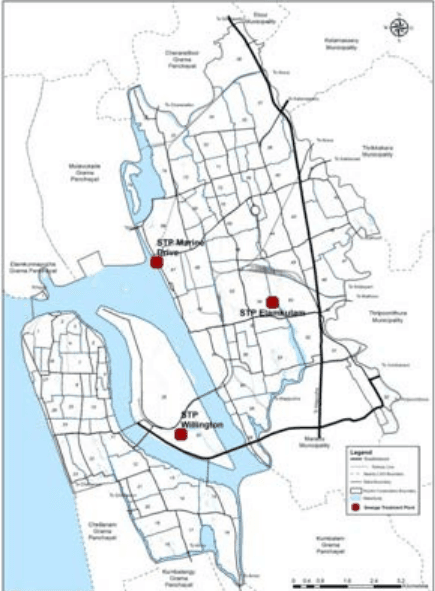
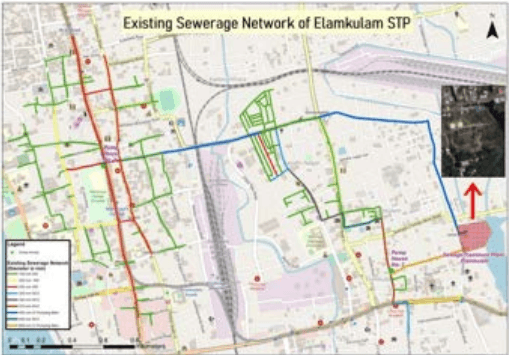
The Census of India from 2011 was the first census to include a section on household sanitation facilities. The questionnaire focused on the containment technologies present in the households. According to the Census 2011, 98.37% of all households in the Corporation area have toilet facilities within their premises with 22.9% having piped sewer system, 70.6% households having septic tanks and 4.9% with other systems including pit latrines and night soil among them. Although the Census 2011 data shows a coverage of 22.9%, the KWA estimates a coverage of 5% only - a sewer network of around 28 km and having 650 manholes. Public toilets (1.26%) and open defecation (0.36 %) play only a minor role. There is no central monitoring of onsite sanitation system and hence private parties provide the service of emptying septic tanks and pit latrines. The slum mapping exercise revealed 72% of the poor
Kochi Municipal Corporation
SANITATION
households had in-house toilet facilities, 25% depends on public toilets whereas 3% resort to open defecation (CSP Kochi, 2014).
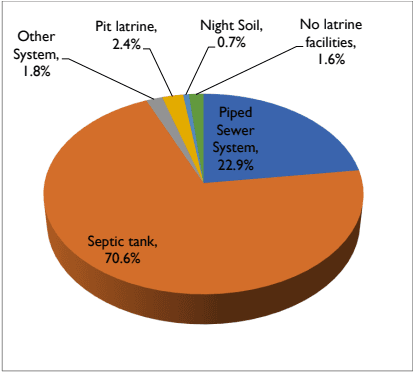
Figure 13:1 Graph showing percentage of various methods of sanitation in Kochi Corporation Source: Census 2011
422