9.3.2.1 Portugese period
When the second phase begins, the Portuguese traders had already reached the shores of Calicut and the commercial interests of different communities were competing with each other for maximum profit. The Portuguese came and settled in Cochin after being expelled from Calicut owing to their differences with the Zamorin over the presence of large Arab trade communities and their influence in Calicut. Carefully understanding the scenario of Malabar politics, the Zamorin’s power and authority, and his adversaries like the kingdom of Cochin, the Portuguese sailed back to Lisbon. As the profits gained from this expedition were exponentially higher for the Portuguese, the king decided to send another expedition to the Malabar Coast. A military commander and navigator named Pedro Alvarez Cabral led this voyage and he was successful in establishing a long-term friendship with Cochin that lasted for a century and half.The Portuguese left Calicut for Cochin upon realising the animosity existing between the Zamorin and the kingdom of Cochin and entered into a treaty for spices in exchange for money or merchandise with King UnniGoda Varma Tirumulpad. The king permitted the Portuguese to establish a factory, which was the first of its kind built there.
313
Meanwhile a second expedition was sent from Lisbon to Calicut led by Vasco da Gama. When the Portuguese demands to expel the Arab merchants from the coasts of Malabar were ignored by the Zamorin. This was followed by a series of battles between the Zamorin and his Arab merchants against the Portuguese and their ally, the Kingdom of Cochin and they succeeded in resisting him. It is interesting to note that during this period the residence of the Cochin royal family was in Mattancherry, the coastal area of Kochi, even though they had palaces and families residing in Vellarappilly and Chazhur.
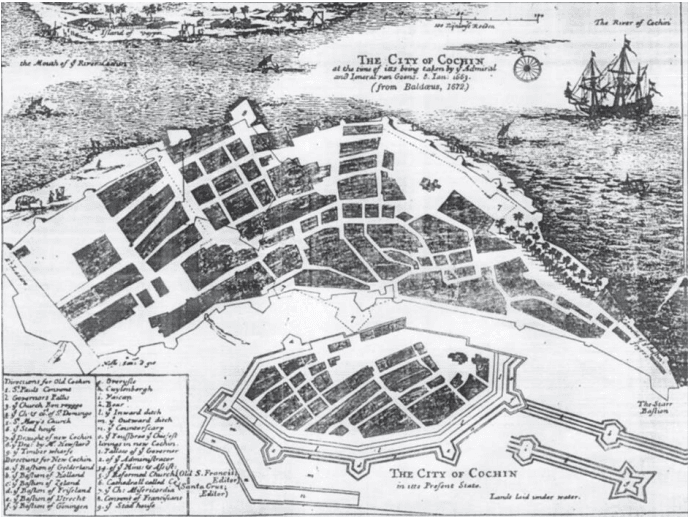
The Kingdom of Cochin underwent several changes in this period, both politically and economically. The Portuguese established one of their political and commercial headquarters in Cochin in the 1530s which continued until 1663. Cochin became the first Asian port city to establish direct contact with Atlantic ports. Under the control of the Portuguese, pepper production also underwent an important change. For example, we see the first systematic pepper gardens in Asia developing in Cochin in the first half of the sixteenth century. They founded Fort Kochi established factories and warehouses, schools and hospitals and extended their domain in the political and religious fronts. Around 1530 AD, under the Portuguese, Kochi grew into a prosperous town. The ruler of Kochi gave the Portuguese permission to build a fort at Kochi called 'Manuel Kotta' (Fort Emmanuel) - which is the first European fort in Kochi. Politically, the King of Cochin started to surpass the ritual restrictions like paying yearly tribute to the Zamorin.
Kochi Municipal Corporation
HERITAGE
However, this was happening at the cost of free trade and free markets in Cochin. While the Portuguese were attempting a monopoly in the pepper trade in Cochin with military force, many merchants left the port in search of a free market. For example, in the 1520s the indigenous Muslim merchant group, the Marakkar group, moved from Cochin to Calicut as a result of their clashes with the Portuguese. By the third decade of the sixteenth century, the Portuguese had established considerable control over the production and sale of pepper in Cochin.
Attacks occurred many times during the sixteenth and seventeenth centuries and every time the Portuguese supported the Kingdom of Cochin. The palace they built in Mattancherry in 1555 was gifted to the king of Cochin. Later, when the Dutch extended and reconstructed it in 1663, it began to be popularly called as the Dutch Palace of Kochi. A temple was also built inside the premises of the Dutch Palace, dedicated to PazhayannurBhagavathy, the family deity of the royal family.
9.3.2.2 Dutch period
The Dutch traders entered the scene as early as 1604, when the Zamorin entered into a treaty with them. By the second half of the seventeenth century, the Cochin kings had also made connections with the Dutch traders, and then located in Colombo. It is popularly believed that a prominent person in the Cochin royal court, landlord PaliathAchan, hadrecommended that the king get into an agreement with the Dutch and the then king and Achan visited Colombo for this purpose.
In 1663, the Dutch attacked the Portuguese settlement in Cochin with the help of the Zamorin and defeated them.The Dutch then built Fort Williams here. From that period onward, the Dutch East India Company established their commercial capital in the western coast in Cochin. The most important political issue faced in this period was the clashes between different royal lineages for the throne. Unlike the other swaroopams, the PerumpadappuSwaroopam of Cochin did not have a solid law for the succession. As a result, we see an increasing fight between several royal lineages in Cochin in order to achieve kingship. This created frequent internal rebellions in Cochin throughout the seventeenth century.
The Dutch East India Company became active in the local political scene of Cochin. For example, the Dutch supported the moothathavazhi (the elder lineage) to succeed with the help of the Zamorin in 1691. Even after investing both politically and economically in Cochin, the Dutch attempts to monopolise the pepper trade were not successful.
314
Kochi Municipal Corporation
HERITAGE
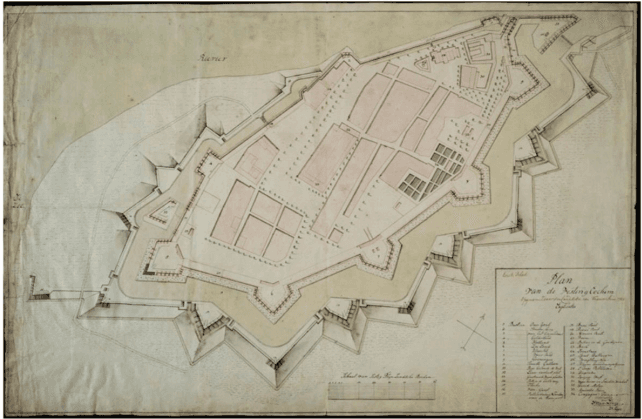
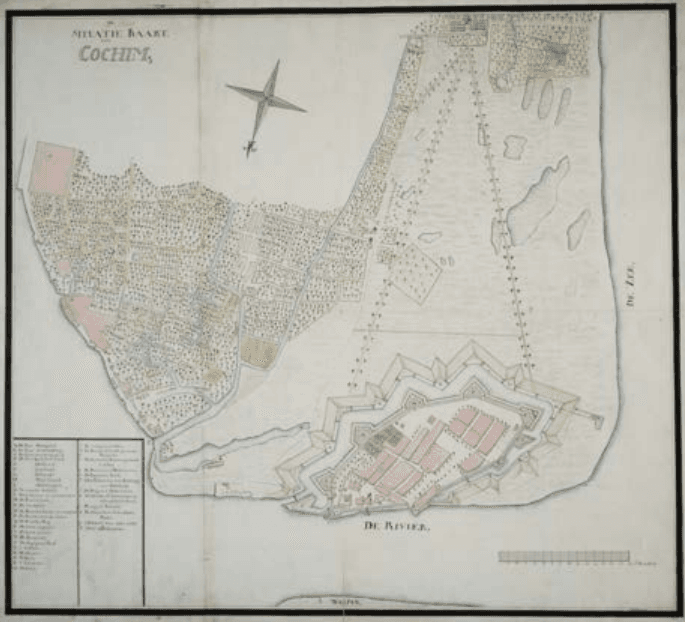
Figure 9:2 Map of Dutch Fort in Kochi Source: Cuturalmapping.in
It is believed that sometime in the mid-eighteenth century (around 1755), a boy from the Vellarappallythekkekovilakam (southern branch), on the death of his mother, approached the king for help along with his mother’s younger sister and two of her sons and the king allowed them to reside in Thrippunithura, close to his palace. This boy later became the most wellknown king of Cochin, namely the SakthanThampuran (literally, the powerful king) and consolidated the position and power of the state.
Rama Varma IX (1755–1805), known as SakthanThampuran, became the king after the death of his uncle, Rama Varma VIII. After the consolidation of the territory of the kingdom, SakthanThampuran apparently started and maintained rigid law and order that eventually affected the traditional power of feudal lords. On the other hand, his policies attracted a large number of traders and merchants to the state and the kingdom flourished.
Another achievement of SakthanThampuran is related to the establishment of the city of Thrissur. Thrissur became the economic, cultural and trade centre of the kingdom of Cochin under him. It is believed that he began the well-known festival of Thrissur pooram.
9.2.2.1 British period
Dutch control over the Kingdom of Cochin continued till the death of SakthanThampuran in 1805. Finally, when the whole nation lost to the British, Kochi too became a part of the British Empire in 1814 .The kingdom came under the British Protectorate.
The British Protectorate over Cochin was confirmed during the early nineteenth century. The British East India Company set Colin Macaulay up in Cochin as the Resident until 1810. During the reign of Veerakerala Varma, in 1809, PaliathAchan from Cochin clandestinely associated with the Travancore Dalava (equivalent to prime minister) VeluThampi in planning and executing an insurrection. Militants from various Nair families of Cochin and Travancore attacked the Resident in Mattancherry. Macaulay escaped to Madras and later to England and many British servants were killed in the mutiny. Soon, PaliathAchan was captured and sent into forced exile to Bombay, ending the supremacy of the Paliath family in Cochin.
Kochi Municipal Corporation
HERITAGE
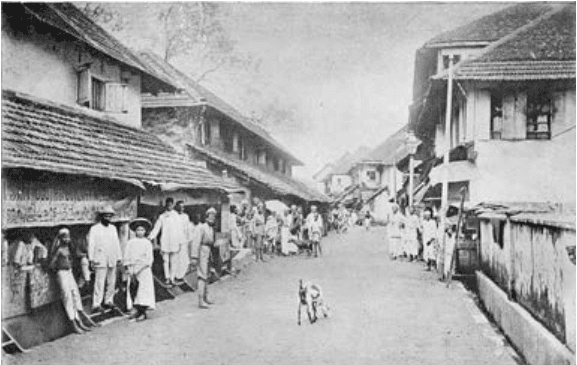
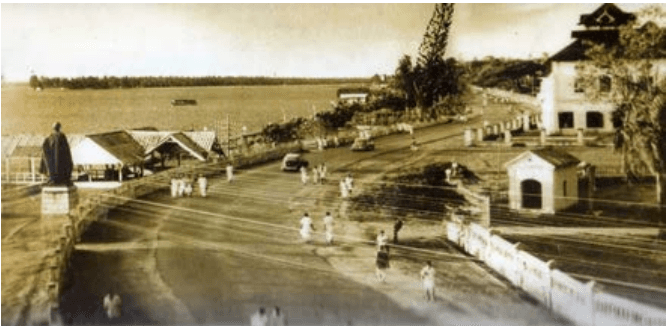
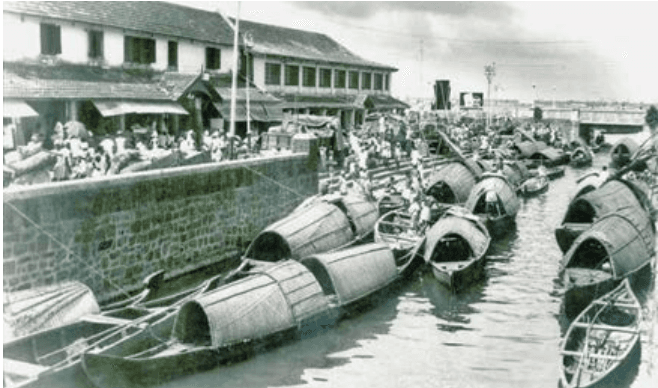
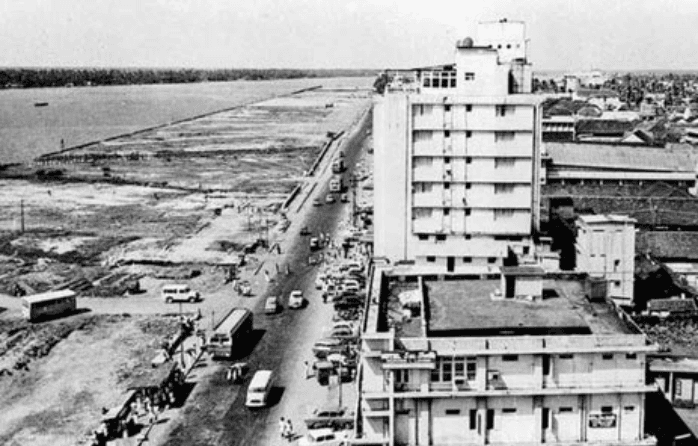
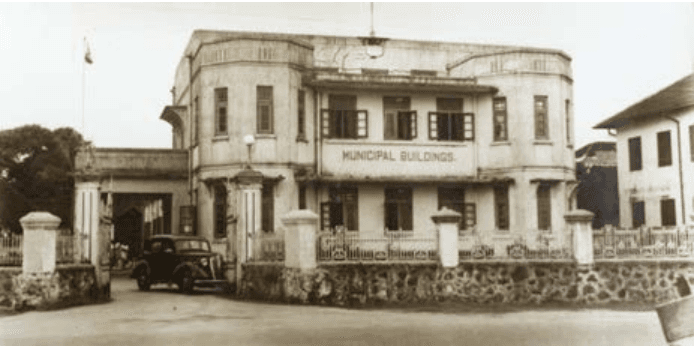
Streets of Cochin during the British period Source: Negative by Charlie Brown, Madras
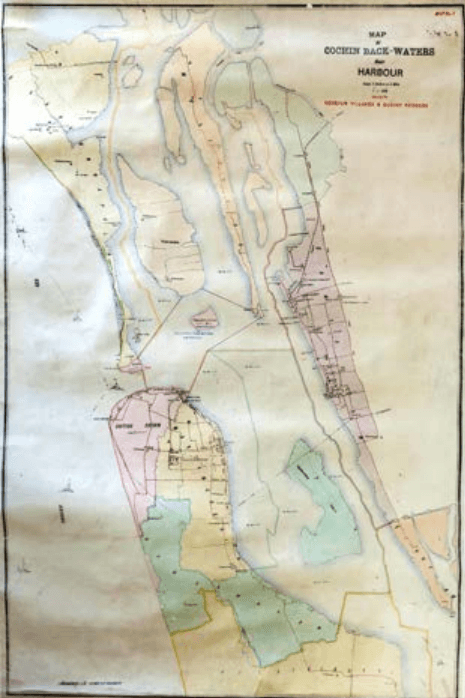
Fort Cochin was ceded to British and they established and strengthened their garrisons in Mattancherry and Thrippunithura.The magnificent forts built here were destroyed by the British. Under the supervision of Sir Robert Bristow, Kochi was developed into a major harbour and Willingdon Island was created. A court was also set up in Cochin for first time in 1812 and it remained functional until 1817.The railways were first introduced during his reign; it is said that he sold an expensive gold thalekkettu (caparison) of the Poornathrayeesa temple to raise the money for extending the railway line from Shoranur to Kochi. The Panchayat Bill and Tenancy Act were passed during the same time. Many permanent reforms were brought into existence in revenue and accounts departments.
318
The next king, Ramavarma XVI (r. 1915–32), also known as MadirassiyilTheeppettaThampuran, had to rebuild the Poornathrayeesa temple which was severely damaged in the ‘great fire’ of 1921.
Rama Varma XVII (r. 1932–41), with the popular name ChovvarayilTheeppettaThampuran, initiated the development of the Cochin harbour. He was succeeded by Kerala Varma (r. 1941–43) who introduced the food rationing system for the first time among the princely states. The next prominent king was Kerala Varma (r. 1945–47) whose name AikyaKeralamThampuran suggests his role in the unification and formation of Kerala state joining the Malayalam-speaking regions of Malabar, Cochin and Travancore. RamavarmaKunjunniThampuran also known as ParikshitThampuran (r. 1947–50) was the last King of Cochin upon the unification of Kerala and the elections for a democratic parliament.