Most of the public spaces in the city, including roads, footpaths, bus bays, parking lots and toilets, are off limits to differently-abled persons. Most of the footpaths, barricades add difficulty to the movement of differently abled as one cannot safely move over them because of their uneven surface. There are pits, and covering slabs are missing in some places where footpaths are constructed over drains, exposing pedestrians to the risk of falling into them.
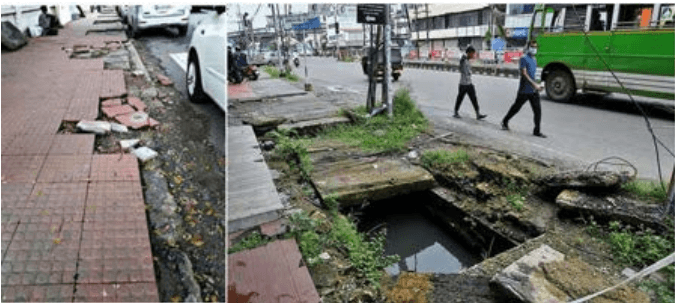
Un-even and missing foot paths
Most of the footpaths in the city do not have ramps that make it difficult for differently abled to travel safely. In some cases, it will also lead to injuries by slipping into the gaps between covering slabs. On some other roads, where ramps are constructed, motorists, especially two-wheeler riders, misuse the facility to park their vehicles on footpaths. Such encroachments deny the disabled sections from accessing their right. In addition, busy trade centre, remains out of bounds for differently abled that moves in a specially modified threewheelers. Those walkways are pedestrian friendly need to be accessible to the wheelchair users.
Absence of dedicated parking bays is another factor that is worrying disabled persons. Even though such parking bays, which are few in numbers, are provided in some places, it is largely misused by other vehicles and therefore do not serve the actual purpose.
Without accessible transportation, people with disabilities are more likely to be excluded from independent access to employment, education, and healthcare facilities, and to social contact and recreational activities (Roberts & Babinard, 2005; Venter et al, 2004).
Disabled friendly coaches and other infrastructure that are designed in the Kochi metro helps to commute the differently abled. Some of their noticeable features are disabled friendly ticket
Kochi Municipal Corporation
counters with lowered windows, wheelchair ramps at all station entrances, exits and platforms, safety docking facilities inside the trains, wide AFC gates to accommodate wheelchair users, tactile tiles for visually impaired passengers, marked seats for disabled passengers and audible and visible information across all stations, Braille languages used at different points for persons with visual disability to name a few.
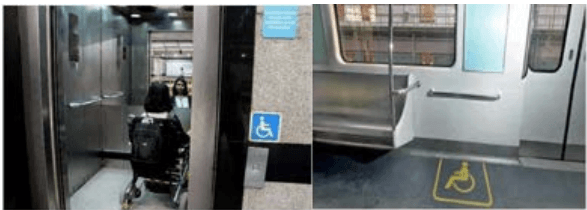
Barrier Free Kerala: It is initiative taken by Kerala Tourism Department, for making, touring the ‘enchanting state’ a possibility for the differently abled. It aims to convert Kerala into 100% accessible friendly tourism destination. Apart from the ramps, easy availability of wheelchairs, crutches, and other resources to facilitate easy manoeuvre, the state has also provisioned for specially trained staff who can guide the tourists in sign language. Audio guides and information in Braille language can give further assistance. As part of the of barrier-free tourism project phase II, authorities are making the popular walkways in the city accessible to physicallychallenged persons.
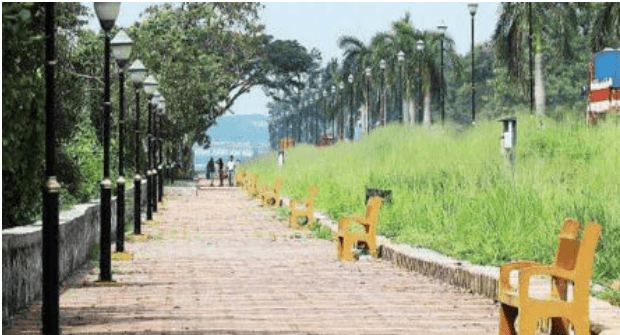
Walkway at Thoppumpady as a part of ‘Barrier Free Kerala Tourism’
Kochi Municipal Corporation