Health sector forms the bedrock for any country to have strong economies. Quality, affordable healthcare is paramount to ensure people live productive and fulfilling lives and for countries to have strong economies. Kerala has achieved major success in the health sector. The success can be attributed to several factors, including strong emphasis on public health and primary health care, high quality health infrastructure, easy accessibility and good coverage, highly skilled human resources and community participation. The health system in Kerala is designed to be a multi-layered system which provides first-contact access for basic services at a community level and expanded integrated primary health care coverage to achieve access to a range of preventive and curative services.
The State has achieved impressive health targets and significant gains in health indices such as high life expectancy, low infant mortality rate etc. This achievement is despite the per capita income being relatively lower than that of several other Indian states and many developed countries. The better health outcomes can be attributed to the State’s focus on high quality healthcare, access to education, poverty reduction strategies and the priority placed on child welfare.
This chapter deals with the existing scenario of healthcare sector in Kochi Corporation. It discusses the spatial distribution of healthcare services, requirements and epidemiology in detail.
Healthcare Infrastructure
Kochi Corporation has a healthcare infrastructure under Modern medicine, Ayurveda and Homeopathy systems of Medicine. A number of specialised and superior institutions are working in this sector under private and public undertakings. The catchment area of the super speciality hospitals in the sector is beyond its geographical limits as it renders services at a regional and even at an international level. There exists a prominent multi-speciality hospital in the fringe areas of the planning area as well. The details of the various hospitals found within the planning area are delineated below.
16.2.1 Allopathic Institutions
The total number of beds available in the 72 major hospitals spread over Kochi City Region is 6848. Category wise details (as per directorate of Economics and Statistics, 2011) of existing facilities are detailed below and the spatial distribution of the facilities are shown below.
Kochi Municipal Corporation
HEALTH
Table 161 Details of Medical Institutions – Allopathy
Name
Source: DMO, Directorate of Economics & Statistics, 2011
470
16.2.1.1 Government Institutions
The Government run institutions are provided in a tiered hierarchy within the planning area offering different levels of service. There exists one District Hospital as General Hospital, Ernakulam along with three Sub-district hospitals at Fort Kochi and Palluruthy. There is a designated Women and Children’s Hospital at Mattancherry. At the secondary level of healthcare, there exits one Community Health Centre (CHC) at Edapally. At the primary level, there are 12 Urban Primary Health Centres distributed within the planning area. The bed to doctor ratio is observed to be 17. The details of some major medical facilities are given below in Table 16-2
Table 162 Details of Government Medical Institutions
S N<sup>lo</sup>..
la if Htpso oroy C<sup>teag</sup>
i Nltemaaps H<sup>o</sup>
)<sup>e</sup><sub>r</sub>c (<sub>ii</sub>A<sub>l</sub> <sub>F</sub>h<sub>tcae</sub><sup>y</sup> f t oae r A
<sub>i</sub>l<sub>t</sub><sup>y</sup> i ff Aca oaerp <sub>i</sub> <sup>U</sup><sub>lt</sub>u B
<sup>lbe</sup>a ifl Ad Base ov <sup>bre</sup>m u N
s f Dbtroco ore N<sup>m</sup><sub>u</sub>
htre &f N osesr ou ffta s <sup>bre</sup>m u N
<sub>il</sub>a<sup>y</sup> f Db N oremu i Pttsnea eareg v A
Major Departments/ Services Offered
1
District Hospital
General Hospital Ernakula m
-
225400sq.ft.
644
110
874
2250
Anaesthesia, Cardiology, Cardiothoracic Surgery, Casualty, Dental, Dermatology & Venereology, Endocrinology, ENT, General Medicine, General Surgery, Nephrology, Obstetrics & Gynaecology,
Kochi Municipal Corporation
HEALTH
Ophthalmology, Orthopaedics, Paediatrics, Palliative Care, Physical Medicine & Rehabilitation, Plastic Surgery, Radiation Oncology, Respiratory Medicine, Urology, Psychiatry
2
Sub-District Hospital
THQH Govt. Hospital, Fort Kochi
3.75
-
240
15
122
589
General Medicine, Gynaecology, Paediatrics, Anaesthesia, Palliative Care
Taluk Hospital, Palluruthy
4
-
50
9
26
461
General Medicine, ENT, Paediatrics, Gynaecology, Palliative Care
Govt. Maharaja' s Taluk Hospital
5.37
6815.18Sq. m
110Sanc tione d220)
17
86
850
General Medicine, General Surgery, Orthopaedics, Ophthalmology, ENT, Dermatology, Anaesthesia , Dental, Paediatrics, Casualty, X-Ray
4
Communi ty Health Centre (CHC)
CHC, Edapally
0.66
2000sq.ft.
No IP servi ce
3
5
≈ 400
Out Patient services, Vaccination, COVID Immunisation, Palliative Care, Physiotherapy
Source: DMO Office, Ernakulam
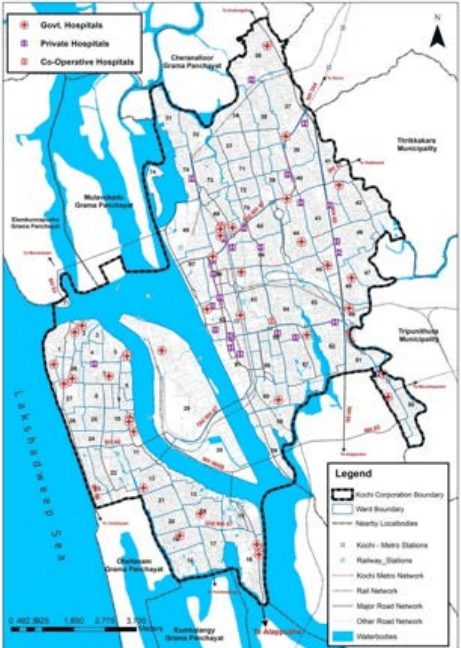
From the above table, it is observed that different levels of hospitals offer palliative care centres. All the levels also offer secondary care centres. Whereas, a trauma centre is only located in the General Hospital, Ernakulam. A mobile unit and dispensary also exists within the planning boundary. The spatial distribution of Government Allopathy institutions is given below in Figure 16:1. In addition to the above mentioned hospitals under the State Government, there exists various other Government institutions such as
Indira Gandhi Co-Operative Hospital: A 250 bedded multi-speciality hospital in an area spanning 2 acres located at Kadavanthara.
Naval Base Hospital (INHS Sanjivini): It is a multi-speciality hospital of the Indian Navy located at Willingdon Island under the Southern Naval Command. It is a nodal hospital for ships and other naval units at Kochi.
Cochin Port Trust Hospital: It is a 110 bedded hospital with ICU facilities functioned by Cochin Port Trust.
Kochi Municipal Corporation
HEALTH
Moreover there is a District TB Hospital established at Palluruthy which specialises in pulmonary diseases. The TB hospital is one of the oldest hospitals in Kerala and located near to Taluk hospital, Mattancherry.
16.1.1.1 Private Institutions
The planning area also has prominent multi-speciality hospitals under the private sector. Prominent hospitals within the planning area include Amrita Hospital, Renai Medicity, Ernakulam Medical Centre, Medical Trust, Lourde’s Hospital, Lissies Hospital etc. The doctor to patient ratio for the private sector is 8. The services offered make the catchment area of the hospitals span at a regional and even an international level. Figure 16-1 shows Spatial Distribution of Health Institutions within the Kochi Municipal Corporation area.
Figure 16:1 Spatial Distribution of Health Institutions within the Planning Area Source: DMO Office, Ernakulam, Land use survey -2020
Kochi Municipal Corporation
HEALTH
16.1.2 Indian Systems of Medicine
The traditional systems of medicine is relevant to the health care of people. Ayurveda, Yoga & Naturopathy, Unani and Siddha constitute Indian Systems of Medicine. The Department of Indian Systems of medicine under the Department of AYUSH, Kerala undertakes provision of medical aid to the people through a wide network of hospitals and dispensaries. The following tables show the details of the hospitals within the planning area.
Table 163 Government Ayurveda Hospitals within planning area
Sl. No
Name of Hospital
Govt./ Pvt./ Co.op
1
District Ayurveda hospital Ernakulam
Government
2
Govt. Ayurveda hospital Mattanchery
Government
Source: Kochi Municipal Corporation
Table 164 Details of Medical Institutions – Ayurveda
Name
Hospital
Dispensaries
Government
Private
Government
Private
No.
Beds
Doctors
No.
Beds
Doctors
No.
Beds
Doctors
No.
Kochi M. Corp
2
60
7
4
5
5
2
-
2
39
Source: DMO, Ernakulam
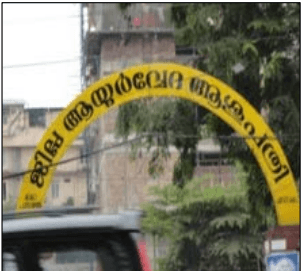
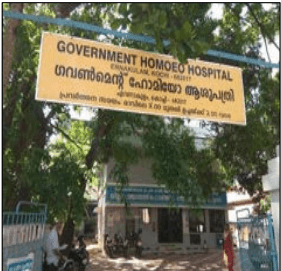
As presented in Table 16:3 Government Ayurveda Hospitals within planning area, there are two Government run Ayurveda hospitals and two Ayurveda dispensaries within Kochi Corporation. In addition to that, there are four hospitals under private sector initiatives. There are two hospitals in the homeopathic system of medicine among which, one is govt. initiative and there are three dispensaries owned by local body within the Corporation area. Average number of outpatients per day is 1591. The details are given below in
Table 165 Details of Medical Institutions – Homeopathy as on 2011
Name
Hospital
Dispensaries
16.3Disasters and Healthcare
The healthcare system, has been subjected to a myriad of disasters. The first experience was with Cyclone Ockhi where the areas outside Kochi Corporation like Chellanam and Nyarambalam were severely affected. The areas experienced structural damage and health hazards due to the overflow of wastewater from septic tanks.
Kochi Municipal Corporation
HEALTH
The impact of the floods (2018) on the health system is multi-fold. It presents varied and considerable challenges to the sector. The contamination of water from mixing of sewage, other waste materials, water logging, crowding of displaced population in shelters increases the risk of communicable diseases in the after-math of a flood. Outbreaks of water-borne diseases like diarrhoea, leptospirosis etc was at a high risk.
The health department worked in co-ordination with the rescue efforts at all levels. Primary response of the health system was on limiting the morbidity and mortality during and after the disaster through co-ordinated action with the rescue and relief teams. To co-ordinate the health system efforts in the situation, a 24x7 Disaster Control Room was set up at the Directorate of Health Services. The risk of injuries, various communicable diseases and mental health problems in the affected population were assessed by the public health team with the assistance of supporting agencies. Communicable diseases like Water-borne diseases (acute diarrhoeal diseases, Hepatitis A, Hepatitis E, leptospirosis etc.), mosquito bone diseases etc. were anticipated and measures were taken to curb the massive spread of these disease.
2019-2020 the world witnessed the outbreak of a new virus called COVID-19. The pandemic had far reaching economic and social impacts. It had disrupted the functioning of society and brought into focus the importance of a responsive and qualitative healthcare system. Table 16:8 shows the Corona virus statistics of the state and the district till 04/10/2020.
Table 168Details of Corona Statistics (Till 17/11/2020)
District
Confirmed
Recovered
Active
Death
ERNAKULAM
57939
48325
9411
192
KERALA
533500
461394
70073
1915
Source: Government of Kerala Covid-19 Dash board
The Ernakulam District adopted the cluster containment strategy put forward by the State Government. First-line and second-line treatment centres were established by utilising the existing infrastructure and also utilising facilities like convention centres, auditoriums and the like, For managing severely affected patients, a COVID-19 Apex hospital was set up and all major hospitals within the District were equipped to manage these patients. A centralised patient management system was also developed and ward level RRTs were formed and given training to ensure quarantine of contact/travellers.
In events of urban flooding, hospitals located at risk zones need to be retrofitted to protect the structure against flooding. For future pandemics or in events of disasters, there is need to spatially allocate healthcare facilitation centres at every Division or Zonal level for better preparedness.
Kochi Municipal Corporation
HEALTH
16.2Epidemiology / Diseases
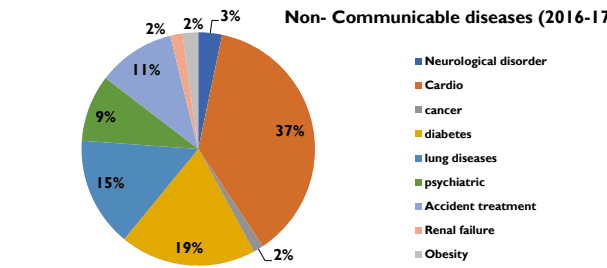
From the secondary data, the major disease affecting people under communicable diseases are Water Diarrhoea and Fever; which is 100% cured. Major diseases occurred and percentage of cases diagnosed with diseases in 2016-17 is shown in table 16-6 (communicable) and 16-7 (non-communicable). Lifestyle diseases, mosquito borne diseases such as Dengue fever and other epidemic diseases such as typhoid appeared more. Considering Non-communicable diseases as shown in table 16-7,; cardio vascular cases occupy the major share (37%) followed by diabetes (19%) and lung diseases (15%). The share of accident cases is about 11%.
Table 166Details of Communicable diseases (2016-17)
No
Disease
78798
Fever
3 57 1
Dengue Fever
25
Chikungunya
6
Cholera
427
Typhoid
1 7373
Diarrhoea
304
Hepatitis - A
5 1 4
Hepatitis B
1 70
Hepatitis C
1 08
H I N I
242
Meningitis
1 08
Measles
95
Malaria (suspected)
1 00
Lyme Disease
8
Typhus
47 1
Leptospirosis
7 1 6
Others
Source: DMO/Health Inspector, Primary Health Centre
Kochi Municipal Corporation
HEALTH
Table 167Details of Non-Communicable diseases (2016-17)
87 1 68
Hypertension
r vas Ca c r u dila o
1 3 705
Ischemic heart disease
8866
Neu rological disorders
1 268
Lung
Ca n c e r
206
Liver
744
Th roat
1 548
Breast
1 5 323
Type- 1
es Di a b et
3 5554
Type-2
1 4929
Bronchitis
dis Lu e n a g se s
3 704
Emphysemas
223 3 7
Asth ma
1 83 79
Com mon mental disorder
c Psy c h i a tr i
66 1 7
Severe mental disorder
1 1 558
Accidental I nju ries
T A re cc a i t d me ent n t
3 3 7
Dog bite
327
Snake bite
1 6744
Road traffic accidents
4570
Renal failu re
5866
Obesity
Source: DMO/Health Inspector, Primary Health Centre
Figure 16:2 Non-Communicable diseases (2016-17)
Source: DMO/Health Inspector, Primary Health Centre
475
The exists issues for the spread of communicable diseases linked to water scarcity. Water scarcity particularly in areas of Fort Kochi and Mattancherry results in dependence on private tankers and the like. Water contamination is the major reason for diarrhoea outbreaks in this region. The public taps are located at a level which due to frequent flooding gets contaminated.
16.4Comparison to Standards
16.4.1 Comparison to URDPFI guidelines
Comparing the URDPFI benchmarks (Table 16:9); health infrastructure in Kochi corporation area meets the satisfactory levels except for the requirement of general hospital. One general hospital with 500 beds suffices a population of 2.5 lakh. At present only one general hospital with bed capacity of 783 beds is present in the city catering to a population of 602,046. But due to the presence of a Government Medical College located in the periphery there is not a necessity to spatially allocate a General Hospital within the planning area.
Table 169 Healthcare Facilities compared with URDPFI Guidelines
Category
Benchmark
Present status
No. of Beds
Population Served per Unit per Facility/ Unit
Units with mentioned no. of beds
Adequacy
Dispensary
-
15,000
-
-
Maternity centre
25-30
45000-1 Lakh
12
Intermediate Hospital (Category B)
80
1 Lakh
14
Intermediate Hospital (Category A)
200
1 Lakh
7
General Hospital
500
2.5 Lakh
1
Source: DMO Office, Ernakulam, URDPFI Guidelines
16.4.2 Analysis of number of beds available
As per the Indian Public Health Standards (IPHS), 2012, the calculation of the number of beds is based on
Annual rate of admission as 1 per 50 population
• Average length of stay in a hospital as 5 days
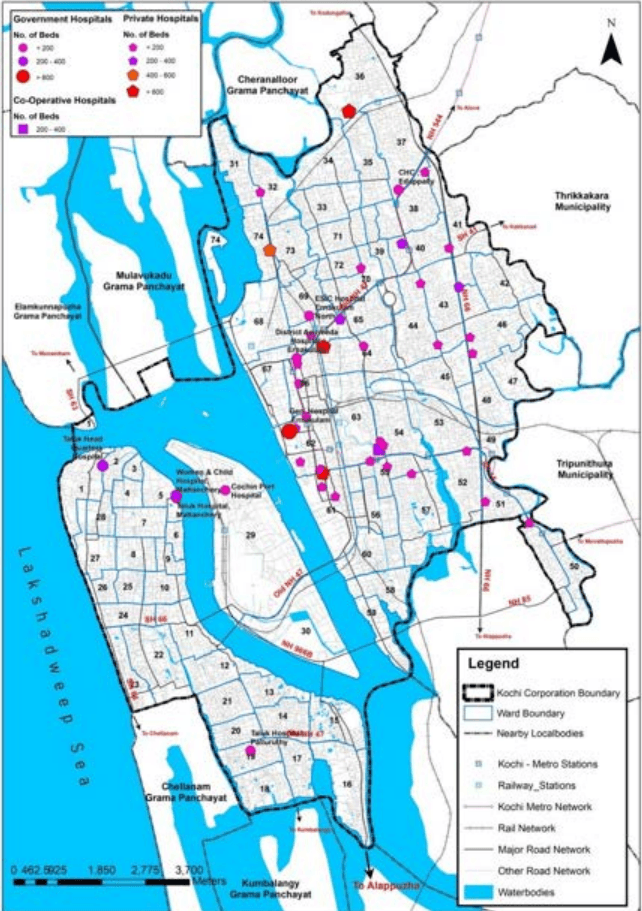
As per the above calculations, the total number of beds available is sufficient for the current population and the projected population. The spatial distribution of healthcare facilities with bed facility and the representative bed availability is shown below in Figure 16-3.
Kochi Municipal Corporation
HEALTH
Government
Private
Government/ULB
Private
No.
Beds
Doctors
No.
Beds
Doctors
No.
Beds
Doctors
Kochi M. Corp
1
25
3
1
8
2
5
-
5
57
-
57
Source: DMO, Ernakulam
Kochi Municipal Corporation
HEALTH
Figure 16:3 Map showing spatial distribution of hospitals & their bed availability Source: DMO/Health Inspector, Primary Health Centre