Canal network is part of our regional traditional heritage planning. The entire development in the low lying coastal areas has been dependent on canal systems integrated by backwaters, lagoons and estuary and was instrumental for trade and commercial activities. The canal network in Kochi is very much intervened with rivers and backwaters. Most of the traditional areas and heritage zones are connected by such canal system. The issues related to the canal network are basically the major issues of Kochi city itself.
Canal network is inaccessible to public in most areas.
Encroachment.
• Pollution from sewerage, weed growth, mosquito breeding, lack of maintenance.
• Lack of proper land records to check encroachments.
• Water edge development guidelines lack environmental sensitivity.
Mangalavanam Natural Heritage Zone
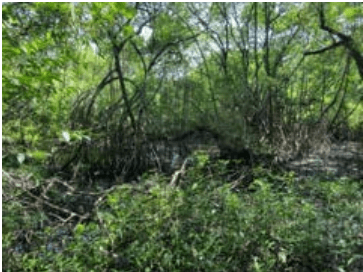
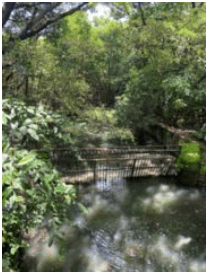
Canal leading to waterbody within Mangalavanam Mangalavanam Natural Heritage Zone
Mangalavanam Mangrove area comprises of a shallow tidal lake in the centre with its edges covered with thick vegetation. It gained importance because of the mangrove vegetation and also due to the congregation of commonly breeding birds. The area of Mangalavanam is 0.0274 sqkm and environmentally sensitive zone (ESZ) as notified by MoEFCC is 0.45 sqkm. Being nicknamed the 'Green Lung of Kochi', the Mangalavanam Bird Sanctuary is among the most beloved sites in all of Ernakulam. Birdwatchers throng to this green haven in large numbers due to it being a popular host for a lot of migratory birds, with a 2006 census having stated that 94 birds belonging to 32 species could be seen in Mangalavanam.
Kochi Municipal Corporation
HERITAGE
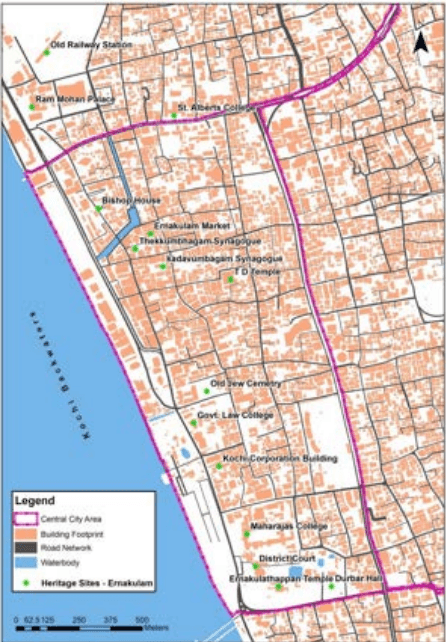
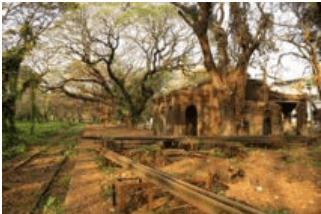
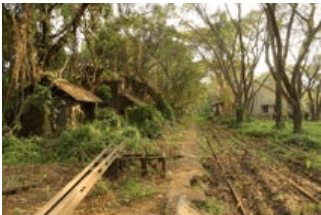
Located right in the middle of the city, it is situated behind the Kerala High Court building and is surrounded by the Arabian Sea and backwaters. Its terrain supports many types of mangroves and their associated species. Many mammals can be seen here as well, including Indian Flying-fox, Painted Bat, Eurasian Otter, House Rat and Three-striped Palm Squirrel. The old railway station situated near Mangalavanam is in completely neglected condition. This site full of thick vegetation can act as a buffer for the bird sanctuary and can be developed for passive tourism activities.
Pollution.
Lack of urban development guidelines.
Old railway station area
Major Planning Interventions for Heritage Areas in the City
Conserving and preserving the rich heritage of culture and traditional structures; both tangible and intangible are very important while planning a city. The absence of a legal framework in the city had led to rampant violations and demolitions of the heritage structures in the heritage zone of Fort Kochi. In this regard a heritage bylaw was prepared for managing and saving the cities most valued heritage buildings. Kochi was one of the first cities in Kerala to make a concrete move for conserving and protecting its rich heritage lineage.
Kochi Municipal Corporation had validated a Heritage Draft Bylaw and brought in necessary amendments for the preservation of natural and cultural heritage. This draft by law passed by the Corporation Council that touches upon the tangible and intangible heritage as well as natural heritage of the city. The bylaw was validated by including the guidelines of the Archaeological Survey of India and the existing building rules.
Under the smart city mission for Kochi, detailed town planning scheme for Fort Kochi area has been prepared in 2017 with a vision to transform Fort Kochi as cultural capital of Kochi
Kochi Municipal Corporation
HERITAGE
city by conserving the built heritage. This published DTP scheme focuses on heritage conservation in such a way that the economic growth is not impaired. “Area Based Development Plan for Mattanchery”and “Area Based development Plan for Central Area” are also on-going projects under the mission.
Other Important Heritage Areas in the District
9.10.1 Muziris Heritage Area
a. Muziris Heritage Tourism Area
Muziris welcome to the cape of trade culture, left behind by its ancestors from around the world, to the waves of Azhikode where Christianity first entered India, to the Cheraman mosque, which gave out the first Muslim call for prayers, to the Bharani festival at the KodungallurBhagavathy temple, to the original culture of the Jewish synagogue, to the village where handlooms spin crafts of heritage, to the Palium Palace and to the old waterways that led one to Muziris.
Muziris is an ancient port town in Kerala that still holds beauty, that is filled with history and culture. The Government of Kerala has initiated the Muziris Heritage Project (Central and State Government aided project under the Department of Tourism, Government of Kerala)to reinstate the historical and cultural significance of the legendary port of Muziris. The region is dotted with numerous monuments of a bygone era that conjure up a vast and vivid past which is designed to involve and integrate the local community in all intended developmental initiatives.
The objective of this project is to conserve the historic monuments situated in and around Kodungallur and North Kerala. The important monuments in the area are Palium Palace &Nalukettu, Paravur&Chendamangalam Synagogue, VyppinKottaSeminari, Holy Cross Church, KottappuramKotta, etc. The multi-disciplinary mega project includes development and maintenance of museums, conservation of heritage buildings and streets, development of roads and jetties, renovation of canals in the Muziris area, development of infrastructure facilities such as water supply and electricity, construction of toilet block, Tourist Interpretation Centre, Activity Centre, etc.
b. Spice Route Project
The Spice Route Project is aimed at sharing the heritage among the 31 countries along the ancient route. The centerpiece of the project is Kochi - Kodungallur belt in central Kerala. This belt was where the ancient spice port Muziris was located and where merchants form West Asia and Mediterranean region came by sea and land.The project was aimed at re-
Kochi Municipal Corporation
HERITAGE
establishing Kerala’s maritime ties with the countries on the Spice Route and also promoting tourism and cultural revival, historical and archaeological exchanges between these nations.
9.10.2 Thrippunithura Heritage Zone
The main area covers the major heritage features like the Fort area, Hill palace, Temples, Palaces, Malikas, Churches, Christian settlements, Tamil settlement and Konkani settlement. The temple forms the focal point of the city. Thrippunithura is the seat of the former ruling family of Kochi. Many palaces in and around the city memorises the rich tradition and history of the place.
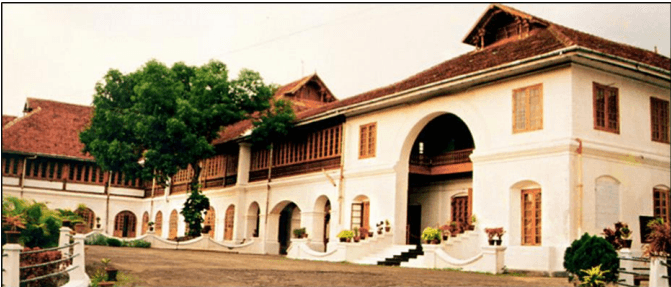
Hill palace, Tripunitura Heritage Zone
9.10.3 Edappally Heritage Sub Zone
It was once the capital of a principality called Elangallur Swaroopam. It has today an old palace built in the Kerala style of architecture. Edappally is an important centre of Christian Pilgrimage. The St. George church draws thousands of pilgrims throughout the year. History records that a session of the synod of Diamper (1599) was held here. It is also the birthplace of the poet Changampuzha Krishna Pillai. His tomb is situated here. Here there is Museum of Kerala History.
9.10.4 Thrikkakara Heritage Sub Zone
Thrikkakara is well known throughout Kerala as the seat of an ancient Vishnu temple. This is the only temple in Kerala where Vamana is the presiding deity. This temple has a large number of lithic records some of them of great historical importance. In days gone by the prominent princes and chieftains of Kerala used to assemble at Thrikkakara to celebrate the Onam festival. This celebration under the Kulasekharas as festival of religious fereor and national
Kochi Municipal Corporation
HERITAGE
solidarity has made Thrikkakara a place of unique cultural importance to the people of Kerala even today. There is an underground passage called Mudikuzhi at a place 3 km of Thrikkakara temple. It is believed that the Pandavas made their escape through this passage when the arakkilam was set on fire.