Swaroopam was one of the major political units of pre-modern Kerala. The meaning of the term ‘Swaroopam’ is self-form. They were large joint families and their political authority was organised on the basis of seniority. After the decline of the CheraEmpire, there were four major Swaroopams in KeralaKolaswaroopam (Kannur), the NediyirippuSwaroopam (Kozhikode), the PerumpadappuSwaroopam (Kochi), and the VenaduSwaroopam (Travancore). Most of the prevalent history of the kingdom is based on mythical sources and
Kochi Municipal Corporation
HERITAGE
tales from a few manuscripts like Keralolpathi, Keralamahatmyam and PerumpadappuGranthavari.
Most of these sources concur on the existence of a lineage of designated kings in the region with the title ‘Perumal’ whose tenure lasted for 12 years. The ancient text of Keralolpathi has a narrative about the last Perumal, CheramanPerumal, who left for Mecca on hajj and converted to Islam. Before leaving, he divided the kingdom between his nephews and sons. Most historians believe that CheramanPerumal’s rule (Second Chera Dynasty 825–1102) ended around 1102 CE and it is widely agreed that he belonged to Cholamandalam in Tamil Nadu. The Perumal’s seat was said to be at Thiruvanjikulam (near Kodungallur). The shrine at Thiruvanchikulam was supposed to be renovated during this Perumal’s time. Even today this temple has a small consecrated idol dedicated to CheramanPerumal.
A popularly circulated story says that CheramanPerumal’s sister was married to a Namboothiri of the PerumpadappuIllam (family) and, during the partition of the empire, Perumal’s nephew (son of this Namboothiri) got a stretch of land where he later established the PerumpadappuSwaroopam. The nephew of CheramanPerumal was called Veera Kerala Varma. Veera Kerala Varma was anointed as Chakravarthy (supreme ruler) on the day of Atham in the month of Chingam (in the Malayalam calendar, Kollavarsham) as he was considered the noblest of all rulers of the time. The day and month of this anointment coincides with the festival of Onam and in present times a procession called Atha-Chamayam takes place in Thrippunithura every year.
The ancestral house of Perumpadappu Namboothiri is situated at Vanneri in Malappuram district. It is believed that the family left the Vanneri region and fled southwards owing to the harassment suffered at the hands of the invasive forces of Zamorin of Calicut around the thirteenth century. After fleeing, the royal family were supposed to have settled near Pazhayannur (northern extremities of modern Cochin State). The Perumpadappu Swaroopam (Cochin royal family) had a few inscriptions of historical value. The Syrian copper plate (VeeraraghavaPattayam) of 1225 CE, issued by Veeraraghava, a ruler of the Perumpadappu royal house, is the most important one. It confers on the Christians of Kodungallur a number of privileges and rights. The Paliyam copper plate records the agreement between the Cochin Raja and the Dutch East India Company. The Jewish copper plate record of BhaskaraRavivarma (1000 CE) from the Jewish synagogue at Mattancherry and the Chendamangalam record in Hebrew dated 1265 CE are the most important in this category.
As a result of many marital alliances the Namboothiri rulers of Edappally handed over some regions to Perumpadappu Swaroopam and the latter came to be known as the rulers of Kochi. They helped the Portuguese to settle in Kochi and King UnniGoda Varma Tirumulpadu extended support in their efforts against the Zamorin based on a treaty between the Kingdom of Cochin and the Portuguese in 1500. Hence, the kingdom was protected by the Portuguese initially and similar treaties were initiated with the Dutch and English East India Companies later.
Kochi Municipal Corporation
HERITAGE
The development of the Kingdom of Cochin was influenced by two major factors. First, the increasing power of the NediyiruppuSwaroopam in Calicut which challenged the autonomy of the kings of Cochin and secondly the increasing demand of pepper in the Indian Ocean trade. Calicut established a stronger political authority in the Malabar Coast from the thirteenth century onward which resulted in the deprivation of several rights of the king of Cochin. The king of Cochin was supposed to pay tribute to the Zamorin as a symbol of the acceptance of his authority.
On the other hand, this period also saw several important changes in this place. Pepper became an important commodity in the Indian Ocean trade networks from the thirteenth century onward. The Malabar Coast, especially Cochin and Calicut, benefitted from this sudden rise in demand for pepper as they both cultivated pepper in high quantities. As early as the fourteenth century, travellers like Ibn Battuta and Ma Huan had marked Cochin as an important port city and market.
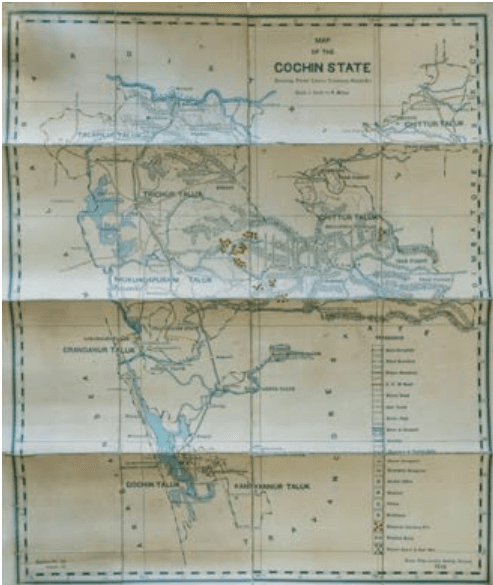
Figure 9:1 Map of Cochin State Source: Cuturalmapping.in
Kochi Municipal Corporation
HERITAGE