The Portuguese had used Gujarati merchants as intermediaries in their trade negotiations with the King of Kozhikode and subsequently with the Maharaja of Cochin. They also sought the help of Gujarati merchants in procuring spices and other goods from the locals.The hub of their activity was Mattancherry, where the Raja of Kochi gave them land and special rights. The place where they set up their business and homes is now known as Gujarati Street.
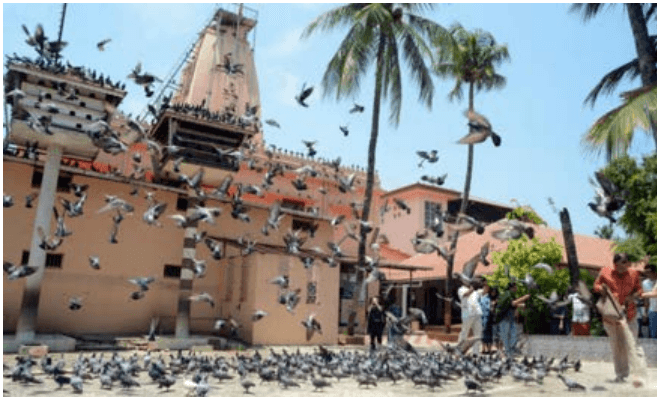
Feeding Pigeons at the Jain temple Photo courtesy: Rajesh Kumar
The major social factors like Religion, Safety, security, the need for privacy and occupation influenced house form and settlement pattern in this community. They give more importance for social gatherings. So the houses are arranged around a courtyard which is used for getting together and common activities. The Gujarati houses in Mattancherry are a reflection of their culture which has many similarities with a typical Gujarati house. More than 700 Gujarati families live in Mattancherry today. Known as 'Little Gujarat', one can find Gujarati temples, schools, colleges, restaurants, sweet shops and cultural institutions in Mattancherry.
The 5,000 odd-members of the community have preserved their socio-cultural identity with the help of the seven temples, one college, three schools, one institute of higher learning, guest house, commercial complex, sports club, goshala, crematorium and even a bird shelter. Shri Cochin Gujarati Mahajan is the representative organisation of the Gujaratis, which include Marvaris, Jains, Patels and others. The association set up way back in 1883 not only binds the community together but also serve as a link to the local community.
Kochi Municipal Corporation
HERITAGE