Management of power quality involves building upon the various analyses, summaries that are available through power quality monitoring and understanding the impact of power quality phenomena on various equipment and then, taking an informed decisions on, further, managing and improving power quality. The approach for power quality management can be seen in Fig. 6.
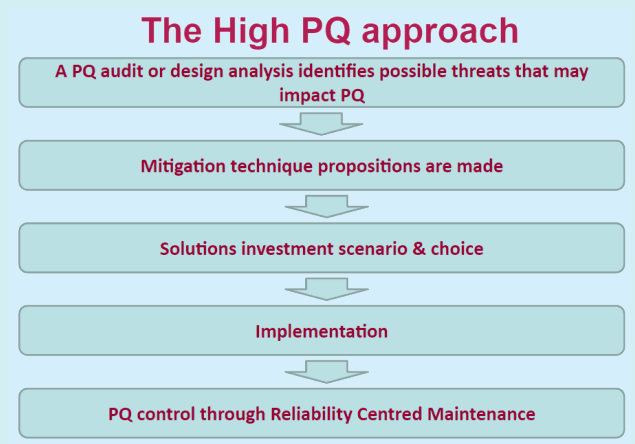
Fig. 6 The Approach for Power Quality Management
Depending on the power quality monitoring objectives (as discussed in 3.2) such as addressing the critical equipment performance issues, establishing a baseline for future performance predictions or other objectives as outlined earlier, the next step is to take corrective actions based on the findings and its interpretations. Table 7 and Table 8 provide a glimpse of the typical counter measures and mitigation methods that may be employed in response to most prevalent power quality phenomena. However, the list is not exhaustive list and care shall be taken to understand the characterization of power quality phenomena with respect to its spectral content, duration and magnitude for applying the right mitigation methods.
| PQ Phenomena | Specific PQ issue | Typical Causes | Suggested Counter Measures |
| Transients | Impulsive | Lightning strike, transformer energization, capacitor switching | Reduce the magnitude and incidence of switching transients; Reduce the lightning surges entering the customer facility; Install surge/lightning arrestors and/or isolation transformers. |
| Oscillatory | Line or Capacitor or load switching | ||
| Short duration voltage variation | Sag and swell | Ferro resonant transformers, single line-to-ground faults | Reduce the incidence rate, amount of variation or the duration of RMS variations; Install dynamic voltage restorers, constant voltage transformers, PWM, Autotransformers |
| Interruption | Temporary (self-clearing) faults | ||
| Long duration voltage variation | Under voltage | Switching on loads, capacitor de-energization | Reducing the load changes, reducing the source impedance, or decoupling the load from lighting circuits. |
| Over voltage | Switching off loads, capacitor energization | ||
| Sustained interruptions | Faults | Limit the incidence rate and duration of sustained interruption | |
| Voltage Imbalance | Single phase loads, Single phasing condition | Improve voltage regulation and load balancing | |
| Waveform distortion | Harmonics | Adjustable speed drives and other non-linear loads | Use active or passive filters to reduce harmonic voltage distortion, neutral upsizing, transformer based solutions |
| Notching | Power electronic converters | Observe proper routing of conductors, Retrofit drives that incorporate Silicon Controlled Rectifiers (SCRs) and diodes | |
| DC Offset | Geo-magnetic disturbance, half wave rectification | Use d.c link chokes | |
| Voltage Flicker | Arc furnace, arc lamps | Dynamic compensation (Static VAR Compensator) |
| Size | Purchase cost | Maintenance | Efficiency | Reaction time | Voltage | Current | Reactive power | Technology Maturity | |
| Flywheel | = | - | - | - | = | + | + | + | + |
| Static UPS | + | = | - | - | + | + | + | + | + |
| DVR - 1 | + | + | + | = | = | = | = | + | = |
| DVR - 2, 200 percent load | - | + | + | = | = | + | = | = | = |
| DVR - 2, 400 percent load | - | + | + | = | = | + | = | = | = |
| Statcom - SMES | - | = | - | - | - | = | = | + | - |
| Shunt Connected SM | + | - | - | = | = | + | + | + | - |
| Transformerless Series injector | + | = | + | = | = | = | = | = | + |
| NOTE - The harmonic currents are reduced by creating a low impedance path through the SM. Efficiency Size +: Losses < 0.55 percent of Srated -: only > 1 MW =: losses 0.5-2 percent of Srated =: only > 100 kW -: losses > 2 percent of Srated +: only <100kW Harmonics, reactive Power Purchase Cost =: no influence -: > 250€/kVA +: positive influence =: 150 - 250 €/kVA +: <150 €/kVA Reaction time Maintenance +:reaction or activation transient < 1 ms -: annual maintenance required =: transient 1-5 ms +: no annual maintenance required -: transient > 5 ms | |||||||||
Power quality is a dynamic reflection of operative system and should be continuously monitored and managed for ensuring energy efficient drives in various aspects of industrial, commercial and domestic environments. A high power quality approach indicated is ideal for adoption in best managing the challenges posed by new age non-linear loads in operation. The solution approach should be more system oriented rather than component oriented and should start from setting the fundamentals of electrical system to be placed right from the beginning (see Fig. 7).
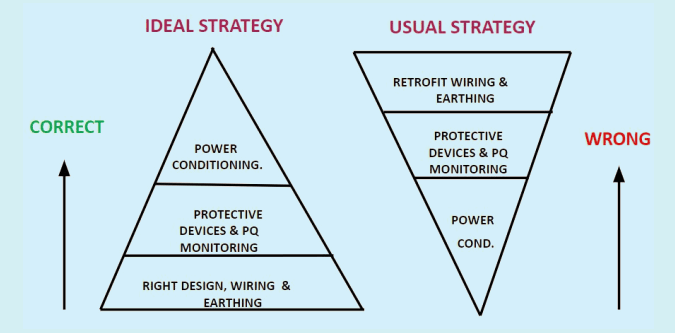
Fig. 7 Strategy For Power Quality Mitigation