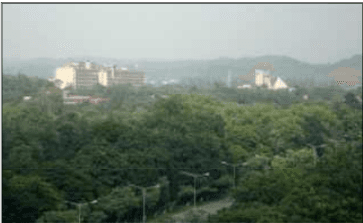
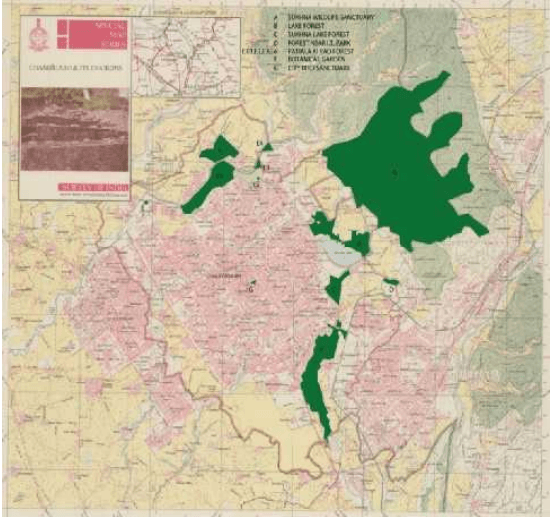
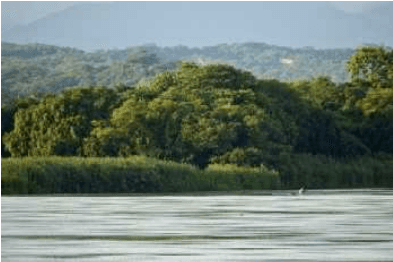
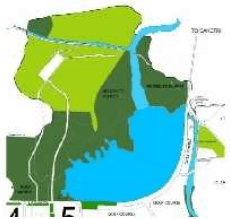
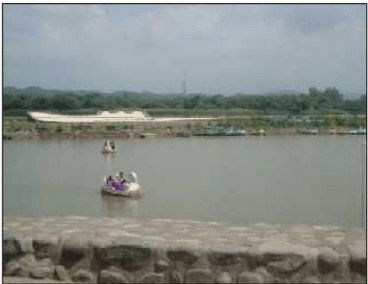
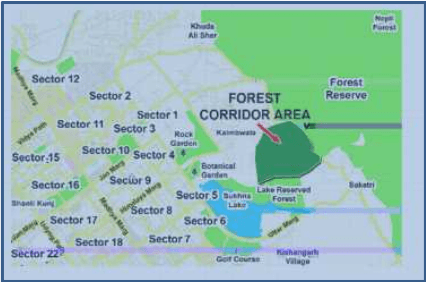
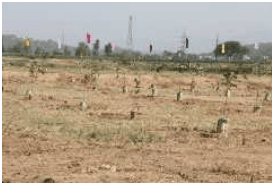
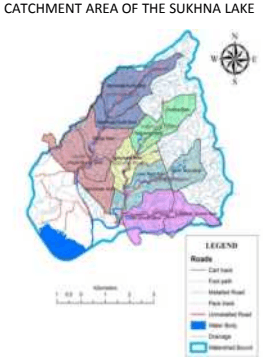
Sukhna Wildlife Sanctuary spread over an area of 2598.42 ha is located in the North –East of the Sukhna Lake and forms part of Sukhna lake’s catchment area falling in the Shivalik Hills. The Shivalik hills geologically unstable and thus are highly prone to soil erosion during rains. The soil in the Shivalik is sandy, embedded with pockets of clay which is highly susceptible to erosion by surface run off .Concerted measures taken towards prevention of erosion /silt into the Sukhna Lake have resulted in a thick forest cover and rich biodiversity of the area. Approximately 10 % of the perimeter of the sanctuary abuts the Chandigarh UT, the major part being along the states of Punjab and Haryana .
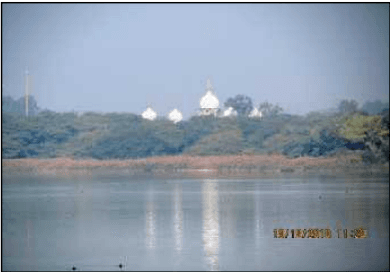
193 water bodies have been built in the Sukhna Wildlife Sanctuary which support wildlife and migratory birds that flock to this sanctuary.
The first wildlife census carried out in the Sukhna Wildlife Sanctuary in December 2010 found nine species of mammals and 63 species of birds including two species of Schedule I, two in Schedule II, three in Schedule III and one in the Schedule IV category of the Wildlife Protection Act .
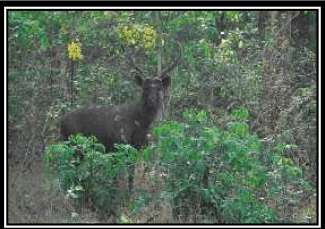
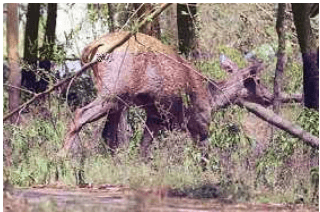
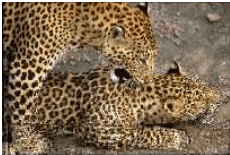
Nine species of mammals include Leopard, Sambar, Chitah, Wild Boar, Indian Porcupine, Indian Pangolian, Blacknaped Hare, Golden Jackal and Grey Langur. The presence of predators such as the leopard, which requires enough prey for its sustenance, suggests the importance of Sukhna and its rich biodiversity. Prominent among the birds are Peacock, Red Jungle Fowl, Grey Partridge, Cuckoo, Night Jar, Golden Oriole, Kingfisher, Swift, Hoopoe, Hornbill, Barbet, Woodpecker, Roller, Barn Owl, Parrot, Dove, Jacana, Plover, Coot, Hawk, Goose, Swan, Duck, Grebe, Black Drongo, Tree Pie, Jungle Crow, Bulbul, Hill Myna, Koel, Bee-eater, Common Myna etc.
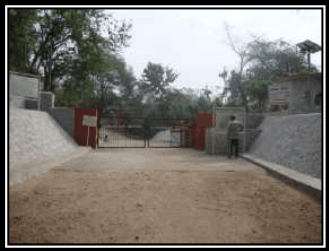
Entrance to the Sukhna Wildlife Sanctuary
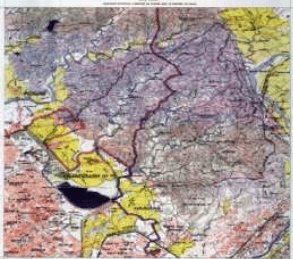
CATCHMENT AREA OF THE SUKHNA LAKE
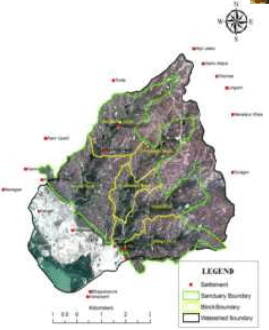

SUKHNA WILDLIFE SANCTUARY
17.4
THE CHOES (SEASONAL RIVULETS)
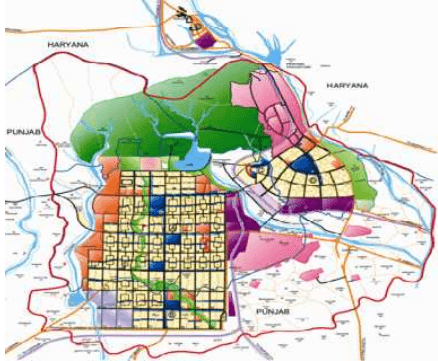
Chandigarh Master Plan – 2031
土
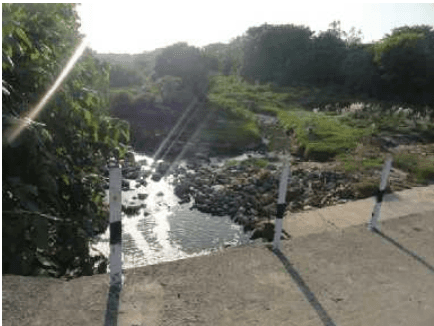
Both Sukhna Choe and Patiali ki Rao, as well as the N choe flowing through the city (now converted into the Leisure Valley) perform important ecological functions which have not received the same attention as the problem of siltation of the lake. All the three choes originate in the Shivalik Hills and provide seasonal drainage for the surface water run off from their catchments during the monsoons. Their sandy beds also recharge the deep sub-soil water aquifers which provide Chandigarh about 20% of its water supply. Many of Chandigarh’s tube wells are located in the beds of these choes.
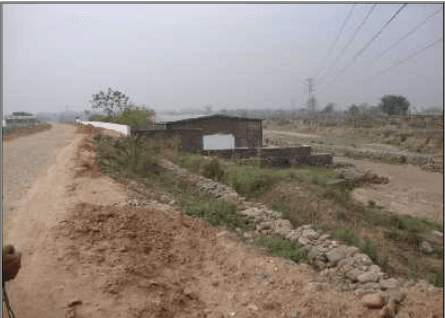
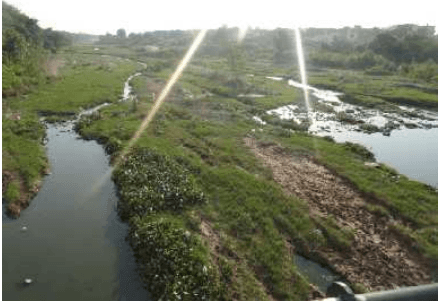
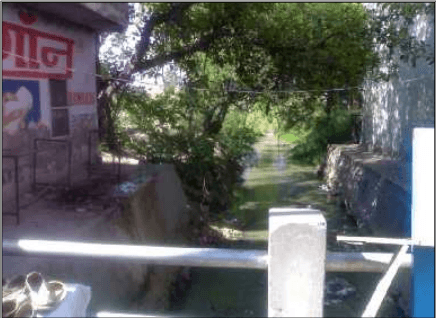
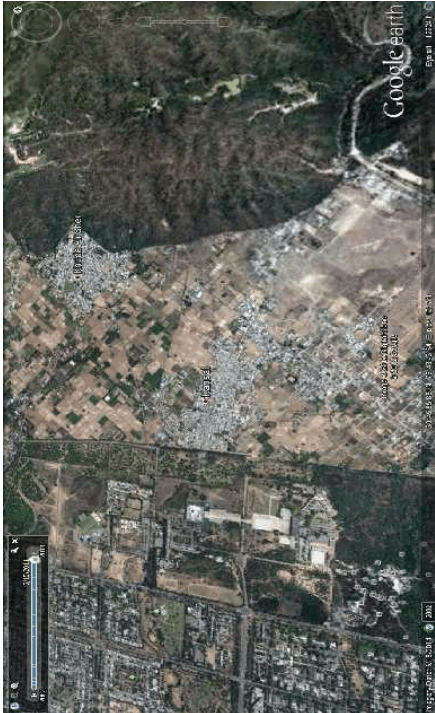
Unfortunately, several insensitive developments are taking place next to and within the choe beds both in the UT and Punjab. Untreated sewerage and solid waste of Naya Gaon in Punjab and Khuda Lahora and Khuda Jassu in the UT is being thrown into Patiali Ki Rao. The same is happening in parts of the Sukhna Choe in the UT and Punjab and even the N Choe going through Chandigarh’s southern sectors has not been spared. Besides destroying the local ecology and becoming a public health hazard, it is likely to pollute the sub-soil water. Rampant unregulated sand mining in Patiali Ki Rao is also threatening its water recharging capacity. In contrast, the parts of Sukhna Choe and Patiali Ki Rao with notified Reserve Forests along their sides are in much better condition with lush vegetation. These Choes suffer from :
i) High degree of man made encroachments.
ii) High degree of water/environment pollution.
iii) Discharge of untreated sullage in the choe bed.
iv) Mushroom development of slums along the river bed.
v) Low availability of fresh water.