12.1 An Overview
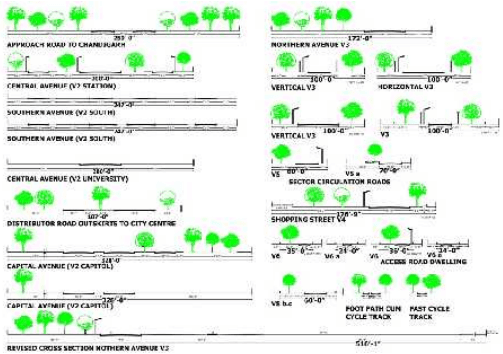
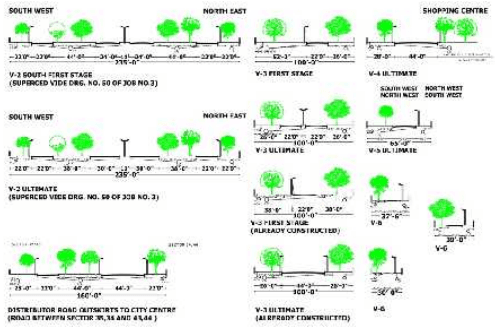
The original plan of the city was based on the gridiron defined by a system of seven types of roads, which was called the 7Vs. The system was designed to provide safe mobility to children and pedestrians within and between the sectors, while also permitting the benefits of fast movement for vehicular traffic. Based on the problems being faced by European cities after the industrial revolution, Le Corbusier intended to prevent the traffic congestion and pollution problems caused by the growth of the private motor car while simultaneously utilising the benefits the technology offered. Prevention of vehicular traffic jams on the roads designed for uninterrupted fast mobility was to be achieved by having an efficient system of public bus transport.
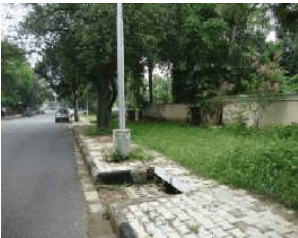
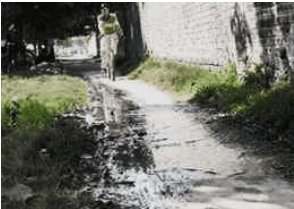
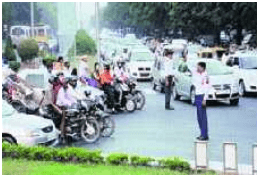
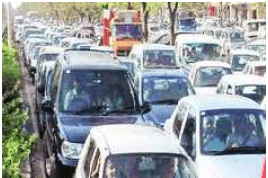
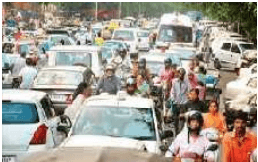
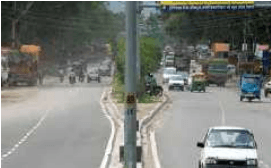
Sixty years later, although most elements of the original circulation system remain intact, it is the private car which rules the roost today. The pedestrian pathways for linking different sectors through open green spaces from north to south have largely remained on paper. Instead of cycle tracks going through the open spaces similarly connecting different sectors, some cycle tracks have been laid along the V3s dividing sectors but even these are poorly planned or incomplete, and in any case, do not provide safe continuity across the fast traffic roads.
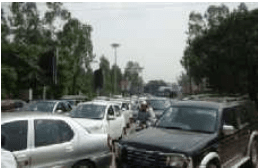
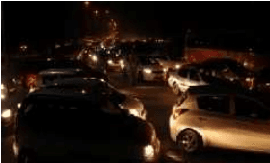
With the city now having the highest per capita ownership of motorised vehicles in the country, and a dramatic increase in daily floating traffic from the extensive urbanisation which has taken place around the city, Chandigarh today faces the very problems that the carefully designed original Plan was meant to avoid. Pedestrians and cyclists can no longer move around the city safely as the motor car has become the prime determinant for traffic regulations and barriers across roads. Road widening has been encroaching on pedestrian pathways and many open spaces are getting encroached for car parking.
Travel in the city has become more risky with accident rates having gone up. the number of persons killed in road accidents has also gone up. This has tended to impact the poor more severely as many of those killed or injured are cyclists’/pedestrians. Increased use of personal vehicles has also lead to air pollution.
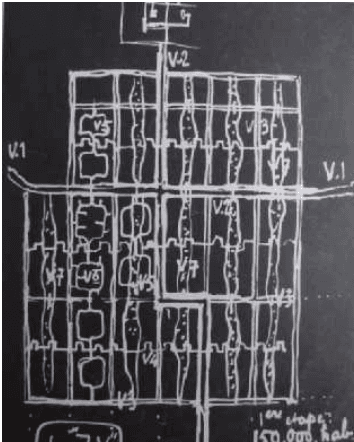
SKETCH BY LE CORBUSIER SHOWING 7V CONCEPT
12.2
REGIONAL CONNECTIVITY OF THE CITY
土
The city has good connectivity with the other surrounding region by road, rail and air.
Road connectivity
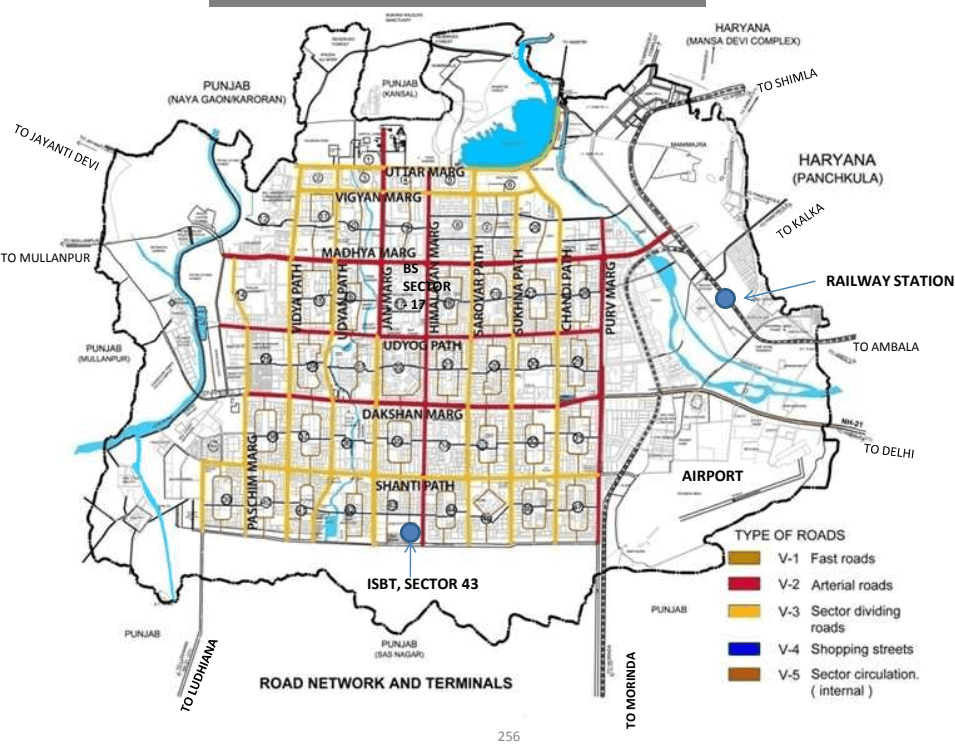
Chandigarh is well connected with the national capital by NH-21 which passes through the city. The four laning of the highway and the construction of a number of flyovers and bypasses has made it a fast travel corridor reducing travel time considerably. The city is also well connected to the major towns in Punjab, Haryana and Himachal Pradesh by road.
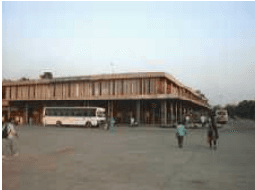
BUS STAND, SECTOR-17
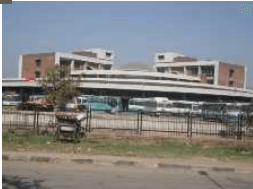
INTER STATE BUS TERMINUS, SECTOR-43
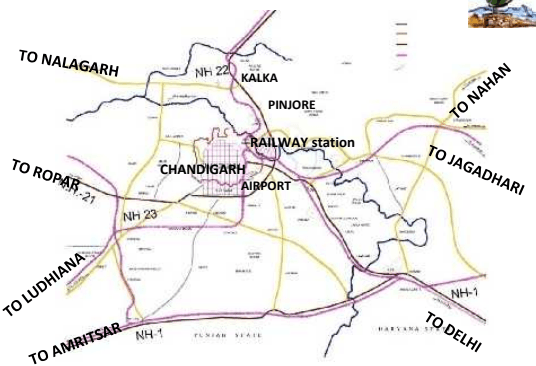
MAP SHOWING REGIONAL CONNECTIVITY
The recent upgradation of the National Highway – leading to Shimla and the construction of a bypass around the towns of Pinjore and Kalka have removed the major traffic bottleneck in the road to Shimla .
The Inter State Bus Terminus (ISBT) in Sector 17 was the main ISBT for a number of decades till the recent construction of the ISBT in Sector 43. The new ISBT provides Interstate bus connectivity on all routes except for a few long route buses plying from ISBT Sector-17. The ISBT in Sector 17 will eventually be used as a local bus terminus.
Railway Connectivity
The rail connectivity to the city is through twin track railway lines from Delhi and Mumbai upto Ambala , a single track broad gauge thereafter upto Kalka and a narrow-gauge single track between Kalka and Shimla having heritage value. The recently built single track Chandigarh to Morinda railway line provides rail connectivity to Punjab.
Besides serving the city, Chandigarh‘s railway station located in the north-eastern periphery of the city near the Industrial Area also serves the goods and the passenger traffic of the neighbouring region including the towns of Panchkula and Mohali. Direct access to the railway station from the Panchkula side has been facilitated.
With the increase in the frequency and number of trains together with faster speed and greater comfort, rail has become an important mode of transport.
Air Connectivity
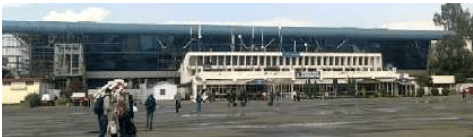
Located on the south eastern corner of the city and built in the fifties, Chandigarh’s airport remains under the Ministry of Defence but also serves as a domestic airport. Over the years, direct flights to Delhi, Mumbai, Jammu, Srinagar, Jaipur, Leh and Bengaluru have been introduced with a daily footfall of around 2,000 passengers at the local airport. The proposal to start international flights has been under active consideration for some time.
A new, fully air-conditioned terminal building, equipped with modern facilities, has been built recently with a capacity to accommodate 500 passengers at a time. Chandigarh’s airport today is among the best airports in the country in the category of B class cities.
The airport is in the process of being further upgraded as an international airport as a joint venture of Punjab, Haryana and the Airport Authority of India on 300 acres of land in Punjab.
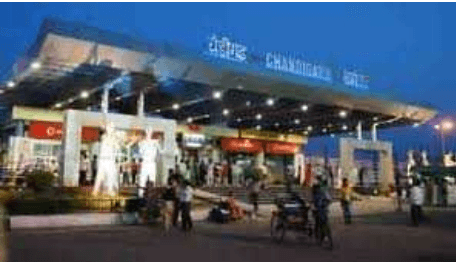
CHANDIGARH RAILWAY STATION
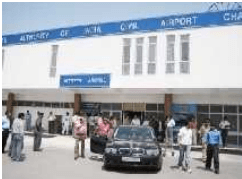
OLD TERMINAL OF CHANDIGARH AIRPORT
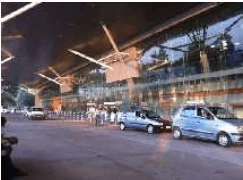
NEW TERMINAL OF CHANDIGARH AIRPORT