This section presents key inferences based on close analyses of the demographic situation of the Study Area to position it in the correct perspective.
“91% of the Study Area is rural as per Census definition.”
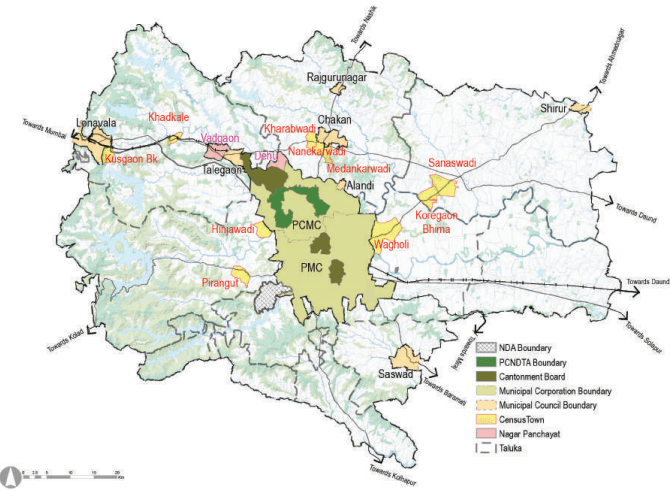
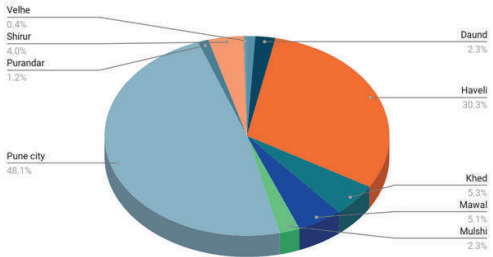
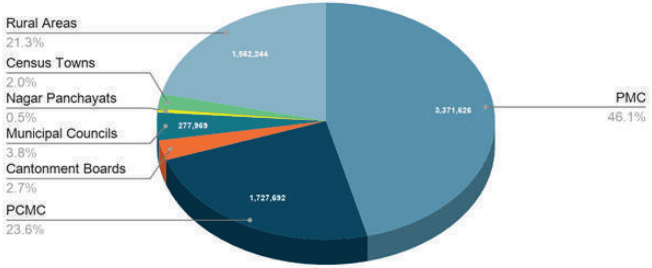
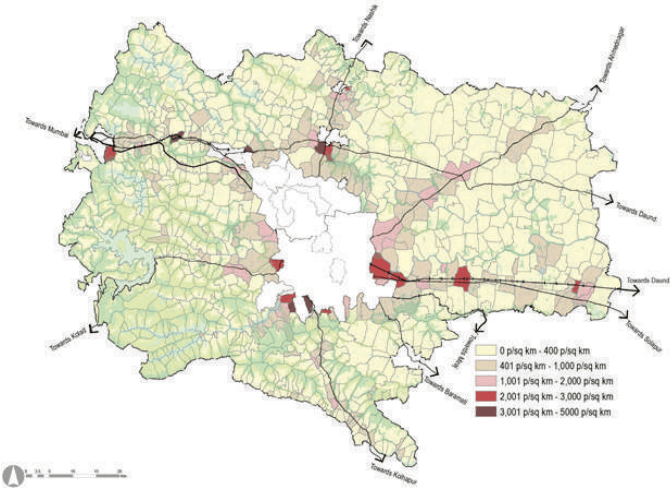
As per 2011 Census, about 18.15% of the district’s population resides in Study Area out of which 91.29% is rural population. Considering the definition of Census Towns (CT), the villages are considered urban if their population is greater than 5,000, main male workforce outside agriculture is >75%, and population density is >400 p/sqkm. Within the Study Area, Bhor, Velhe, Daund, and Purandar are entirely rural as per the above criteria. Mulshi taluka shows the highest urbanisation level (15%), whereas Khed, Mawal, Shirur talukas show urbanisation levels between 9-12%.
However, aerial imagery and existing land use reveal the number of rapidly urbanising villages and applying census definition alone may not reveal the real growth trend in the Study Area.
“In reality, the Study Area is rapidly urbanising, out-pacing the rural population growth rate.”
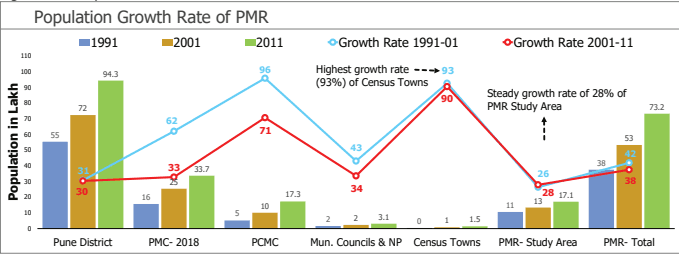
The average decadal growth rate of urban population in the Study Area was 90% between 2001-11. This decadal growth rate is higher than that of PMC (33%) and PCMC (71%) during the same period. PMC’s declining population growth rate can be attributed to the increased cost of living, high land prices, sluggish natural growth rate, congestion and declining quality of life. Spin-offs from this trend can be seen as an increase in urban population around its immediate fringes, i.e. urbanising villages of Study Area and PCMC.
The Study Area has excellent potential to urbanise with emphasis on offering the best “Quality of Living” to benefit from present demographic growth trends within the region.
“Favorable Sex Ratio for demographic growth but weaker Literacy Rates for development.”
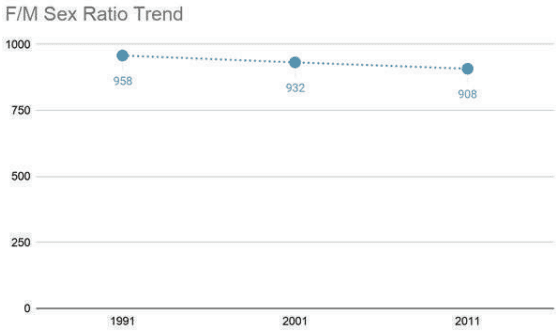
Sex ratio is commonly defined as the number of females per 1,000 males in the population. Within the Study Area, the sex ratio has been declining, which could be attributed to largescale migration of male workforce into the
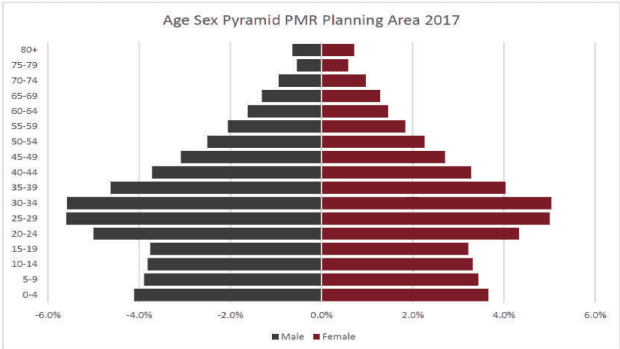
region post-2001. The Study Area shows a higher number of females compared to urban areas. It has favourable sex ratio in comparison with MMR. Age-group wise distribution is studied at District level since Census 2011 data is limited to age group 0 to 6. Age-group pyramid indicates a favourable situation with a broad base of the young and working-age population.
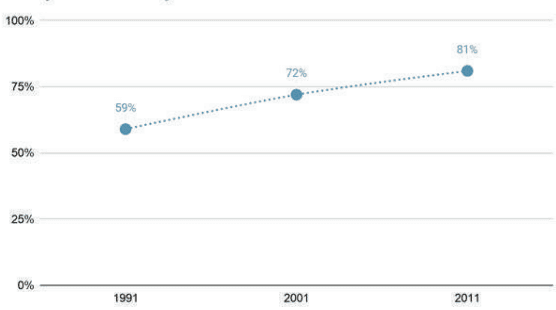
However, Literacy Rate remains a key concern since it is lowest in the Study Area. CTTS Household Survey reports 91.1% literacy rate with about 25%, 32% and 22% of the population being educated up to 5th, 10th and 12th class respectively. The lack of educational infrastructure, accessibility, and efficiency could be few contributors to lower literacy rates. As most of the working-age group is educated up to 10th-12th Class, vocational training holds immense importance for skilling of youth and re-skilling of elderly workforce. It would also support major employment generators such as SME, which grapples with sourcing local semi-skilled/skilled tertiary workers which is understood from interaction with industry associations.