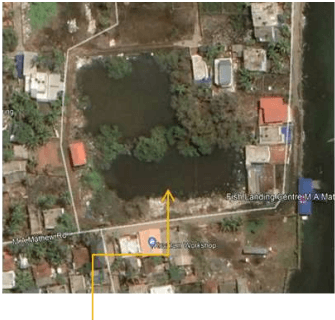
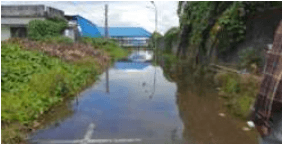
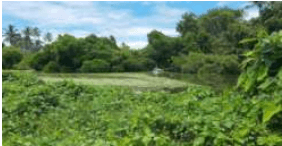
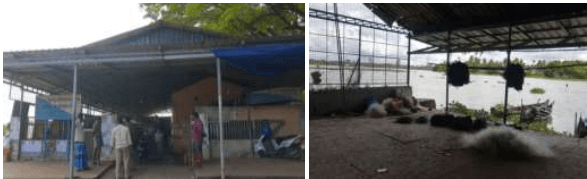
The existing drainage network including the Canal system and water bodies need to be restored and renewed. These ponds should be protected to retain their drainage properties.The width of the canals are to be measured as per records and need to be widened to the earlier width wherever possible. The following canals need to be rejuvenated:
a. Renovation of Polakkandam Market Canal: The Polakkandam market canal which is a part of Rameswaram Canal needs to be cleaned and side protected. Screens are to be placed at different parts of the canal for bigger wastes to accumulate which are to be removed regularly. The canal also needs desilting and restoration to original width.
b. Renovation of Mullassery Canal: Mullassery Canal forms the core of water logging in the city area including KSRTC Stand. The Mullassery canal is to be rejuvenated through integrated blue green infrastructure for flood mitigation and street scape improvements. This project is to be integrated with water management & flood mitigation, Bio diversity planning, mobility planning, canal edge development, sustainable livelihood plan, open public space planning, coastal edge development along with engineering measures mainly for slope correction.
149
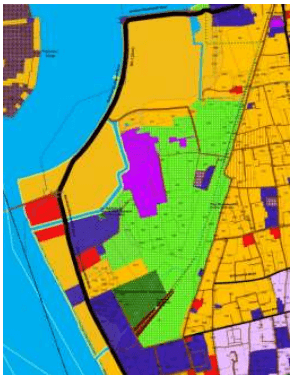
Effecting natural drainage to the nearest outlet is the most viable solution for preventing flooding up of water in KSRTC/ South Railway Station area. Excess water from the GHS School for Girls is directed to the Perandoor canal. The bed level of Mullassery Canal has to be lowered to the bed level of nearby Perandoor canal about 1.25 m to facilitate the un-obstructed flow of water. The Mullassery canal is proposed to be opened up. The opened up section of the canal is widened and connected to parks on both sides. The park alternates low lying wetlands to encourage bio-diversity and allows for permeability with higher sections that can be re-wilded and programmed for social activity. To manage water in the KSRTC stand area, large water holding areas are to be created. Here the local catchment options are used to slow down the speed of flow, store and route excess run-off to reduce floods. Large sections of the KSRTC plots are excavated to hold water during flooding. These are designed as tanks or landscaped as floodable parks and the excess water is then pumped back into the Mullassery Canal and to the Perandoor canal through multiple pipes across the railway lines once the rain subsides. All developments on the KSRTC plots are to be raise above the 100 year flood line. The rail culvert connecting Mullassery Canal and Perandoor canal is to be kept free of obstruction as this is a juncture point of many water bodies and drains.
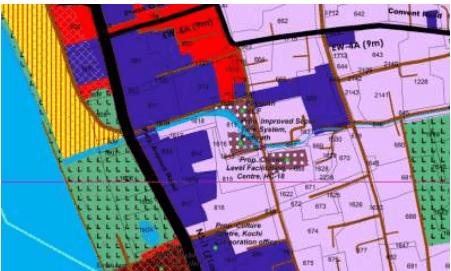
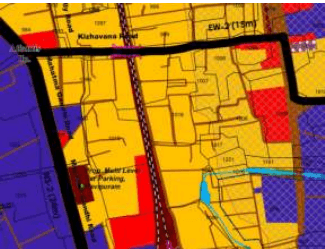
Figure 32:36 Mullassery Canal area
Hospital road and MG Road which are the collector streets are provided with rain gardens and tree pits to collect water from the streets and surrounding run – off. These blue – green infrastructure helps the existing storm water drain from getting overwhelmed by delaying the water. This helps to slow down the run-off before the water is released into the canal in case of cloud burst event. The project should also include community initiatives for effective waste management of communities on the banks of Mullassery Canal.
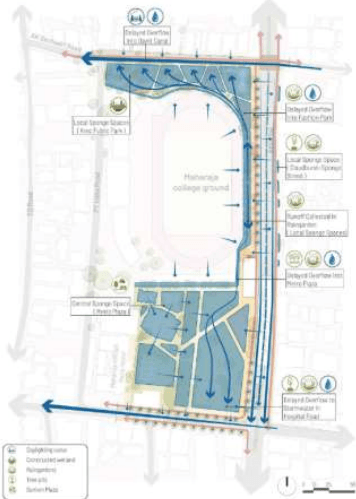
Figure 32:37 Integrated water management and flood mitigation strategies for sub-site as per Concept Plan for Mullassery Canal Area Source: GIZ, India for Kochi Municipal Corporation
Kochi Municipal Corporation
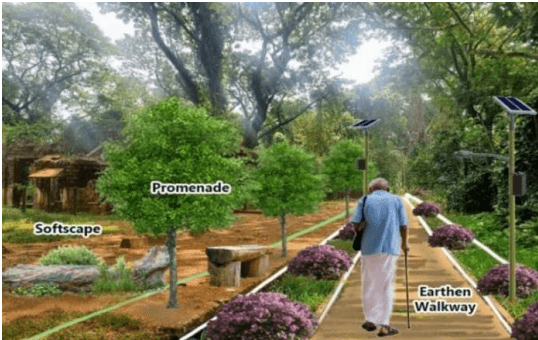
c. Renovation of Thevara Market Canal: Thevara Canal that runs along the Thevara market requires desilting and side protection. Effective community spaces are proposed along the banks of this canal including canal beautification and promenade development.
d. Renovation of Thevara Perandoor Canal (TP): ThevaraPerandoor canal requires silt removal especially between the Perandoor ROB and backwaters. The blockage of pipe culverts needs to be removed near the CBI quarters. Cables, ducts and pipes across the TP canal causing obstruction to the free flow of water needs to be shifted. TP canal is also linked through the backwaters through a system of link canals. These link canals need from Vaduthala to Atlantis hotel needs to be opened and cleaned. The boundaries of the canal have to be surveyed as per the revenue records and have to be brought back to its original shape. The Edges of the canal is to be beautified and preserved. The span and height of culverts especially in the Panampilly Nagar area, Pulleppadi – Kaloor area has to be increased. The storm water from MG Road has to be diverted directly into Kayal near shipyard area so that the water load of the TP Canal can be minimized. The mouth of the branch canal should be widened at Mullassery Canal Junction to avoid flooding in Kammattippadam area.
a. Connection of Changadampokku Thodu and Karanakodan Thodu at Kaloor: The Chilavannur canal needs to be fully opened and the connection of parts of the Chilavannur canal i.e. Changadampokku Thodu and Karanakodan Thodu is to be restored at Kaloor Metro Station to ensure the uninterrupted flow of water. This connectivity should be restored atleast by constructing a drain having minimum width of 4m from the sub-station compound by crossing Banerjee road adjacent to the JLN Stadium metro station so as to facilitate the flow of water in either direction. The width of the thodu is to be restored to original width. The canal banks are to be protected from encroachment. Existing culvers having no head room and vent way has to be reconstructed. Interlinking of parallel canals wherever possible to facilitate the natural flow of water for easy drainage. Providing high capacity pumps with shutter arrangements helps to drain out flood water to the lake so as to combat tidal variations.
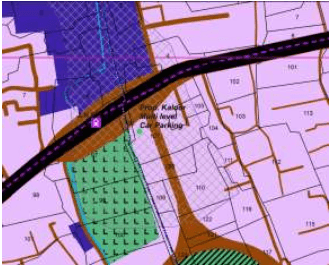
Figure 32:38 Connection of Changadampokku Thodu and Karnakodan thodu
Kochi Municipal Corporation
The rivers & lakes encompassing the main lands have to be desilted regularly in order to accommodate the flood water. Water storage capacity of Perendoor canal and Chittor puzha shall be increased by desilting so as to reduce the travelling time of runoff water to kayal and to reduce the tidal inflow of water towards the thodu.
b. Restoration of Konthuruthy river and rehabilitation: The Konthuruthi river whose width has drastically reduced needs restoration to the original width. Desilting has to performed and delta formed at the end needs to be removed. The obstructions in the course of the channel also need to be removed. The pipe culverts provided under the thodu causing hindrances to the smooth flow of water needs to be removed and a culvert having necessary width and clearances need to be constructed. This area can be developed as a community space. The families along the river needs to be resettled and the encroached area is to be regained for the canal.
c. Renovation of Edappally, Chilavannoor and Market Canals: The Edappally, Chilavannoor and Market Canals are to developed through canal bank infrastructure development, Canal cleaning, canal widening and canal shore protection. Parks and other public places are to be set up along the banks of the canal to prevent the encroachment.
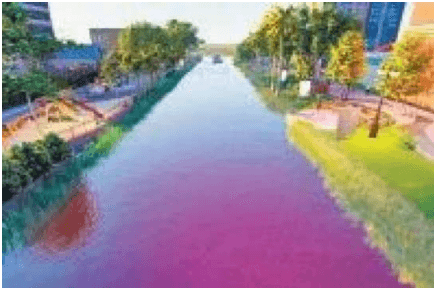
Figure 32:39 Canal bank infrastructure development of Edappally Canal-conceptual sketch Source: IURWTS Detailed Project Report, KMRL
The desiltation and rejuvenation of Canals in West Kochi area like Rameswaram Canal, Mantra Canal, Pallichal, Pashni thodu and Pandarachal that forms the life lines of canal network in West Kochi area also need to be carried out.
Considering the future generation of waste water and the high water table of Kochi Municipal Corporation, it is imperative that it should have a waste water treatment mechanism. With the unique to topography as well as interaction between various parts of the city a decentralised water treatment mechanism is proposed. In –situ liquid waste
Kochi Municipal Corporation
management systems like septic tanks and soak pits are not suitable to Kochi Corporation area mainly due to high water table, high population density and due to the risk of contamination of other bodies. So it is imperative that we need to move gradually to piped sewer system and decentralised collection of sewer.
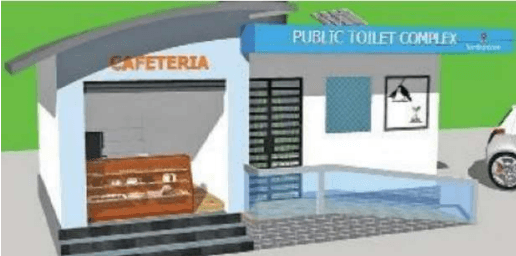
Presently various schemes are being carried out in the corporation for carrying out the sewage treatment. These schemes are also integrated with the proposals.With better utilization of solar energy sources and IT based sensors for the operation of the plant, the operational cost can be reduced and the projects can be made eco- friendly. Absence of neat and clean toilets with proper signage and markings are proposed. Major proposals are detailed below:
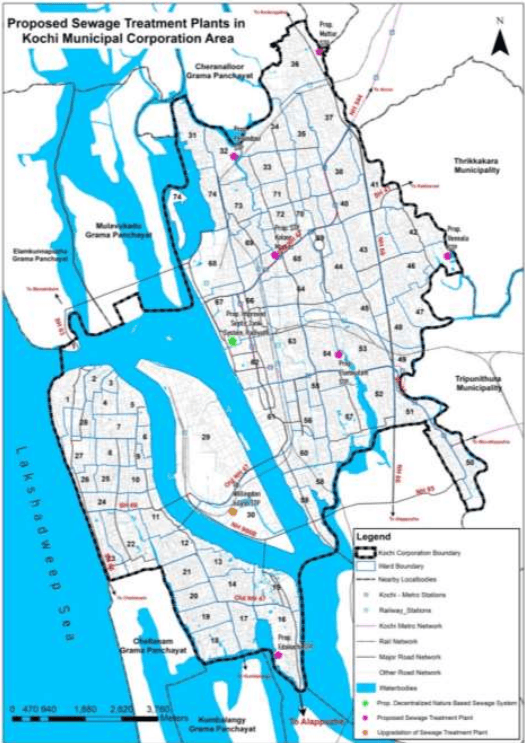
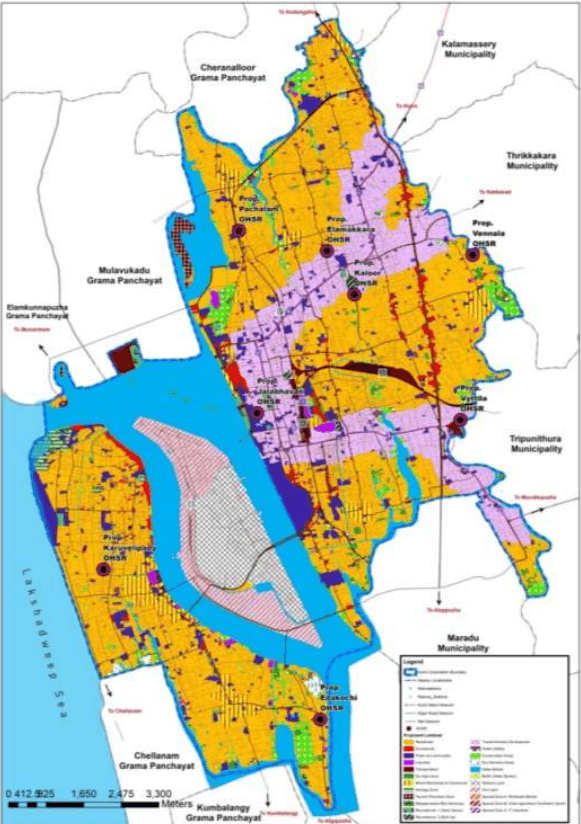
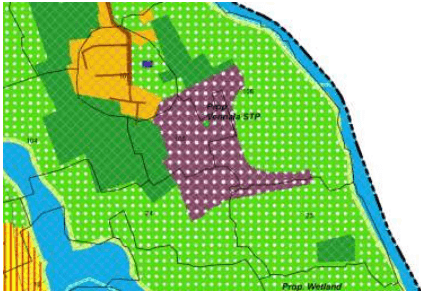
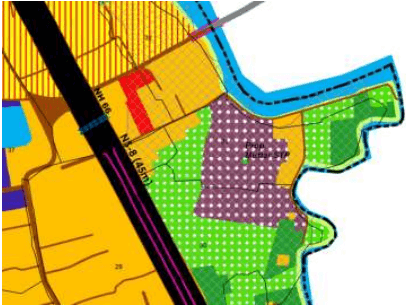
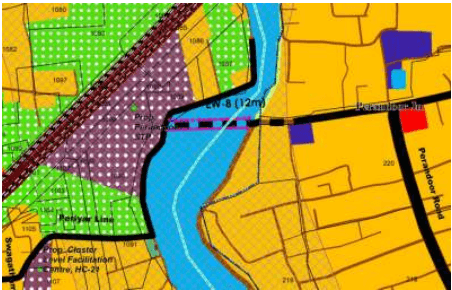
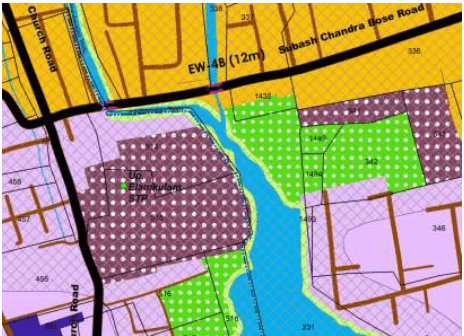
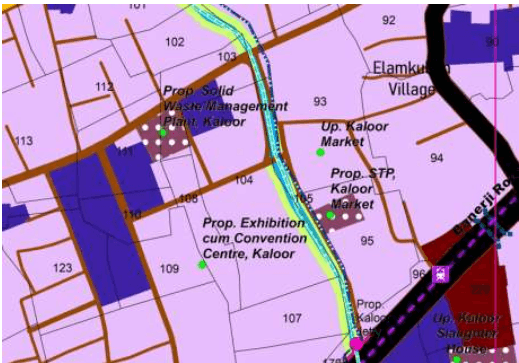
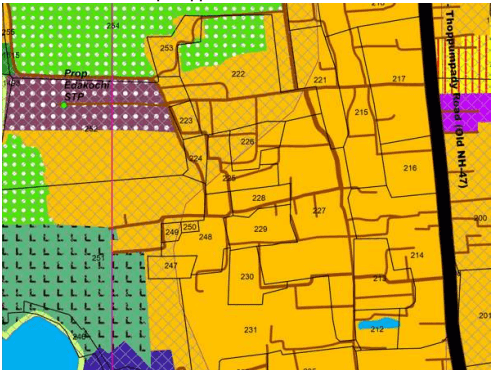
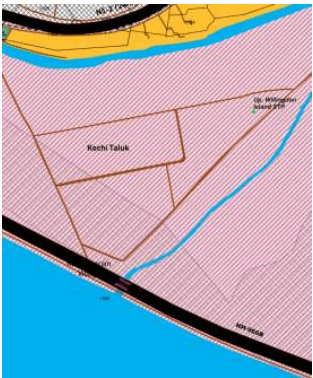
Figure 32:40 Location of Proposed Sewage Treatment Plants Source:Generated by LSGD (Planning)
Kochi Municipal Corporation