• Easy access to fresh, nutritious food for lower income consumers, and income generation potential.
Kochi Municipal Corporation
• Supply to urban food markets, street food and food processing, providing additional employment and income
Water harvesting, water re-use, and urban wastes re-cycling to provide water, animal feed and fertilisers to provide for the requirements of urban agriculture
Integration of urban agriculture with urban greening programmes which can reduce urban pollution and temperatures, improve micro climate as well as offer recreation opportunities to improve quality of life for all urban residents.
• Provides opportunities for leisure, community cohesion, environmental education and social inclusion.
To promote urban agriculture as an efficient tool to help manage city’s waste thereby improving food security at the neighbourhood and city level and also improving environmental quality in the city.
Land policies in and around cities need to be designed in such a way that it accepts agriculture as a legitimate usage of land.
• At policy level Urban Agriculture should be given proper recognition and appropriate legal framework. It is necessary that an institutional home is created for Urban Agriculture which encourages inter-departmental commitments.
• Strong enforcement of planning norms in the urban and peri-urban areas is needed to prevent illegal conversion of agricultural land. Tax on vacant plots and houses to prevent unproductive use of land.
• Setting up schemes for leasing vacant plots for cultivation and encouraging the use of roof tops and backyards of houses and apartments as well as premises of schools and other institutions for farming are some of the ways space can be found for urban farming.
• Homeowners with space in their backyards or rooftops where they want to farm but are unable to do so themselves must be connected with people willing to grow food there for a fee.
Builders, housing societies and individual owners must be encouraged and given technical support to include edible plants and fruit trees as part of their landscaping. Tax incentives can also be given to housing colonies and apartments to undertake landscaping that includes fruit trees, vegetables, herbs, etc.
GIS based land records should be maintained on available land resources which can be brought under cultivation and where already cultivation is being carried out. Land parcels lying vacant for more than three years have to be demarcated and steps should be initiated to bring them under the productive landscape.
Recognize Urban Agriculture role as an interim land use. In this way land that has been allocated for major projects like road development, construction etc. can be used in the interim period for cultivation.
Programs like farm to school which initiates compulsory inclusion of farming in the school curriculum and school compounds should be encouraged. The nodal agency can start initiatives to bring in public and private institutions for cultivating within their compounds through Department of Agriculture programs and incentives.
Kochi Municipal Corporation
SECTORAL PROPOSALS
• There should be proper legal framework to lease or rent farmland.
• Provision for Urban forests in KMBR to be followed strictly.
Urban Agriculture at City Level
• House hold – Green roofs/balconies, green houses, etc.
• Vertical farming
• Institutional cultivation at schools, public and private offices parks, vacant plots etc.
• Community gardens with organic farming involving Residents associations.
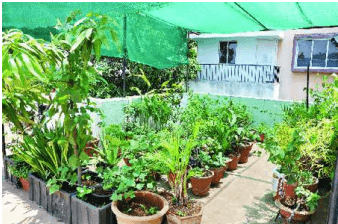
Urban Agriculture at Periphery Level
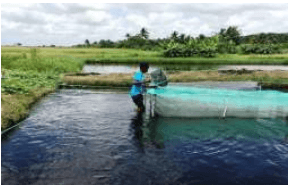
• Pisciculture, aquaculture at wetlands.
• Agricultural tourism, farmsteads etc. can be promoted in the zones
• Group farming
• Farmer outlets can be designated to sell the produces within the city limits (at markets and city periphery)
Urban Agriculture at Corridor Areas
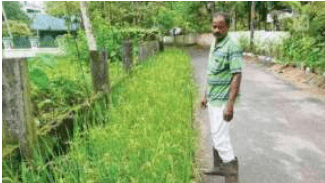
Agriculture at arms of Transport corridors and railway lands can be adopted which are lying vacant. This could be done with the active participation and guidelines from railways, high authority, PWD etc.