High-tech farming is an alternative to derive high incomes from small sized holdings due to the attractive crop productivity they offer. These practices involve farming under controlled conditions such as greenhouses, shade net houses, and plant
protection nets. This can be promoted in city areas, where the land availability for conventional farming is less.
Method such as Tunnel technology, Hydroponics Farming and Vertical farming may be introduced and free training and subsidised supply of materials can be provided in an organized manner.Water logged land can be developed into rain water harvesting locations. These areas can be encouraged to incorporate pisciculture activities. The agriculture lands should have strict use of pesticides it would be ideal if only organic cultivation is allowed in these areas.
Proper waste management programs should also be initiated in these agricultural lands such that the community could also benefit. Biogas plants in these farms can also assist the residents by allowing them to dispose their household wastes too. The best mechanism which could be suggested in farms is 119reas -compost plants.
For the effective management and coordination within a city it is advisable to form a nodal agency whose functions can roughly be defined as following:
To integrate schemes at state and central level
• To organize technical and research institutions and coordinate their services available.
To identify waste and fallow land available within the urban areas.
• To manage the land leased ad donated by private parties or individuals.
• To act as a nodal agency in the distribution of these identified land resources among the registered interest group.
To identify stakeholders involved in the participation in Urban Agriculture like schools, public institutions, residence associations, volunteer groups and NGO’s etc.
To provide services to the cultivators i.e. machinery from Krishibhavans, Soil testing at KVK and KAU, Seed samples and kits from KSSDA, DoA etc.
• The nodal agency can also be involved in the distribution of cultivated products and saplings.
• It can have a panel of advisory and administrative members who can review the progress and come up with innovative ideas for future development.
The nodal agency can also have a wing for record keeping and monitoring. These records can be used to identify the meritorious and can be used to distribute the incentives to the participators.
Programs under the state and central government which subsidizes tools, machinery, biogas plants, rain water harvesting tanks, greenhouses construction etc. could be coordinated through the agency and distributed to the participants. Tax incentives, low interest loans etc. for cultivators can be sanctioned, if certified by the nodal agency based on their prospects.
• The agency can also initiate city wide green club meetings to bring in more people into the programs.
Kochi Municipal Corporation
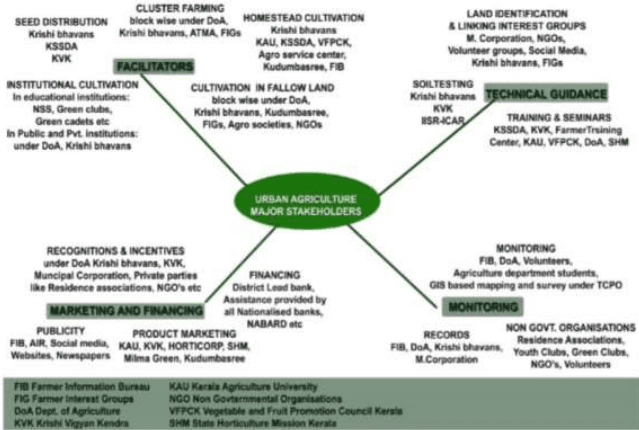
Figure 32:14 Stakeholders for Urban Agriculture in Kochi Source: LSGD (Planning)
Urban agricultural activities are to be linked with other sectoral proposals making it a more viable and productive activity, at the same time achieving food security at the local level.
Treating the waste water to a level that makes it reusable for crop production, will help close the loop in urban water management. Grey water can be used without much treatment for irrigation. Set up decentralised waste water treatment plants and make treated water available for farming.
Biodegradable wastes can be utilized for agricultural activities and energy generation at the neighbourhood level itself decreasing the load on the solid waste management facilities. The following figure will indicate the prospects of neighbourhood level urban gardens in the city:
Kochi Municipal Corporation
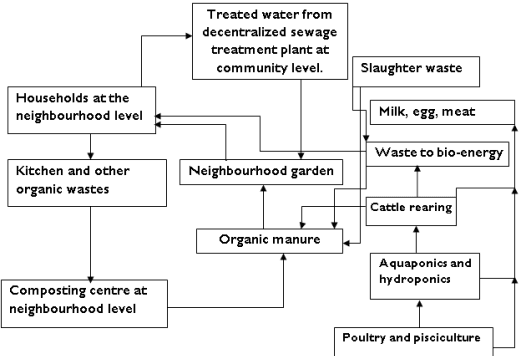
Figure 32:15 Neighborhood Garden and its Inter-Sectoral Linkages Source: LSGD (Planning)