The Kochi Metro rail transit corridor selected includes a length of 16.96 km consisting of Phase I - Edappally to Petta (14.77 km) and Phase II - JLN Stadium to Palarivattom Bypass (2.19 km) Metro Stations. The metro line passes roughly through the center of Banerjee Road (Aluva – Ernakulam Road), MG Road, Sahodaran Ayyappan (SA) Road and Vaikkom Road for most of its length except for a few deviations like Madhav Pharmacy Junction, Jos junction - Kadavanthra stretch and Vyttila Junction where the metro rail deviates from the main road. At the Jos junction, the metro line deviates from the MG road and enters the railway station road which then crosses the railway line and enters SA Road approximately 100 m before Kadavanthra Metro Station. When a 500 m radius from each of the metro station in the Metro Rail Transit Corridor is spatially analyzed, it can be seen that many of the influence area overlaps within the corporation area as seen in the Figure 32.1. Hence, a continuous stretch of land as indicated in the proposed land use map comprising of around 500 m to each side of Banerjee Road (Aluva – Ernakulam Road), MG Road (Madhava Pharmacy Jn to Pallimukku), Sahodaran Ayyappan (SA) Road and Vaikkom Road (Vyttila Jn – Corporation Boundary) is proposed as TOD zone (with width varying based on physical conditions, revenue divisions, walkability/access and such other factors) with a total area of 10.84 sq.km. In such cases, giving practical considerations to include maximum mixed- use areas and to provide a continuous stretch, minor deviations from the main road are not taken into consideration
71
URBAN REFORMS
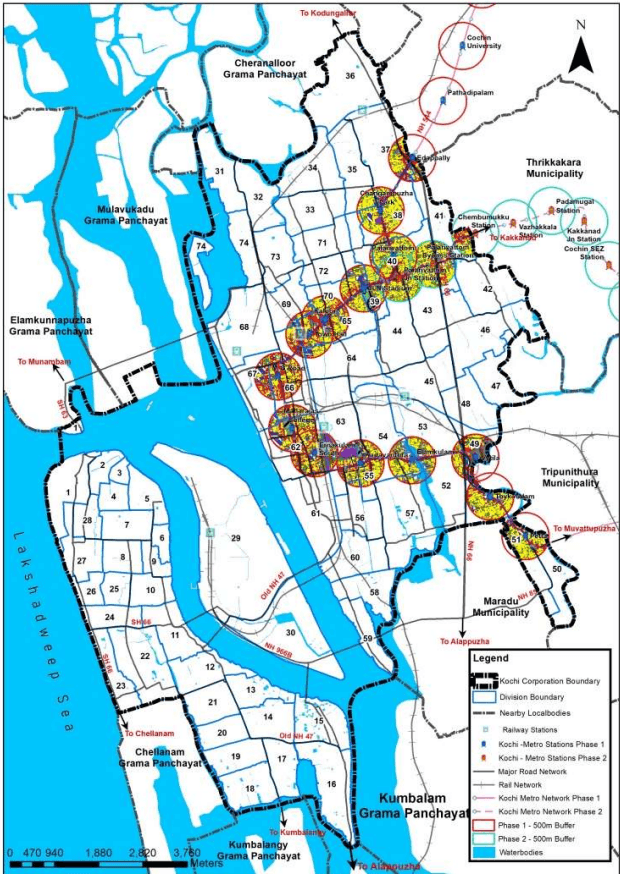
Figure 30:1 Metro Station Influence areas Source: Generated by LSGD (Planning)
Figure below shows the identified Transit Oriented Development Corridor in Kochi Municipal Corporation area and this corridor is termed as TOD zone.
Kochi Municipal Corporation
URBAN REFORMS
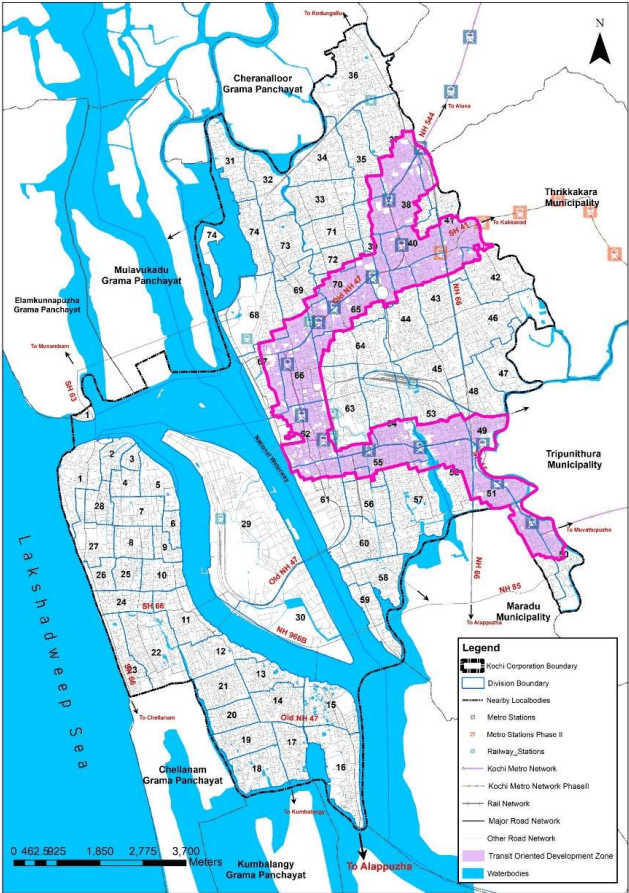
Figure 30:2 Transit Oriented Development Corridor Source: Generated by LSGD (Planning)
Currently the density along the metro corridor is low. In these land use zones; mixed land use can be allowed throughout with preference given to vertical mix use. However,
Kochi Municipal Corporation
URBAN REFORMS
horizontal mixed land use should also be allowed given that any new vertical mixed use coming up in these use zones must be guided by the TOD guidelines for the zones. Since the transformation from current low density single use development to vertical mixed use may be dependent upon market forces and timeframes, adequate mix of uses are encouraged in the TOD zone.
Major benefit in the TOD zone include additional floor space index that helps to achieve the best possible use of the land in TOD area which otherwise is not possible as per KMBR. Other benefits include relaxation in parking which helps to achieve better land utilization, better transit facilities and multi – modal connectivity that creates improved livable work spaces which attract more people.
Densification of TOD station areas and accommodating maximum population and employment within the TOD corridor area through infill development and/ or redevelopment is suggested to be given priority over the developments in the suburbs. For achieving higher FAR, it would be desirable to incentivize amalgamation of plots.The Regulations to be adopted in the implementation of TOD includes encouraging small land owners to amalgamate their plots and giving incentives for plot amalgamation, Controlling the FAR inside and outside the TOD zone, relaxation in parking requirements, ensuring an affordable housing mix and facilities to provide last mile connectivity/ Non – Motorized Transport.
The general guidelines and development control regulations in the TOD zone are discussed in detail along with the Development Control Regulations. The Municipal corporation may also take initiative to constitute a suitable mechanism governed by a body involving Mayor and Secretary of Kochi Municipal Corporation, Managing Director of KMRL, the Senior Town Planner of District unit of LSGD(Planning), Superintending Engineer (PWD Roads) and any other expert members to coordinate and facilitate various activities for the materialisation of transit oriented development as envisaged in this plan.
The implementation of TOD provisions would pave way for making decentralized infrastructure provisions and management techniques which needs localized planning efforts as the character of various station areas are different. This is to be done through Local Area Plans. For detailing and implementing TOD provisions, Local Area Plans (LAP) may be prepared after the sanctioning of the master plan in a phased manner. Some provisions that may be explored while preparing micro level plans/schemes are suggested under:
(1) Bringing the yards, especially those with main road/transit corridor frontage under public domain to be considered to enhance mobility, especially walkability in the TOD zone. Parking on such front yard may be restricted / prohibited.
(2) Restriction/prohibition of compound walls on street abutting yards.
(3) There may be facility to public to use bicycle/NMT from parking station to the site.
(4) Connectivity to Transit stations through NMT, especially walking to be improved in the TOD zone.
(5) Reservation and creation of recreational open spaces to be considered in the TOD zone.
Kochi Municipal Corporation
URBAN REFORMS
(6) TOD zone may be made a Barrier Free Built environment for differently abled and elderly persons and universally accessible.
(7) Public parking, especially the on-street parking should be priced relatively high and properly regulated.
(8) The transit stations must be fairly connected with the other pubic modes of transportation in the TOD zone to ensure multi modal integration.
(9) Street oriented buildings and public spaces may be encouraged by establishing form based codes.
(10) Government/ Private organizations having offices in the TOD Zone can issue Universal Transit Passes which are linked to their Id cards which are valid on all public transportation modes.
(11) Carpools/ shuttle bus facilities should be provided by all government offices as well large trip generating private uses like malls, institutions, colleges etc to the public transit stations.
(12) In existing areas where pedestrian network already exists, the same should be upgraded and widened