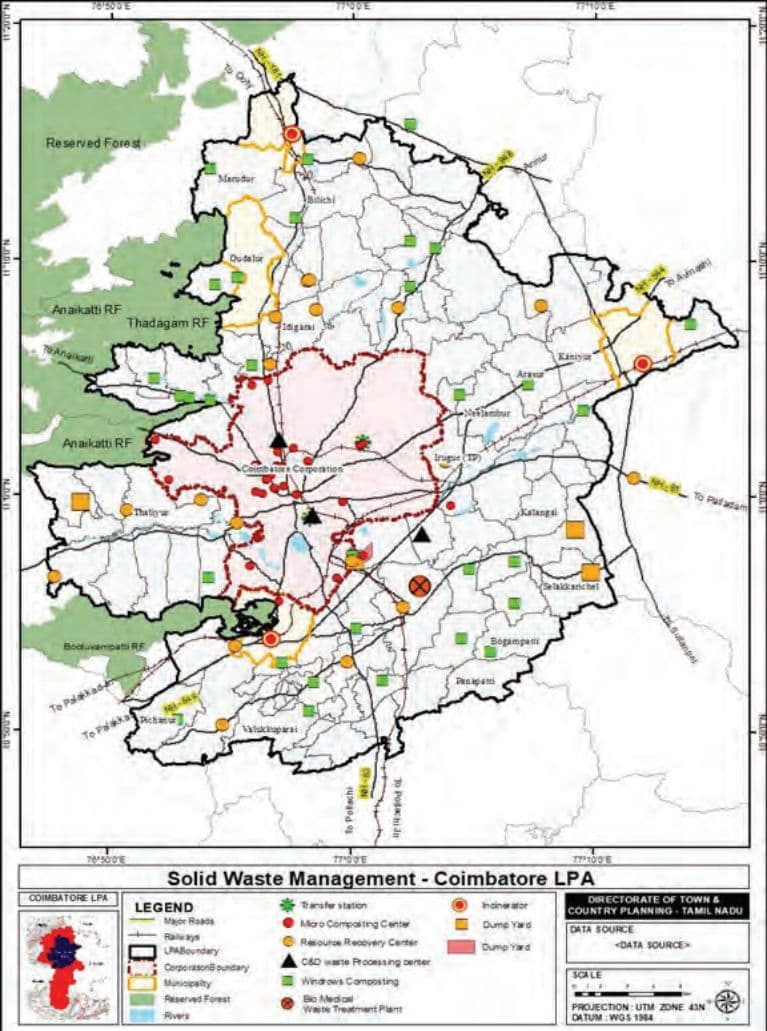
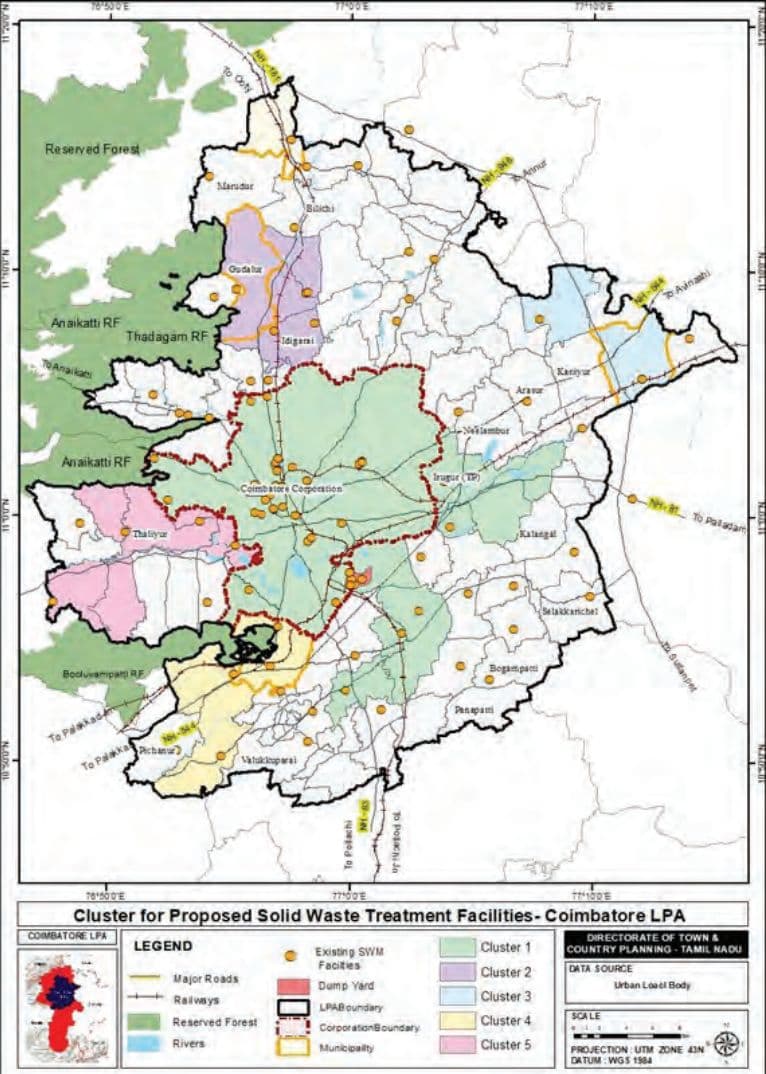
In order to obtain efficient Solid waste Management in Coimbatore LPA the following policies and strategies are proposed
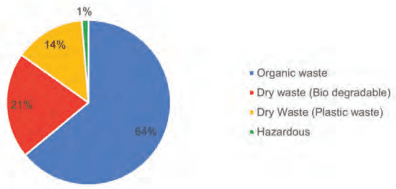
Adopting a Zero Waste Policy Framework: Implementing a comprehensive Zero Waste policy emphasizing the principles of Reduce, Reuse, Recycle, Recover, and Rethink. This approach mandates source segregation of waste into categories such as wet (biodegradable), dry (recyclable), plastic, and hazardous materials. It also promotes door-to-door collection and enforces Extended Producer Responsibility (EPR) to ensure effective treatment and disposal of waste.
Incentivization of Waste Collectors: Introducing a performance-based incentive for waste collectors to encourage the proper transfer of segregated waste to designated treatment facilities, including an extra incentive for non-degradable waste will reduce environmental degradation due to disposal of non-degradable waste. This strategy aims to enhance compliance with segregation norms and improve overall efficiency in waste management operations.
Promotion of Eco-Friendly Products: Encouraging the use of eco-friendly and biodegradable products among residents and businesses. Conduct awareness campaigns highlighting the environmental hazards of single-use plastics and the benefits of sustainable alternatives to foster responsible consumption patterns.
● Implementation of a Digital Monitoring Platform: Developing an online platform equipped with
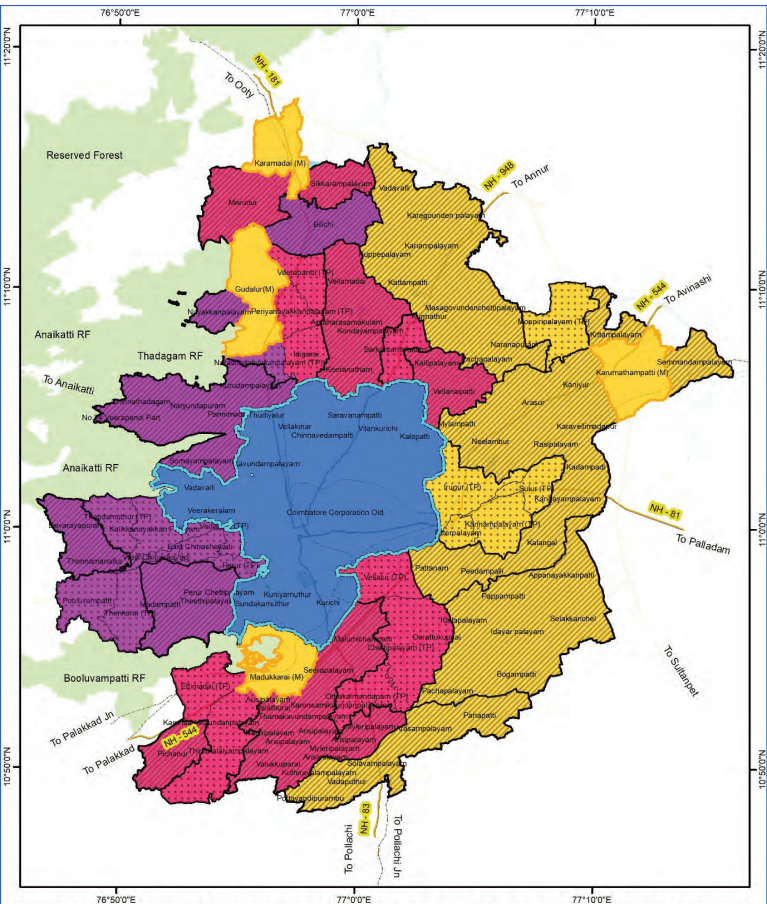
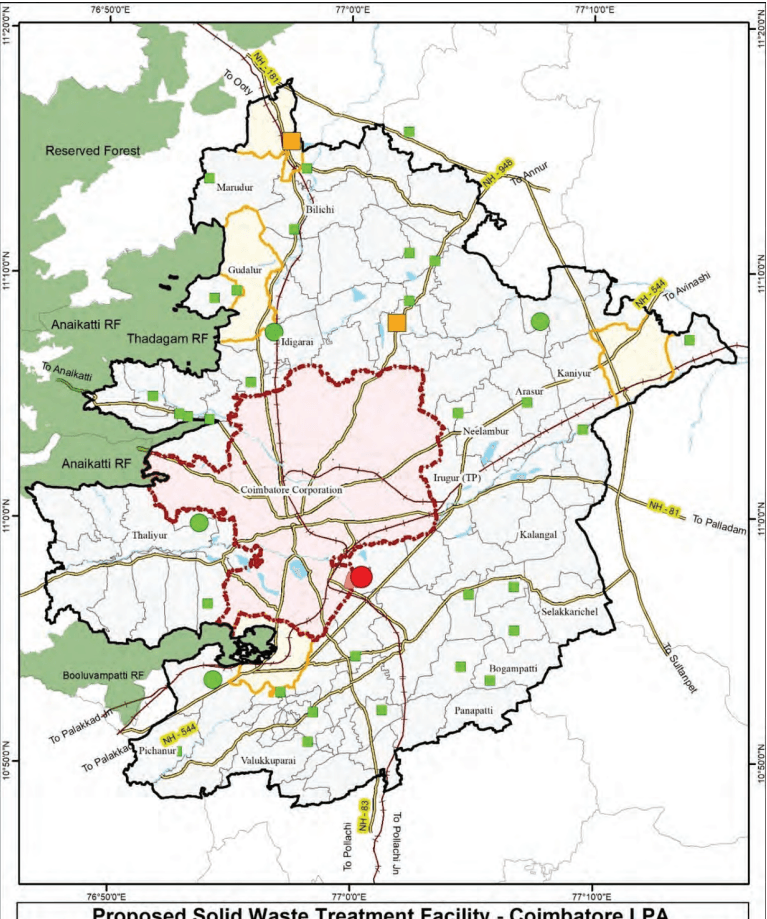
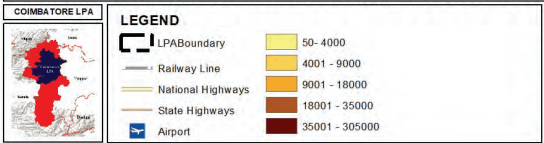
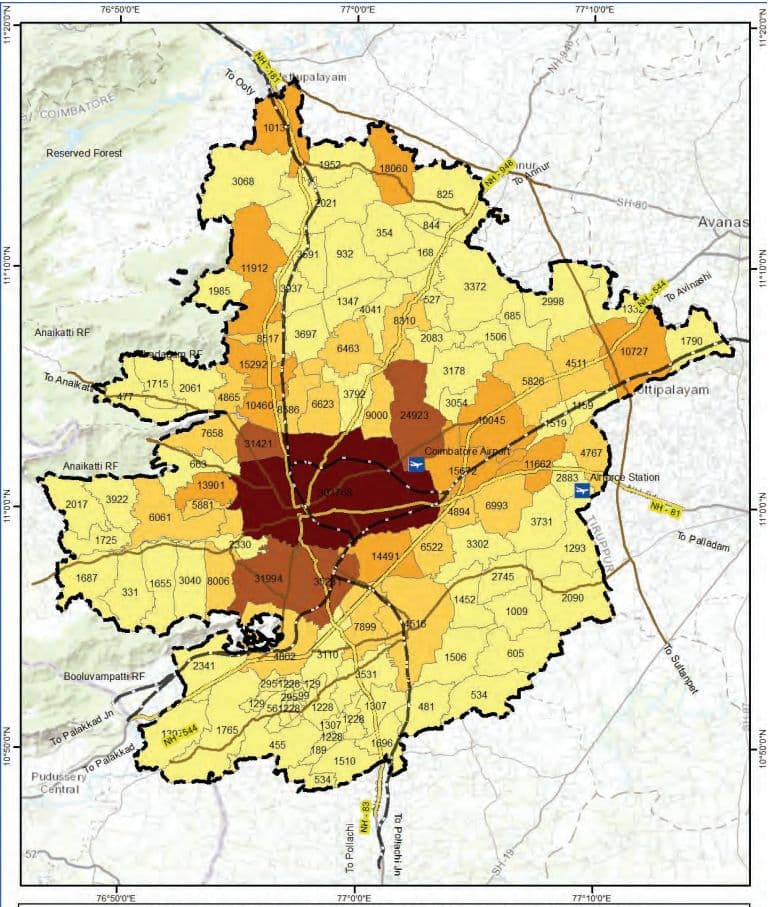
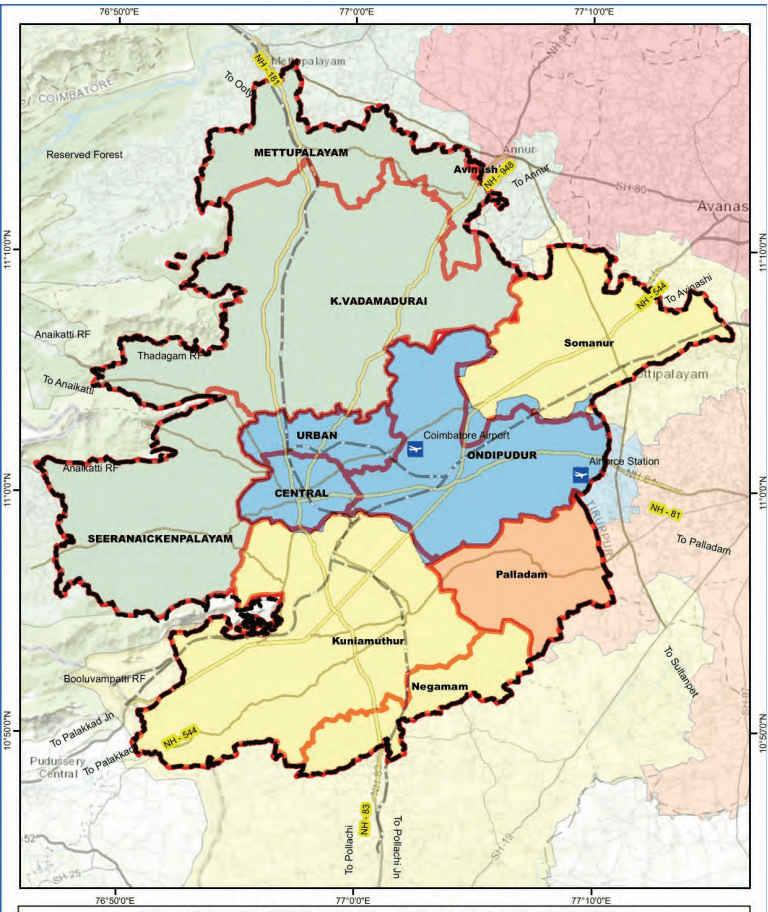
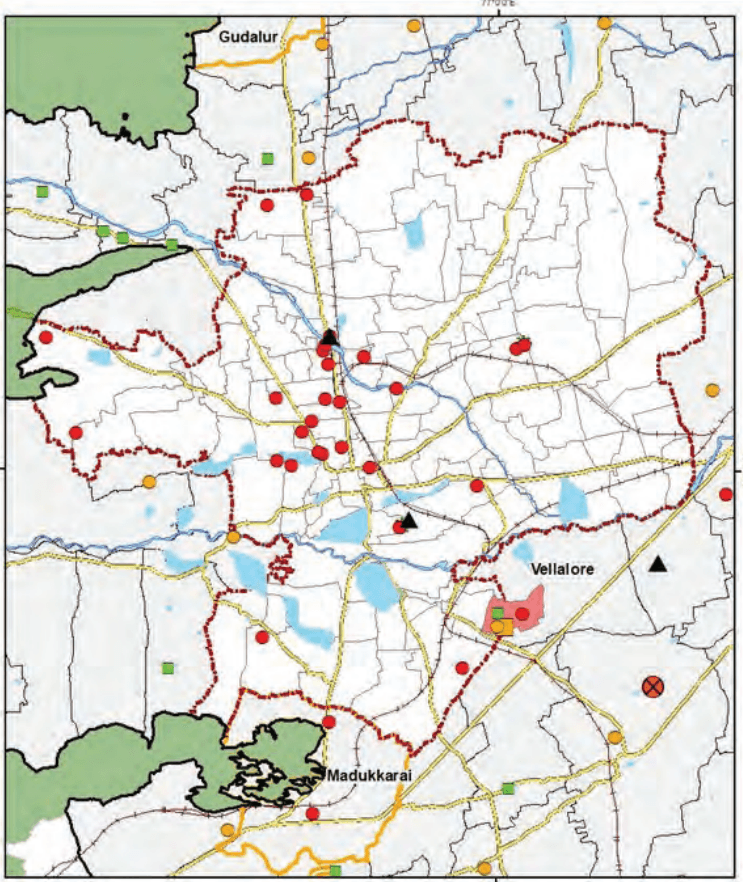
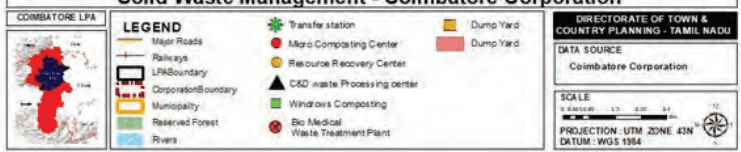
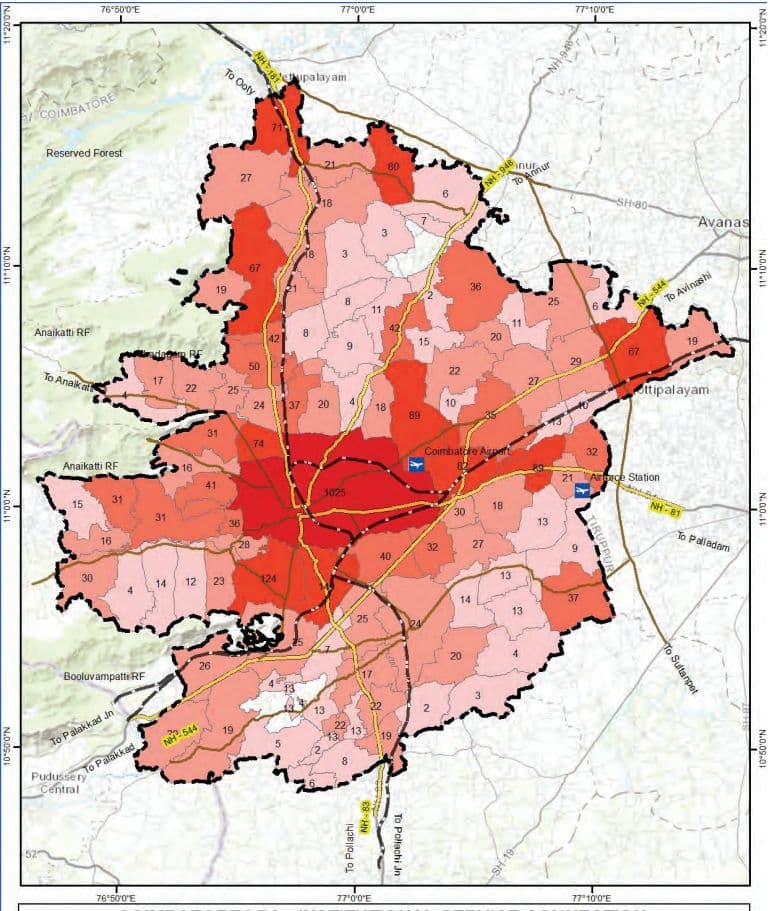
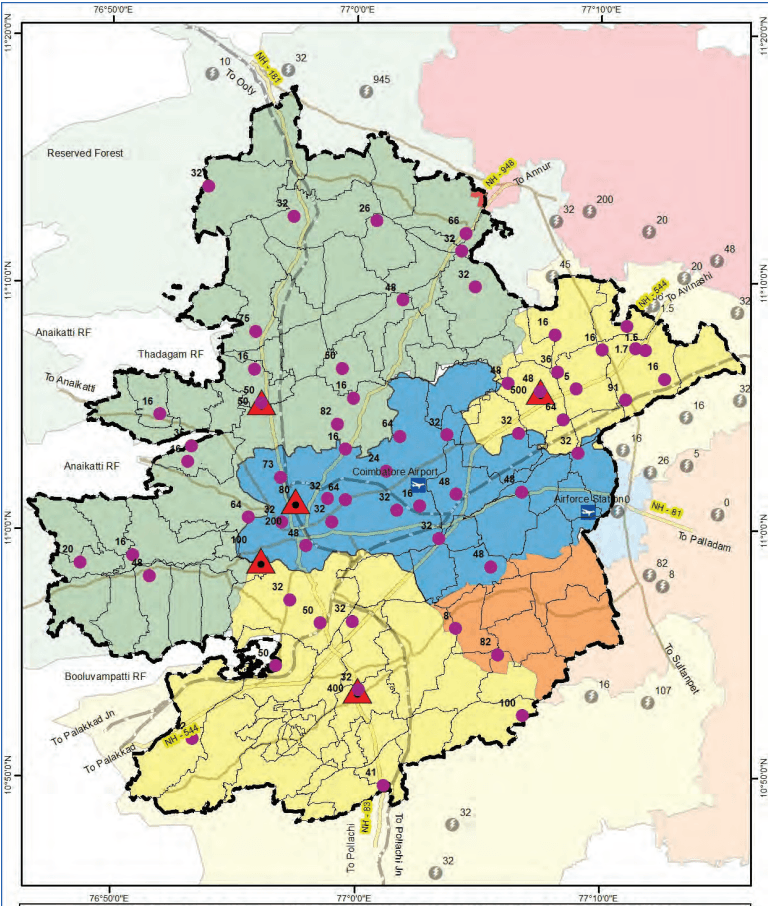
Proposed Solid Waste Treatment Facility - Coimbatore LPA
Map 9.4 : Proposed Solid Waste Treatment Facility - Coimbatore LPA
real-time monitoring capabilities to oversee solid waste collection processes. This system should include a dedicated citizen interface for lodging complaints and providing feedback, thereby enhancing transparency and community engagement in waste management.
Enforcement of Penalties for Unauthorized Waste Disposal by Bulk Waste Generators (BGWs): In Coimbatore, it is imperative to enforce appropriate charges and penalties on BWGs that dispose of waste in unauthorized areas. This approach will promote responsible waste management practices and uphold environmental standards.
Charges to be imposed on the bulk waste producer or any industries disposing the solid waste generated in the unauthorised area
Establishment of Neighborhood-Level Waste Management Committees: Forming local committees at the neighborhood level to oversee and coordinate waste collection and segregation activities. Such community-driven initiatives can lead to increased public participation, accountability, and effectiveness in managing solid waste at the grassroots level.
By implementing these strategies, Coimbatore LPA can move towards a more sustainable and efficient solid waste management system, ensuring environmental protection and improved public health.
10.1 Introduction
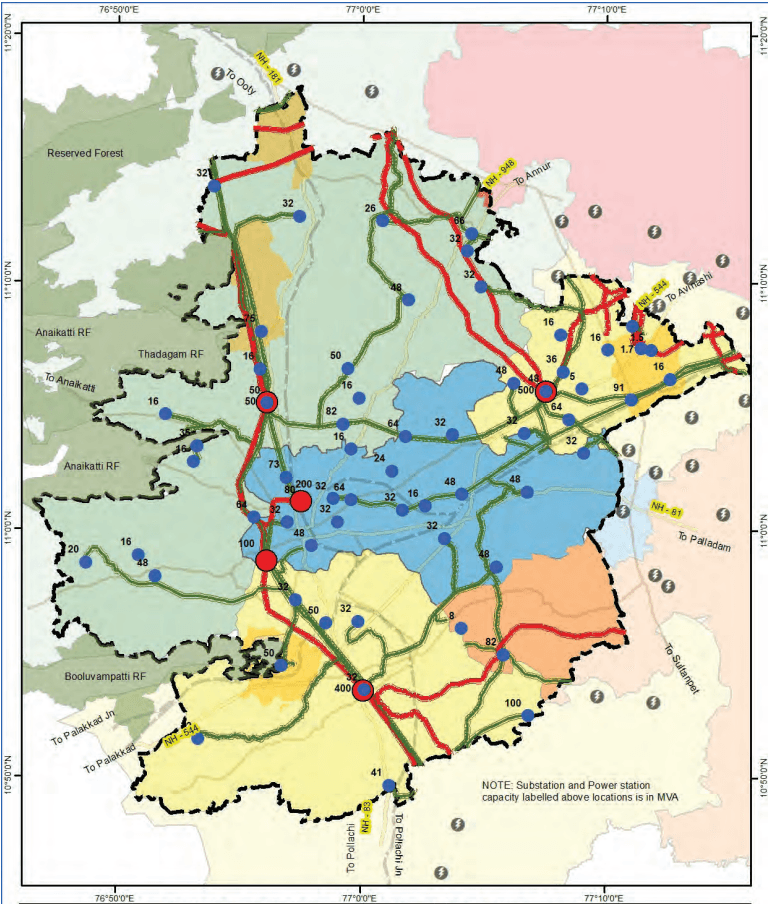
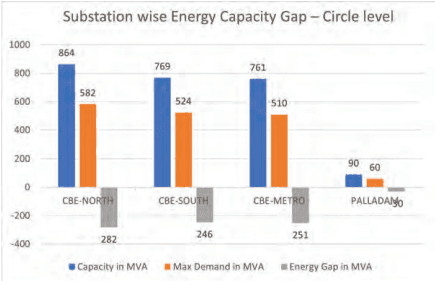
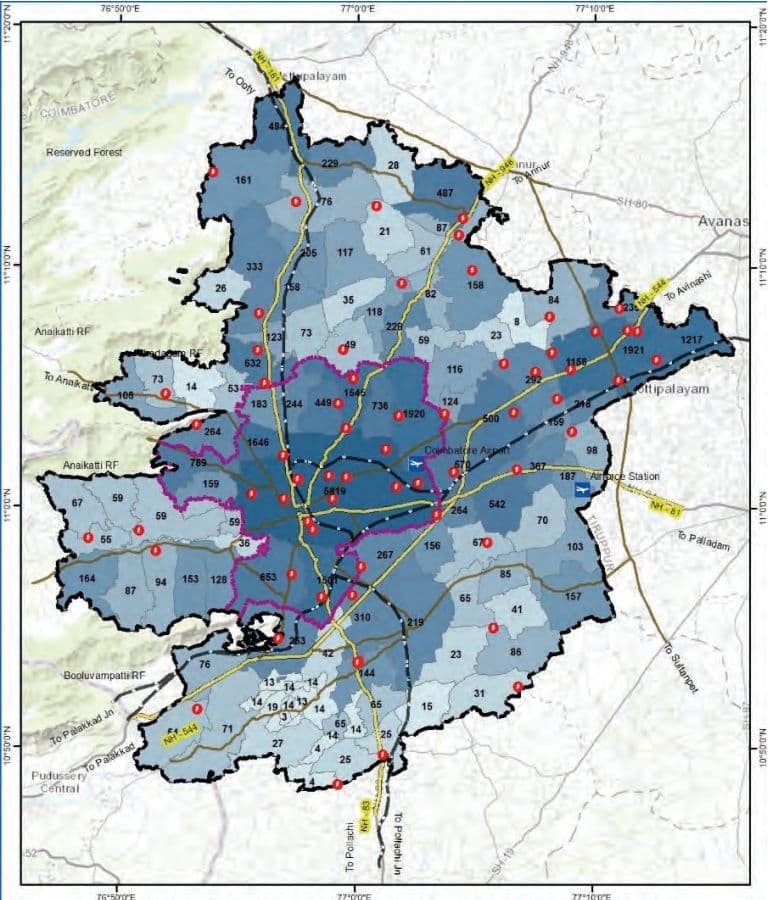
Energy is one of the most important building blocks in human development, and as such, is a key factor in determining the economic development. Towards meeting rapidly increased demand, in general, the emphasis has been on utilizing the non-renewable sources, while the priority should have been on tapping renewable sources, which are sustainable. Tamil Nadu’s energy sector is poised for rapid transformation to meet the surging demand driven by technological advancements and changing climate conditions.
Tamil Nadu aims for net-zero emissions by 2070. The state’s commitment is evident through its Solar Policy 2019, Industrial Policy 2021, and EV Policy 2023, TN Energy Policy 2024 along with initiatives in green hydrogen, energy storage, and offshore wind.
TNEB (Tamil Nadu Electricity Board) is the sole electricity utility in Tamil Nadu, responsible for the generation, transmission, and distribution of electricity across the state. It generates power from thermal and hydel plants and purchases energy from private companies, PSU and receives an assigned share from Central sector projects.
Tamil Nadu Government restructured TNEB into TNEB Ltd with subsidiaries TANTRANSCO and TANGEDCO, effective from 01.11.2010, through the Reorganization and Reforms Transfer Scheme. Due to operational scale and renewable energy priorities, TANGEDCO was further restructured into TNPGCL for fossil fuel generation and TNGECL for renewable energy operations (including Solar, Wind, Bio-gas) and TNPDCL, focusing solely on distribution.
Coimbatore region’s energy supply relies on a blend of conventional and renewable sources. The Tamil Nadu state grid, powered by thermal (coal and lignite), hydro, and nuclear plants, forms the backbone of its electricity supply. However, the region is also a pioneer in renewable energy, leveraging its geographical advantages. The surrounding Western Ghats and Palakkad Gap provide strong wind corridors, making Coimbatore region as a part of Tamil Nadu’s leadership in wind energy, contributing significantly to the state’s overall wind capacity. Solar energy adoption is rising, with rooftop installations, solar parks, and government schemes like Kalaignar Solar Mission driving growth. Biomass and small hydro projects add to the renewable portfolio.