- Treatment of Runoff Water: Runoff collected through the storm water drainage system should be treated before being discharged into natural water bodies. At present, 2 Water Treatment Plants are available at the Corporation, and Municipalities lack a Water Treatment Plant. Given the region’s low rainfall and limited runoff, a Water treatment plant of 1-3 MLD is proposed in the Municipalities. Considering the spatial location and the run of rain water the capacity for the Water treatment plan is considered.
| Municipality | Capacity of Water Treatment Plant (in MLD) | Area required (in Ha) | Survey number details |
|---|---|---|---|
| Gudalur | 2 | 0.04 | 594pt |
| Madukarai | 3 | 0.06 | 166 pt |
| Karuma-thampatti | 2 | 0.04 | 130 pt |
| Karamadai | 3 | 0.06 | 138 pt |
| Total | 10 | 0.2 |
-
Green Buffer zone: The Major drains connecting the water bodies is identified, the linkage of the drains is proposed to ensure strengthening of the drainage pattern of the LPA. A Green Buffer zone as per TNCDBR is proposed along the major drain link in order to avoid encroachment of the major drain due to urbanisation, flooding and to maintain a seamless linkage of the major water bodies.
-
Following the Master Plan, a comprehensive Drainage Master Plan should be developed for the Coimbatore Local Planning Area (LPA). This plan must provide detailed mapping of the existing drainage network, identify missing links, and propose measures for flood mitigation. It should also incorporate sustainable practices aimed at ensuring long-term resilience. A drainage master plan similar to the Drainage Master Plan for the National Capital Territory (NCT) of Delhi or Assam is required for the Coimbatore LPA, The Drainage Master Plan should further include a robust flood monitoring system and strategies for enhancing groundwater recharge.
-
The conventional concrete storm water drain can be replaced by Bioswales at low to medium dense development with wider roads.
a. Bioswale: is a vegetated, shallow channel specifically designed to manage stormwater by slowing, collecting, filtering, and infiltrating rainwater into the ground. When incorporated into urban drainage networks, bioswales help to reduce surface runoff volume, improve water quality, and support groundwater recharge.
b. Infiltration drain: For High dense area with lesser road width, a storm water drain with an infiltration drain can be considered. An infiltration drain is a stormwater management system that collects rainwater and then gradually releases it into the ground, replenishing groundwater resources. These systems are often made of modular plastic crates connected to form a large underground drain, covered with a geotextile to facilitate the infiltration process.
8.9 Proposal Phasing
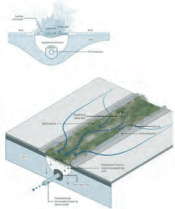
Figure 8.16: Bioswale as Storm Water Drain