The orientation factor (ω) is a measure of the amount of direct and diffused solar radiation that is received on the vertical surface in a specific orientation. This factor accounts for and gives weightage to the fact that the solar radiation falling on different orientations of walls is not same. It has been defined for the latitudes ≥23.5˚N and latitudes <23.5˚N (Table 9). Table 9 should be read in conjunction with Figure 6.
| Orientation | Latitudes ≥23.5°N | Orientation factor (ω) |
| Latitudes <23.5°N | ||
| North (337.6°–22.5°) | 0.550 | 0.659 |
| North-east (22.6°–67.5°) | 0.829 | 0.906 |
| East (67.6°–112.5°) | 1.155 | 1.155 |
| South-east (112.6°–157.5°) | 1.211 | 1.125 |
| South (157.6°–202.5°) | 1.089 | 0.966 |
| South-west (202.6°–247.5°) | 1.202 | 1.124 |
| West (247.6°–292.5°) | 1.143 | 1.156 |
| North-west (292.6°–337.5°) | 0.821 | 0.908 |
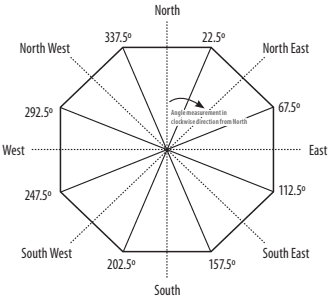
Figure 6 Primary orientations for determining the orientation factor ω
Bureau of Energy Efficiency (BEE)
| 27 |
ANNEXURE 7