Section 44 Mandatory observance of accessibility norms.
-
No establishment shall be granted permission to build any structure if the building plan does not adhere to the rules formulated by the Central Government under section 40.
-
No establishment shall be issued a certificate of completion or allowed to take occupation of a building unless it has adhered to the rules formulated by the Central Government.
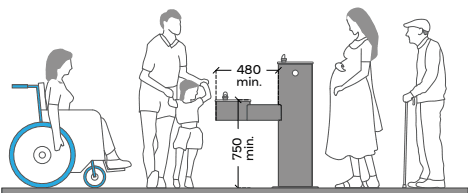
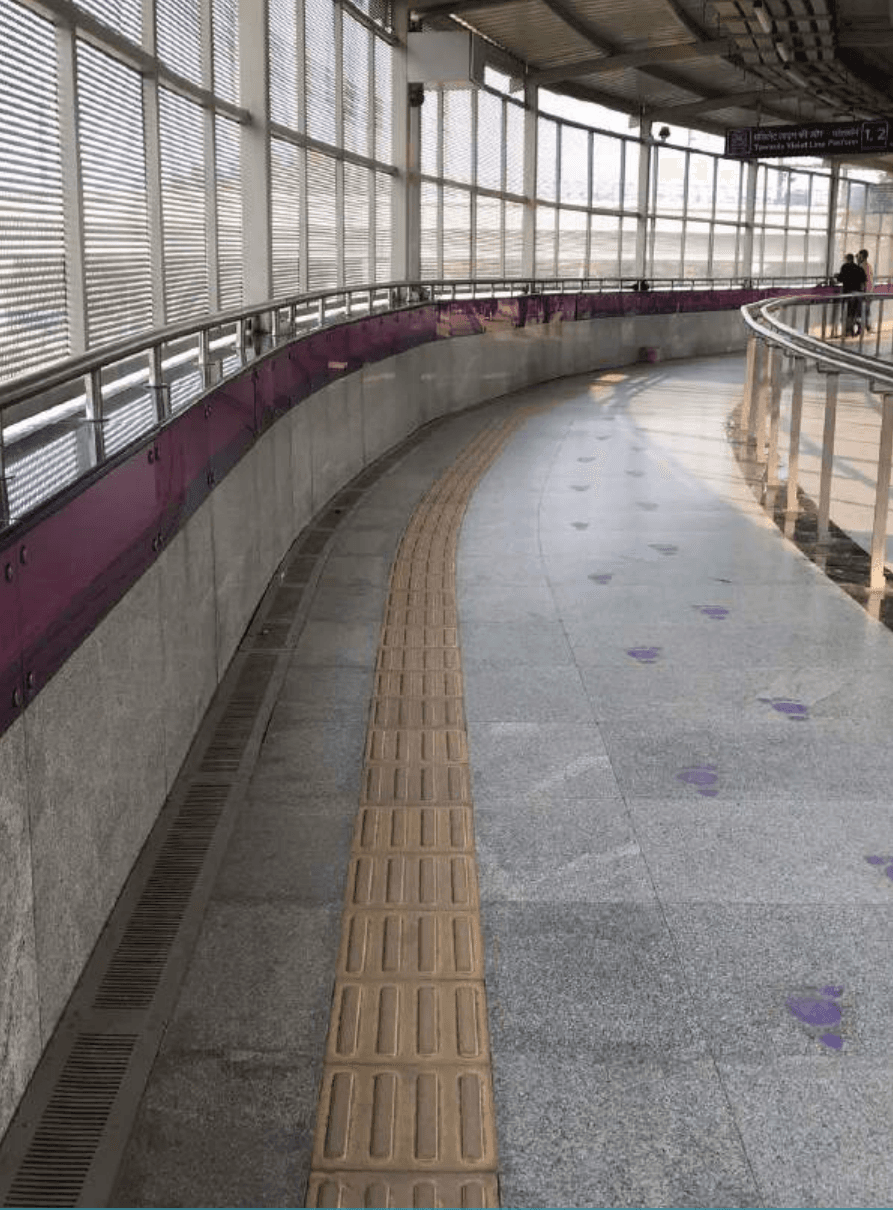
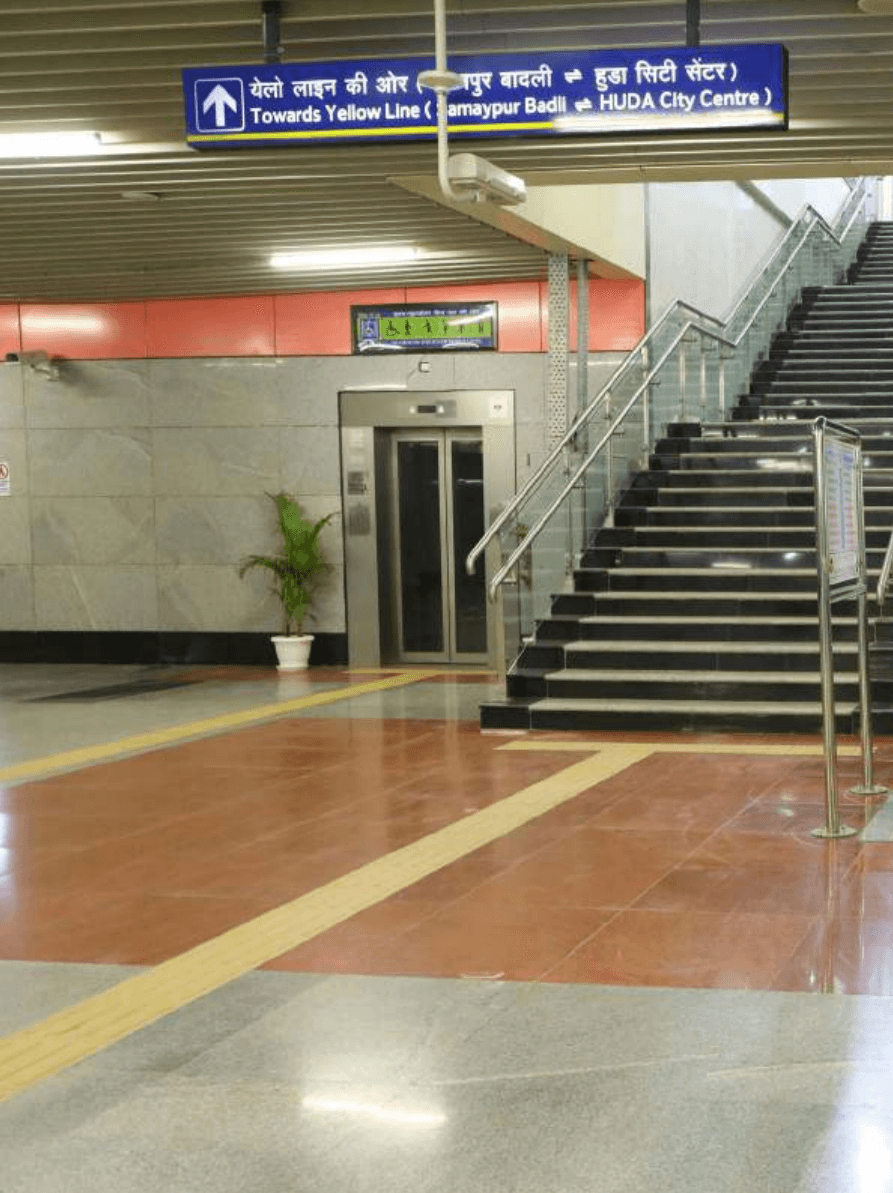
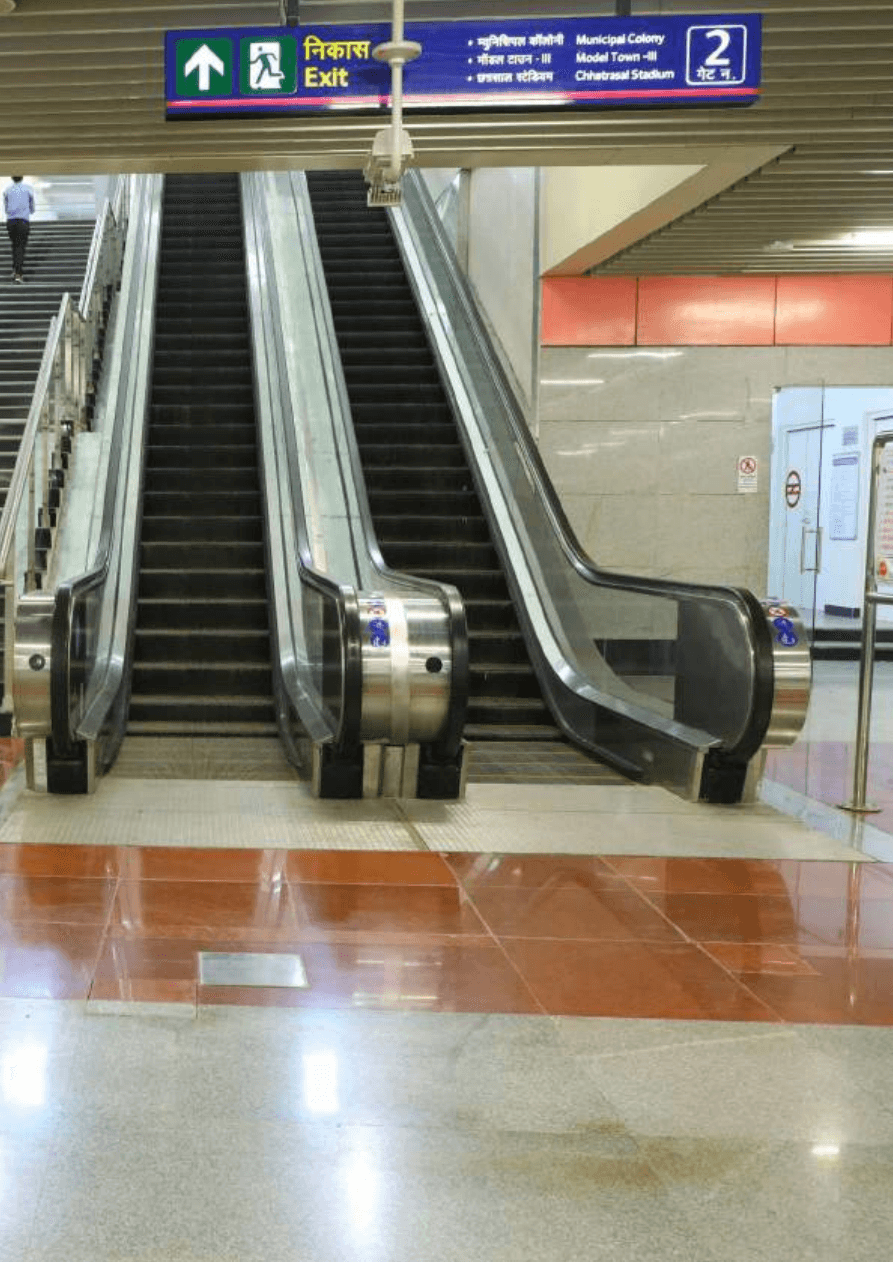
It would be important for all those involved in the development or management of built environments to be conscious of the mandates as issued by the RPWD Act and should render the creation of built environments in compliance to the same.
1.3.2 Accessible India Campaign, 2015
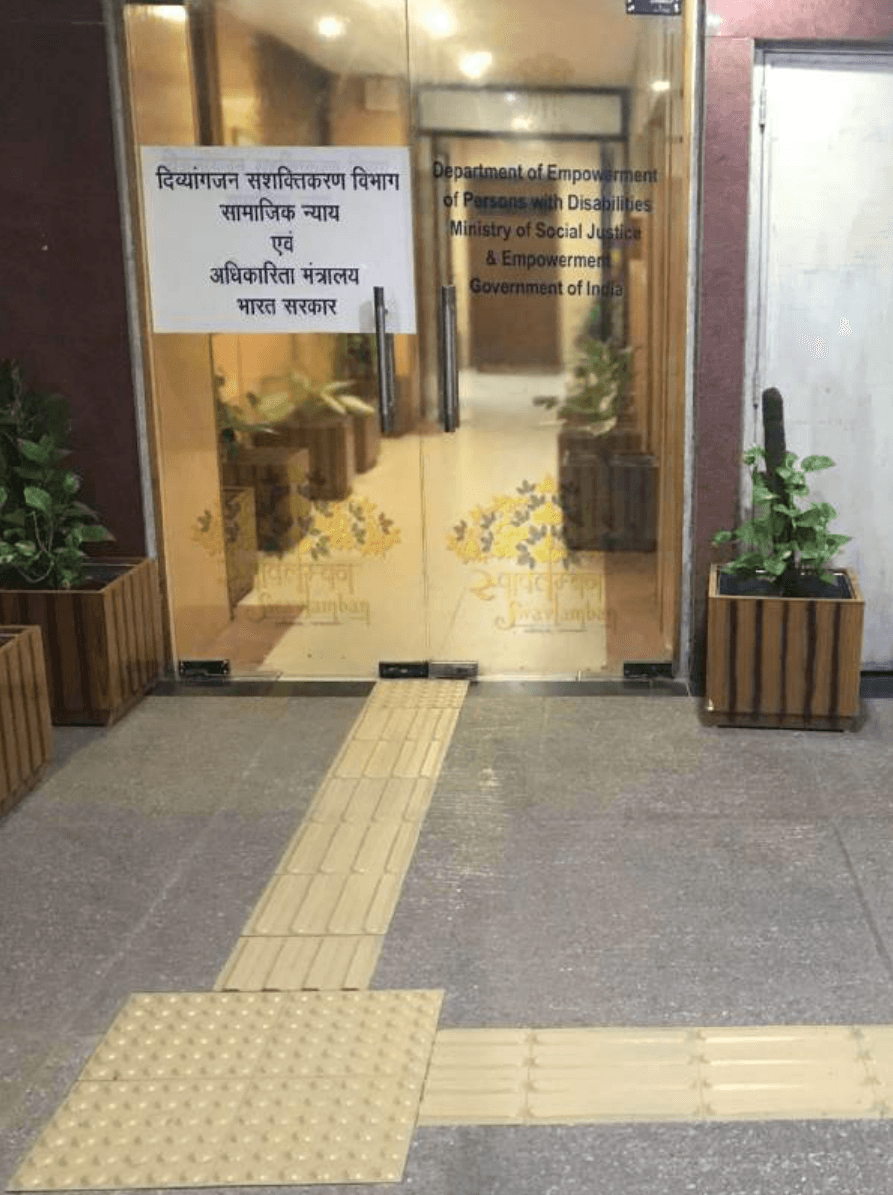
The Government of India launched the Accessible India Campaign (Sugamya Bharat Abhiyan) in 2015 to facilitate barrierfree urban development for Persons with disabilities in three broad domains i.e. Built Environment, Information Technology and Transportation. The Department of Empowerment of Persons with Disabilities (DEPwD), Ministry of Social Justice & Empowerment remains the nodal agency for the successful implementation of the Campaign. It has been a nation-wide flagship campaign to achieve universal access and enablement for persons with disabilities through infrastructure ecosystems involving built environment, transportation and Information & Communication technologies.
Several measures have been taken to spread awareness and drive implementation programmes of access under this campaign. Predominantly, the Accessible India Campaign has shaped the discourse of accessibility into wide ranging possibilities and inter sector responsibilities. The campaign drives the agenda into a holistic vision of accessibility as a norm for Indian living environments.
1.3.3 Smart Cities Mission
The Smart City Mission (SCM) of the Ministry of Housing and Urban Affairs launched in June 2015, aimed to transform 100 cities in a span of one five-year plan. The mission focuses on sustainable and
Chapter1: Introduction
inclusive development, with an idea to look at compact areas, create a replicable model which will act as a lighthouse to other aspiring cities. It caters to the core infrastructural elements and provisions like Efficient urban mobility and public transport, affordable housing (especially for the poor), Robust IT connectivity and digitalization, Good governance (especially e-Governance and citizen participation), safety and security of citizens.
Many innovative projects including Sensory Park for persons with disabilities in Chandigarh, Chennai, Visakhapatnam, a Multi Sports Centre in Bhagalpur, Barrier free stadium in Varanasi; Smart roads in Belagavi, Kanpur, Jaipur and Nashik; Smart pedestrianized roads in Chennai etc. have adopted the principles of universal design in their project formulation.
The Smart City Mission anchors the idea of human centric approaches keeping in view the Indian diversity and technological progress. Cities with greater inclusion will pave way for smarter futures and a more public friendly environment. In the future, Indian urban cities need to further incorporate accessibility perspectives in various stages of city scale implementation of infrastructure projects.
1.3.4 National Policy on Elderly
The National Policy for Elderly, 2011 values “an age-integrated society” and intends to strengthen integration between generations, facilitate interaction between the old and the young as well as strengthen bonds between different age groups. It believes in the development of a formal and informal social support system to strengthen the capacity of the family to take care of senior citizens, and they continue to live in the family. It also attempts to incorporate the action
points as highlighted in the “Madrid Plan of Action and Barrier Free Framework”. It works towards an inclusive, barrier-free and age-friendly society.
The policy brings the concerns of older persons, especially older women, into the national development debate with priority to implement mechanisms already set by governments and supported by civil society and senior citizens associations. It also supports promotion and establishment of senior citizens associations, especially amongst women. It also focuses on the promotion of the concept of “Aging in Place” through accessible housing, income security and home care services, old age pension and access to healthcare insurance schemes and other programmes and services to facilitate and sustain dignity in old age.
1.3.5 National Policy on Women
The National Policy on Women 2001 provisions gives special attention to the needs of women with regard to providing drinking water, sewage disposal, toilet facility, sanitation within acceptable reach of the household and incorporation of a gender lens to housing policies and provision of shelter. It also advocates provisions of support services for women like child care facilities at workplaces and educational institutions.
1.3.6 National Policy on Children
National Policy on Children, 2013 strengthens the need for affordable and accessible quality education and incorporation of age-specific initiatives for safe spaces for play, sports, recreation, and leisure.
UN-CRPD, UN-Safe cities, Madrid Plan of Action and Barrier Free Framework, Age-Friendly Cities (WHO), Beijing Declaration
and Platform for Action, Child Friendly city initiative (UNICEF) have been some of the other commitments focusing on the need for inclusive and universally accessible urban development. India has been committed to all the international treaties and has been working towards mainstreaming inclusion into urban policies and planning.