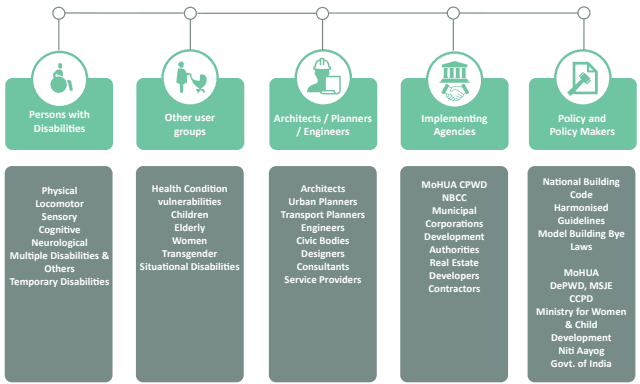
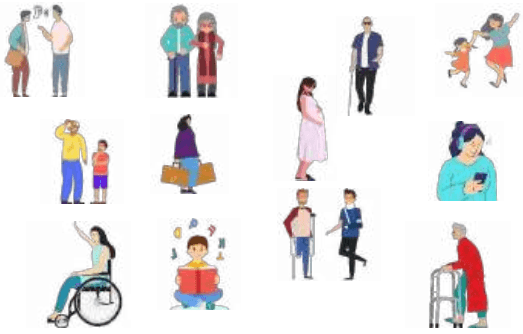
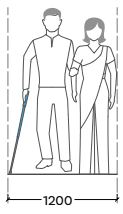
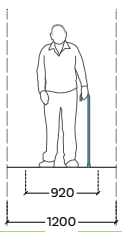
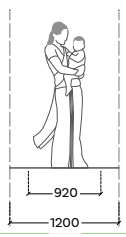
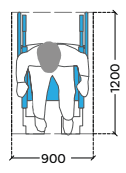
Human abilities vary in diverse ranges of physical, sensory and mental capabilities. Built environments need to be mindful to accommodate a widest possible range of human abilities through design of various elements, features and overall services as part of it. For better understanding, the accessibility needs of some diverse user groups are listed below:
2.5.1 Infants, Toddlers and Children
Infants, toddlers and children in their early life stages require special care and support in built environments, including spaces for family members and play areas. It is pertinent to include and accommodate for children with special needs through therapeutic play areas and systems.
• Family friendly features in public
Chapter 2: Understanding Accessibility
areas, urban spaces, transportation hubs.
• Baby changing stations to be made available in both Female and Male washrooms, lactation rooms, creche support in built environments like work places, etc.
• Child friendly facilities in all public spaces, etc.
• Walkable, friendly, and wide kerb ramps in street infrastructure to be provided for using baby prams.
• Children play areas in neighborhoods with provision of soft landscapes.
• Therapeutic play areas or parks for children with special needs.
• Adequate information and signage support for various child friendly facilities in built environment.
• Low height basins, mirrors, faucets, counters, etc. to accommodate children of various age groups.
2.5.2 Women
Built environment accessibility needs for women should consider diverse age groups, diverse cultural contexts and diverse life situations in which women operate. As an expectant mother, as a working professional or as an elderly mother, built environments require to be sensitive to gender specific needs while retaining an inclusive and safe character to our environments. Diverse forms of women clothing (saris, salwar kameez, etc.) and footwear (heels, kolhapuri chappals, etc.) require a certain orientation to built environment elements and their detailing.
• Uniform and low kerb heights and level crossings in sidewalks
• Perforated pavers or grass pavers should be avoided as they pose
barriers or challenges for women wearing different kinds of shoes like shoes with heels and Kolhapuri Chappals etc.
• Well maintained pathways, free from uncobbled surfaces to avoid any challenges for expectant mothers in public spaces or in transition from public transport facilities.
• Provision of lactation or feeding rooms in organisations / work places and transportation hubs.
• Child protection seats in public washroom facilities for women.
• Wider footpaths to enable the caregiver role of women or families accompanying young children, elderly parents or carrying bags full of supplies for their homes.
• Provision of resting spaces and other public amenities for expectant mothers in public spaces.
• Well illuminated street and public space environments.
2.5.3 Transgender
Inclusion of transgender populations in built environments requires to sensitively respond to the following aspects in addition to most of the above mentioned accessibility needs, such as:
• Inclusion of Transgender through provision of proper signage and visual information wherever shared facilities need to be provided in public spaces.
• Provision of unisex washrooms or gender neutral washrooms to be made available in Public Spaces, Transportation hubs, etc.
2.5.4 Elderly
Ageing as a human life stage integrates
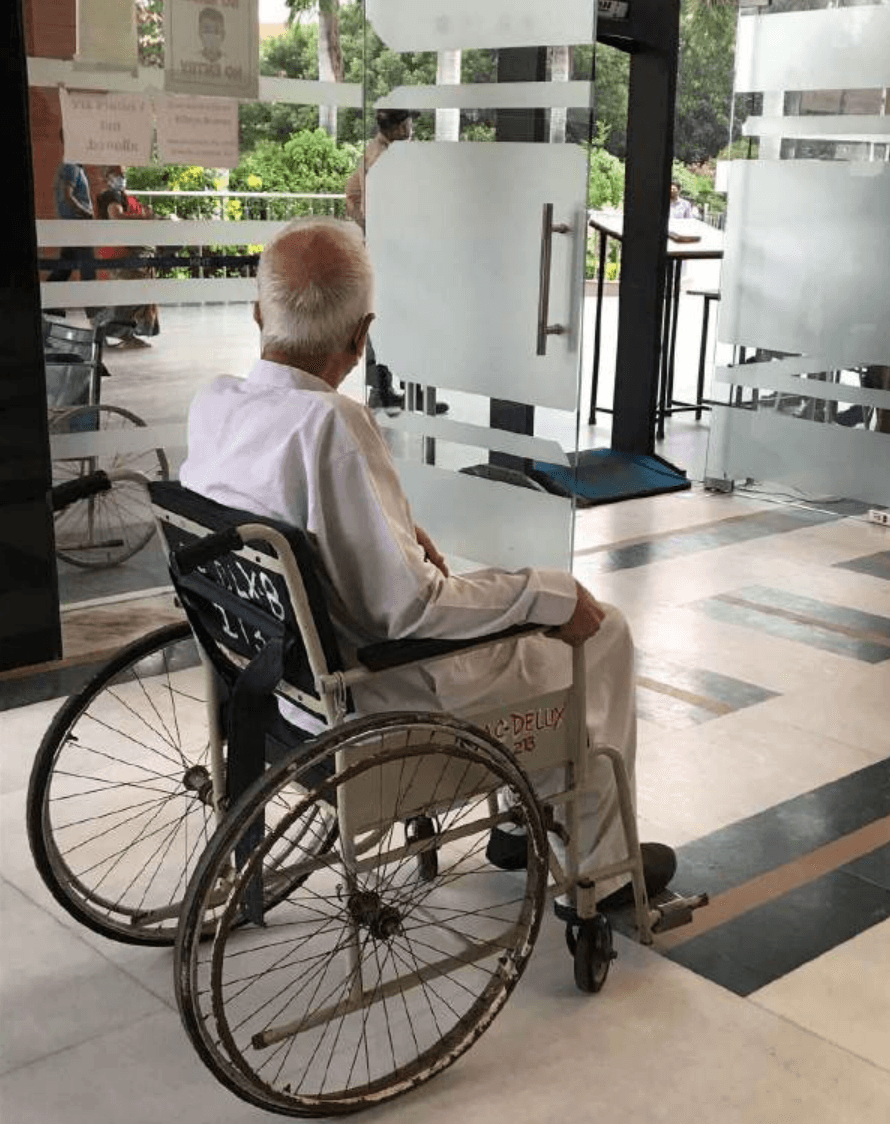
several dimensions of human diversity with usual challenges of loss of mobility, dexterity, hearing, sight, memory, strength or stamina. Elderly citizens are prone to falls and slip accidents in wet areas like the washrooms or floors under maintenances. The phenomenon of ageing induces multiple forms of physical, sensory and cognitive challenges which have to be addressed in built environments that not only minimize physical effort, but also render services with care, priority and inclusion. The accessibility needs listed below must be considered while planning and designing built environments.
• Provision of supporting element in built environment like Grab rails, Nonslip surfaces, adequate colour contrast in level changes.
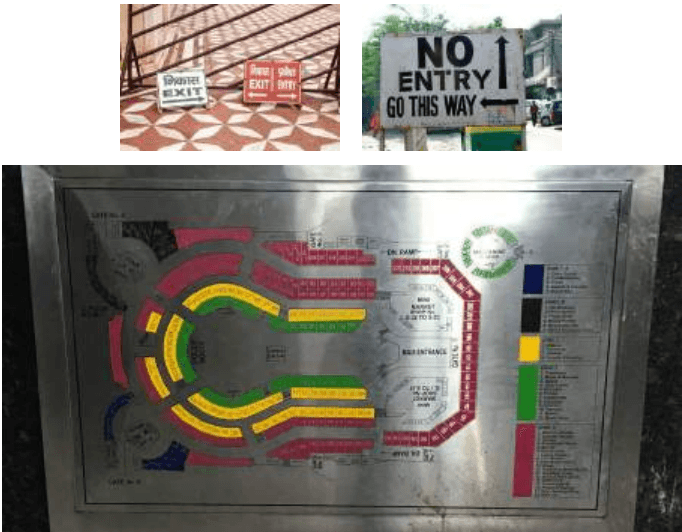
• Use of efficient wayfinding system which allows a user to reach a destination independently.
• Provision of priority queuing systems
• Provision of ramps with gentle gradient, accessible elevator access and appropriate level differences.
• Large and readable fonts with adequate colour contrast in signage systems.
• Digital signage systems with real time information and audio-video public announcements.
• Adaptive and supportive features like grab rails, high WC seat, etc. in residential and public washrooms.
• Well maintained, non-slippery flooring surfaces.
• Good acoustic treatment indoors which does not distort sound and enhances its quality.
• Providing emergency alarms in private spaces of the elderly which can warn the caregiver, in the event of any
accidents or emergency situations.
• Provision of resting spaces and accessible washroom facilities in public spaces.
2.5.5 Health Conditions (Cardiac,
Health conditions may be temporary or permanent in diverse human population groups. Contemporary living environments reflect people with cardiac disorders, blood pressure, terminal ailments like cancer, post operative challenges, knee replacements, etc. as part of our societies. Supportive and accessibility elements in built environments would enhance their inclusivity. Some of their needs include:
• Provision of supporting element in built environment like Grab rails, Nonslip surfaces, adequate colour contrast in level changes.
• Provision of ramps with gentle gradient, accessible elevator access and appropriate level differences.
• Use of efficient wayfinding system which allows a user to reach a destination independently.
• Use of Digital Signage system with Audio-Video public announcements.
• Good acoustic treatment indoors which does not distort sound and enhances its quality.
• Provision of resting spaces and accessible washroom facilities in public spaces.
• Grab rail support in staircases, ramps, corridors, etc.
• Minimum level changes or level surface routes.
Chapter 2: Understanding Accessibility