1.1 Introduction
The idea of universality, non discrimination, equity and inclusion of diversity both in symbolic and real terms is well reflected in the Indian context as stated in the given quote by Gurudev Rabindranath Tagore.
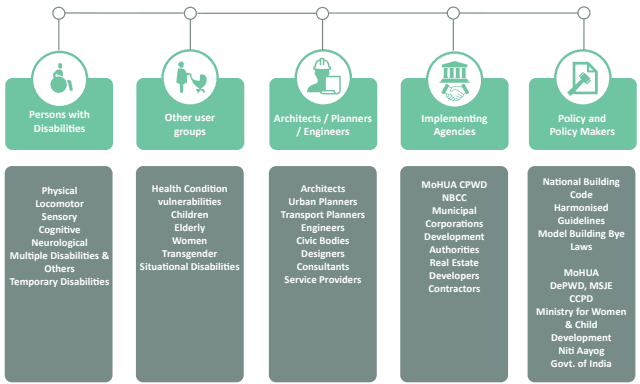
The progressive reality of twenty first century India needs to extend these thoughts into practice of urban futures and built environments, which at times play a crucial role in disabling or enabling a human experience. Universal accessibility in a broader sense forms one of the key means to include all, ranging from persons with disabilities to other diverse user groups in the urban Indian context. Creating human centric, safe and inclusive environments for all, will perhaps be the surest ways to prepare for the demographic transformations and challenges of age, ability, gender and cultures in Indian futures.
Key elements of an urban built environment, information systems, infrastructure developments and their internal services play an active role in shaping one’s accessibility experience. Missing out on a small component amongst the above can also exclude several humans with special needs and likewise, presence of small and apt
features can enhance inclusion for many.
The complex Indian diversity and pluralistic approach requires to be further strengthened through envisioning, creating and maintaining inclusive built environments for all without compromise. This could only be possible through sustained efforts to improve sensitisation towards accessibility among all stakeholders responsible for the conceptualisation and realisation of built environments along with common citizens.
Persons with disabilities, elderly, women and children along with other vulnerable population groups like ones with terminal health conditions, expectant mothers, persons with obesity or other invisible disorders, etc. need to be considered at all levels of design and planning decisions in built environment and services alongwith procurement and implementation processes. The Harmonised Guidelines for Universal Accessibility 2021 succeeds the earlier version of Harmonised Guidelines 2016 amidst new transformations and visions for urban futures and built environments in India. The new guidelines and standards complement the parallel existence of the National Building Code 2016, Model Building Bye Laws 2020 and other relevant codes while adhering to the mandates of the Rights of Persons with Disabilities Act, 2016.
Chapter1: Introduction
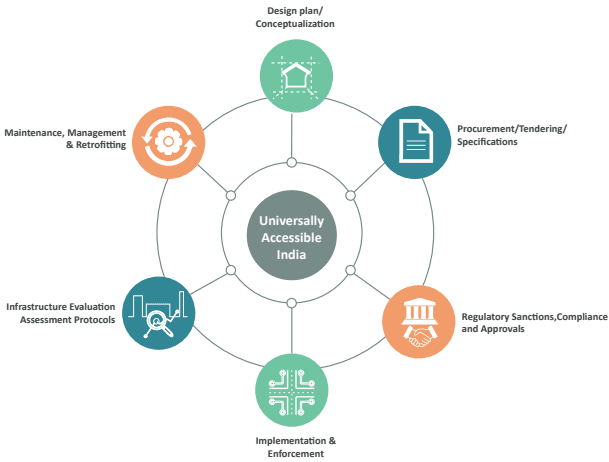
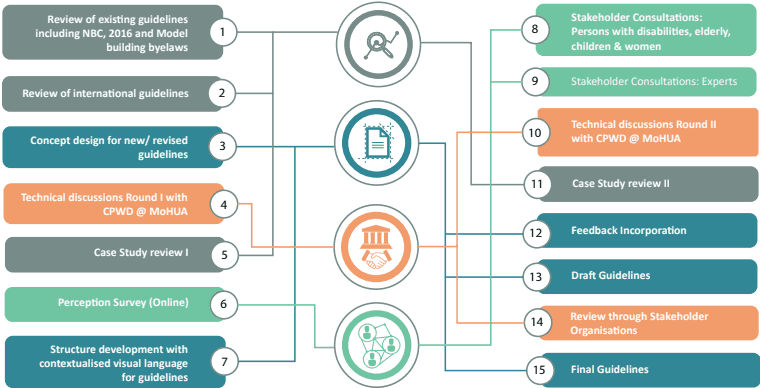
Figure 1.1 Holistic Framework for Universal Accessibility Implementation
Emerging futures of built environments, human diversity and new technologies together share an immense potential to be mutually inclusive and leaving no one behind.This,asakeyapproachofUniversal Design, forms the core principle for these guidelines to shape the implementation of our built infrastructures in various sectors of housing, mobility, education, health, work and recreation.
Accessibility needs to become a unifying feature in all built environments and an expected experience of all services rendered to a wide range of population groups. Progressive national policies and campaigns towards implementation of accessibility in various facets of Indian built environments shall further render these guidelines handy towards their grounded implementation.