1.1.1. In order to organize a conscious, planned and a determined effort in all the states to improve fire fighting capabilities in the country, prevent unacceptable deaths and huge loss of property, the National Disaster Management Authority (NDMA) felt that definite guidelines are needed in terms of setting up of fire stations, their spread at different levels, their scaling, type of equipment and training of manpower. The NDMA was involved in constant dialogue at highest levels for providing adequate funds to the states for strengthening of fire services in the country. While definite steps for funding have been worked out by the 13th Finance Commission (FC), it may not be adequate for the total requirement of the country. Therefore, how the 13th FC grant should be operationalized and how the remaining funds should be mobilized through the Planning Commission, has been suggested. What should be the minimum standard of equipment and spread of the fire services up to rural areas in the country are also being laid down.
1.2Structure of the guidelines
1.2.1. These guidelines consist of seven chapters, the details of which are as follows.
1.2.2. Chapter 2 on Fire Services In India and its Present Status provides a brief history of the evolution of fire services in India, the increasing trend of fire incidents, shortcomings in the fire services, basic norms for setting up of fire stations, overall shortages of fire stations, equipment and fire personnel in the country, the slow pace of growth of fire services in India, enumerating the glaring deficiencies noticed even in the recent fire incidents.
1.2.3. Chapter 3 on Emergent Needs and Recent Initiatives deals with the various immediate needs of the fire services in the country like need for a comprehensive plan for revamping of
Scaling, Type of Equipment and Training of Fire Services
Executive Summary and Action Points for the State Governments and ULBs
the fire services for the entire state, need for enactment of Fire Act in every state, need for provincialisation wherever it has not already been done, setting up a complete administrative structure for fire services, need for creating required infrastructure, adoption of new technologies, need for research and development etc. Keeping the other disaster vulnerabilities of the country in mind, the possibility of converting the fire service into a multi-hazard unit has also been discussed. While dealing with recent initiatives taken, this chapter also deals with a complete strategy for improvement of fire services in the whole country.
1.2.4. Chapter 4 on Operationalisation of the 13th Finance Commission Report; Strategy and Action Plan gives a complete gist of the recommendations made by the 13th FC regarding fire services in the country. It deals with the various direct Grants in Aid (GIA) made to different states and also the allocations made to the ULBs by the 13th FC with directions for spending on fire services in their jurisdiction. The conditionalities laid down for accessing the performance grant by the ULBs and a complete set of actions that need to be taken for the purpose has been pointed out in this chapter.
1.2.5. Chapter 5 on Fire Hazard Response and Mitigation Plan discusses various issues involved in order to help states prepare their plans. It will not only help in preparing plans for all the districts in the country, but will also be helpful in preparing the plans for all million plus cities. It was felt necessary because specifically, preparation of Fire Hazard Response Mitigation Plan and its publication in the state gazette, is one of the nine conditions that need to be fulfilled by the states in order to be eligible for drawing their share of the performance grant. Along with other steps as enumerated in the 13th FCR, if this plan is not prepared by the concerned states for all million plus (2001 census) cities in their states and notified in the state gazette, the state will not be able to draw the performance grant they would otherwise be entitled to. A complete detailed format of the plan has been given so that the state may find it convenient to prepare its plan and get it notified. The list of cities with million plus population (2001 census) has been placed at Annexure – 3.
1.3Action Points
1.3.1. For convenience of central and state governments, ministries and ULBs, action points enumerated in these guidelines are as follows;
Table - 1
Page No.
Action Points
Time line
Responsible Agency / ies
1718
Enactment of a Fire Act so that fire vulnerabilities in the state are adequately dealt with. The Act should interalia provide a legal regime for mandatory clearance from the fire department for buildings and premises that the state may consider hazardous requiring their own fire protection arrangements. Provision should be there for time to time revision of standards in a phased manner as the area develops. The Act should further also provide for a designated fire officer who should organize regular mock exercises and ensure maintenance of fire prevention systems in big locations. It should include proper cadre planning for smooth growth of fire services. For urban areas fire tax / levy could be provided for and the revenue so generated should be earmarked for the improvement and upkeep of the fire services over and above the normal governmental financial support required by the fire service. (Para: 3.2.1, 3.2.2, 3.2.3 )
1 to 2 years
State Government
18
Preparation of a comprehensive plan for revamping of Fire Service in the state. Calculation of the total requirement of equipment and fire stations on the basis of the state vulnerabilities, classifications of hazardous industries in rural and urban areas on the basis of norms laid down by the SFAC for fire services. Finalization of how much
As quickly as possible / latest by 31st December, 2012. It must be kept in mind that 2 years of the 13th FC award has already lapsed and the state plans for the next five
State Government / ULBs
Scaling, Type of Equipment and Training of Fire Services
Executive Summary and Action Points for the State Governments and ULBs
Page No.
Action Points
Time line
Responsible Agency / ies
can be procured from the 13th FC grant for the ULB's and how much will have to be procured through the state five year plan. (para: 3.3.1)
2.1Evolution of fire services in India
2.1.1. The development of fire services in India, to a large extent, was influenced by India’s political and historical association with Britain. Regular fire services in India first came up in Bombay (Mumbai) & Calcutta (Kolkata).
2.1.2. The great fire of Bombay occurred in 1803 and the first nucleus of fire service in India took shape, with police being entrusted with fire fighting jobs. In 1822, the fire service in Calcutta was organized under the Calcutta Police. In 1855, the Bombay fire brigade was officially formed and formally placed under the police as a part-time function. In 1864, it was placed jointly with the government and Municipal Corporation. In 1872, the Calcutta fire brigade came to be financed by the Calcutta Municipal Corporation. By the Municipal Act 1872 and 1878, insurance companies were made to contribute towards the maintenance of the fire brigades. In 1888, through the Bombay Municipal Corporation Act, protection against fire became obligatory for the Bombay Municipal Corporation. The Madras city fire brigade was established in 1908 by the Municipal Corporation of Madras after a devastating fire in the city. Delhi is believed to have had a fire brigade in 1867, but the organized form of fire station is claimed to have been started in 1896 and was under the Municipal Corporation. Presently, Delhi has its own Fire Service Act, under the Government of the National Capital Territory (NCT) of Delhi since 10th November, 1994.
2.1.3. While in Britain, a national fire service was started during the Second World War, no such national fire service was formed in India. As a sequel to the Second World War, however, a need was felt to organize and improve the fire service in India and, hence, some new fire brigades were set up. The concept of auxiliary fire services in the Civil Defence (CD) was also introduced, but it never took concrete shape in the country. The fire brigades in India remained heterogeneous in character and majority of them continued to remain ill-equipped and differently organized.
Scaling, Type of Equipment and Training of Fire Services
National Disaster Management Guidelines: Scaling, Type of Equipment and Training of Fire Services
2.2Present status
2.2.1. Fire services in India come under the 12th schedule of the Constitution under the provisions of Article 243W of the Constitution, the performance of functions listed in the 12th schedule comes under the domain of municipalities. Presently, fire prevention and fire fighting services are organized by the concerned states, Union Territories (UTs) and ULBs.
2.2.2. In view of the shortcomings in the fire services in different states of the country and the need to upgrade it, the GoI in 1956 formed a Standing Fire Advisory Committee (SFAC) under the MHA. The mandate of the committee was to examine the technical problems relating to fire services and to advise the GoI for speedy development and upgradation of fire services all over the country. This committee was renamed as Standing Fire Advisory Council (SFAC) in 1980. This committee/council has representation from each state fire service, as well as representation from Ministry of Home Affairs (MHA), Ministry of Defence (MoD), Ministry of Road Transport and Highways (MoT), Ministry of Communications and Information Technology (MoC) and Bureau of Indian Standards (BIS).
2.2.3. Fire services in Gujarat, Chhattisgarh, Punjab, Maharashtra, Himachal Pradesh, Haryana and Madhya Pradesh are under the respective concerned municipal corporations. In other remaining states, it is under the Home Department. While some states have enacted their own Fire Act, some have not. In some states, it is called the state fire service, while in some states, it is called the state fire and emergency services. It is but natural that there is no standardization with regard to the scaling, type of equipment and the training of manpower of fire services. In each state, it has grown according to the initiatives taken by the state governments and the funds provided for the fire services. Presently, the only fire services which are fully committed to the common public are the municipal and state fire services. However, the Airport Authority, big industrial establishments, Central Industrial Security Force (CISF) and sections of the Armed Forces, have their own fire services and many a times, in case of need, rush to aid the local fire services.
2.2.4. The state fire services have their own organizational structure, administrative setup, funding mechanism, training facilities and equipment. Somehow, the fire service in India has not got the attention it needs and deserves. There has been very little planned and determined effort to revamp it with a comprehensive developmental plan and adequate funds.
2.3Increasing trend of fire incidents in India
2.3.1. The incidents of death due to accidental fire in the country are quite alarming. Data shows that there were a total of 20,772 deaths in 2007 in comparison to 19,222 deaths in the
Scaling, Type of Equipment and Training of Fire Services
Fire Services in I ndia and its Present Status
year 2006. The trend is increasing year by year and the states need to take immediate action for revamping their fire services.
2.3.2. Some of the major fire incidents that occurred in India in the past four decades are as follows.1
i. On 31st January,1974 an explosion in a rail transport of fire work products led to the death of 42 people in Allahabad;
ii. On 29th July,1979 a total of 78 people died and 88 were injured due to fire in a cinema hall in Tuticorin, Tamil Nadu;
iii. In 1981, similarly an explosion in a firework factory in Mettupatti killed 32 workers, including women and children;
iv. In 1992, two separate incidents of firework disasters in Tharia and Ludhiana accounted for 25 and 40 deaths respectively;
v. On 24th May, 1995, an explosion at a firecracker factory in Rohtak, Haryana resulted in a death toll of 23 people, which included 13 women, 6 children and 4 men;
vi. On 23rd December, 1995, over 500 people were dead and 300 injured due a fire in a school function in Dabwali, Haryana;
vii. In 1995, a fire at a cinema theater in Delhi killed more than 60 persons and left hundreds injured;
viii. On 9th June, 1997, an accidental fire in the Brihadeswara temple in Thanjavur district of Tamil Nadu resulted in more than 60 deaths and 250 were injured in the stampede to escape;
ix. In February 1997, at least 204 people died due to a fire at a religious discourse at Baripada, Odisha;
x. On 7th November, 1999, at least 45 people were killed (16 women and eight children were among the dead) and 16 seriously injured in Sonepat, Haryana, when a fire began after sparks from some high-tension wires over the market fell over a firecracker shop and an adjoining clothes store. Around 25 stores, some of them selling plastic wares, were completely gutted;
xi. In November 2002, at least 17 people were killed and 27 injured (five in critical conditions) when two gas cylinders in a van carrying fireworks exploded, bringing down several nearby houses at Athur, near Salem. Those dead included seven men, five women and five children. 15 houses on either side of the street came down in the explosion, trapping
2.4Shortcomings in the present system
2.4.1. During their regular deliberations, the SFAC have noticed the following shortcomings in the fire services in India.
Lack of:
a. Unified fire services in some of the states;
b. Proper organisational structure, training and career progression of its personnel;
c. Adequate modern equipment and their scaling, authorization & standardization;
d. Appropriate and adequate funding;
e. Training institutions;
f. Infrastructural facilities – fire stations and accommodation of personnel etc.;
g. Vulnerability analysis;
h. Public awareness (DOs & DON’Ts), conduct of regular mock exercises and evacuation drills; and
i. Uniform fire safety legislation in some of the states.
2.5 SFAC norms for setting up fire stations
2.5.1. The SFAC has laid down norms for setting up of fire stations. The criterion for setting them up are as follows.
a. Response time (3 to 5 minutes in urban areas and 20 minutes in rural areas);
b. The scale of population to be served; and
c. The number of minimum standard equipment that are needed and manpower required for its operation.
Source: Compendium of recommendations of SFAC
Scaling, Type of Equipment and Training of Fire Services
National Disaster Management Guidelines: Scaling, Type of Equipment and Training of Fire Services
2.6 Overall shortage in the country
2.6.1. On the basis of the norms laid down by SFAC, the existing deficiencies as regards fire stations, fire fighting vehicles and personnel are as follows.
a. Fire stations – 97.54%;
b. Fire fighting and rescue vehicles – 80.04%; and
c. Fire personnel – 96.28%.
Source: Compendium of recommendations of SFAC
2.7Slow pace of growth of fire services
2.7.1. Though deliberations by the SFAC for improving the fire services in the country have been done regularly, deficiencies clearly identified and various recommendations made, too little or very delayed / inadequate steps have been taken to become better prepared. The result is that even in the most recent fire incidents, the response has not been as it should be.
Avoidable deaths and huge loss of property continue to occur even today. Some of the recent incidents with such unnecessary loss of life and property are as follows.
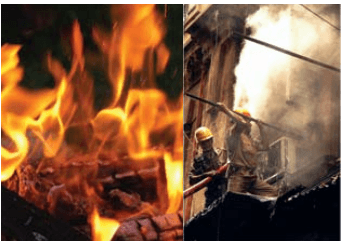
a. Kolkata – Bada Bazaar – 12th January, 2008, 2500 shops were gutted, property worth crores destroyed. The fire could not be controlled and put out for days together; it was found difficult to reach the source of fire because of narrow lanes and there was also scarcity of adequate water to put it out.
A shop on fire at Mehta Building – Bada Bazar Kolkata
Fire men breaking a window to rescue the trapped at Mehta Building
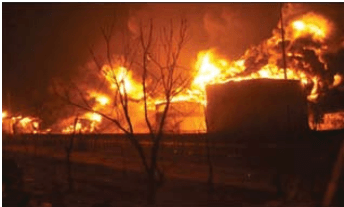
b. Jaipur – IOC depot – 30th October, 2009, 12 persons were killed, 200 injured, half a million evacuated from the neighborhood. The fire could not be controlled for over a week because nothing was available to put out the oil fire. It stopped only when the fire burnt itself out.
IOC Jaipur Depot during burn out, Jaipur
Scaling, Type of Equipment and Training of Fire Services
Fire Services in I ndia and its Present Status
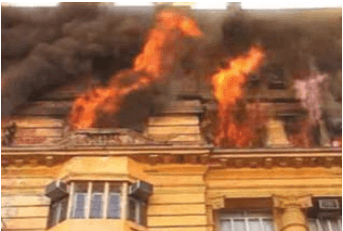
c. Kolkata – Park Street – 23rd March, 2010, 26 persons were killed, some even jumped to death because the key of the terrace gate was missing and the trapped persons could not escape to the terrace. Hydraulic ladder also could not reach in time because of traffic congestion. It was stationed in a garage in Behala area far from the down town and business hub of Kolkata with many high rise buildings.
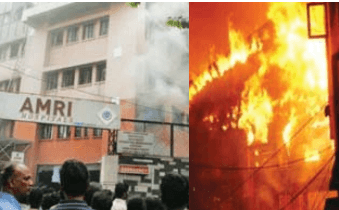
d. Fire at AMRI Hospital – Kolkata on 9th November, 2011, 90 patients could not be evacuated and died of suffocation. There was no fire fighting equipment in the hospital and the community who wanted to come and help were not adequately trained and also found it difficult to get inside because the security decided to block them.
3.1Introduction
3.1.1 Recent and earlier fire incidents have clearly demonstrated some of the major shortcomings in our fire fighting capabilities along the length and breadth of the country. The recent fire incident in a hospital in eastern India has added another dangerous possibility and dimensions to fire accident. We need to have a serious look at the capabilities of our fire services in this context. If the tele-therapy machine in the hospital had been damaged, the incident would have assumed a completely different tone and escalated into an even worse tragedy. The Mayapuri incident in our country is a very recent example of what can happen if a radiological device gets damaged. We need to examine whether our fire services have the capability to respond in a fire incident when radiological equipment has got damaged. Are the fire services trained and equipped to respond or even capable to contain and restrict the dangers till other experts arrive? There is more than an urgent need to ensure that the fire services are well equipped and trained to respond to all possible vulnerabilities resulting out of fire accidents. The instructions are given in NDMA guidelines for nuclear and radiological emergencies must be followed for management of such type of incidents and must mandatorily be a part of the firemen training as hospitals having radiological machines are spread throughout our country.
3.1.2 Unless there is a conscious and planned effort in all the states, the fire fighting capabilities of the country are not likely to improve and an unacceptable number of deaths along with huge loss of property will continue to occur. To prevent such unwarranted deaths and loss of property there is an urgent need therefore, to start a planned and determined move towards revamping the fire services in India.
3.2Enactment of a Fire Act in every state
3.2.1. It is sad that in many states even today a comprehensive Fire Act does not exist. Considering the increasing vulnerabilities to fire all over the country, it is of utmost importance
Scaling, Type of Equipment and Training of Fire Services
National Disaster Management Guidelines: Scaling, Type of Equipment and Training of Fire Services
that every state enacts its own Fire Act so that fire vulnerabilities in the state are adequately dealt with and unacceptable loss of life and property is prevented. The GoI had prepared a draft model Fire Bill and circulated to all the states way back in 1958. The states which have not enacted their own Fire Act should immediately enact a suitable Fire Act within a year. A copy of the draft model Fire Bill is enclosed in Annexure – 1 for reference. V45
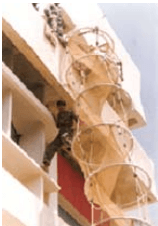
3.2.2. Various necessary provisions in the Fire Act: The legal regime in the Fire Act to prevent fire hazard should provide for mandatory clearance from the fire service department for all high rise buildings, residential clusters, colonies, business centers, malls etc. that they are self sufficient in fire fighting capabilities. This regime should also ensure; a) oil and natural gas installations, b) Hospitals, c) hotels with more that 100 rooms, d) shopping complex, e) building above 50 meters height, f) cinema halls and g) stadiums, etc. have adequate fire fighting capabilities of their own along with a fire officer who should be trained
Emergency Escape Chute
in fire fighting and who should conduct regular fire drills. There should be proper escape routes and such equipment like emergency escape chute etc. for safe and quick evacuation. It should be mandatory for the respective fire station officer to check whether in each such location in his jurisdiction, fire fighting capabilities and adequate escape facilities are in place, fire drills are held regularly and that the people living there are aware of what should be done in case of fire. Provision should also be made for right of way for fire tenders and proper parking locations for firefighting appliances at such busy and vulnerable locations. If the occupancies do not fulfill the fire safety requirements like proper fire safety equipment and escape / evacuation routes and parking locations etc., there should be provision for sealing of such occupancies. This will ensure that fire safety norms are followed and enforced at all places. There should be provision for legal and penal action against defaulters.
3.3Preparation of a comprehensive plan for the state
3.3.1. The first step for every state is to prepare a complete plan and work out the total requirements of manpower and equipment for the entire state. All hazardous industries existing in the urban and rural areas of the state need to be accounted for and after conducting the vulnerability analysis of the area, the requirement of equipment should be worked out on the
Scaling, Type of Equipment and Training of Fire Services
E mergent Needs and Recent I nitiatives
basis of the norms laid down by the SFAC. The number of fire stations, the number and type of vehicles and equipment required should be calculated. After finalizing the requirements, it should be examined as to how much can be procured out of the 13th FC grant to the ULBs in the states and for remaining requirements, proposals should be prepared and submitted to the Planning Commission through the MHA, GoI for consideration and approval in the respective state plan.
3.4Creating basic infrastructure and adopting modern technologies
3.4.1. Creating basic infrastructure is of utmost importance and the state government should provide adequate funds for such projects. The National Policy on Disaster Management of the Government of India has clearly laid down that disaster management should be main streamed in the development process of the country (para 2.4.1. and 4.2.1.). The state government may also think of taking up such projects as a part of all the developmental programs of the district.
3.4.2. Proper fire stations: New fire stations, their buildings and fire service posts will need to be set up as per norms of SFAC based on the vulnerabilities. Designs for buildings may vary according to the size of the fire station and geographical condition. For convenience, the basic requirement for setting up of a fire station is being given in Annexure – 1B.
3.4.3 Tackling water scarcity:
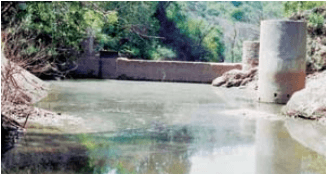
3.4.3.1 Tapping natural water resources:
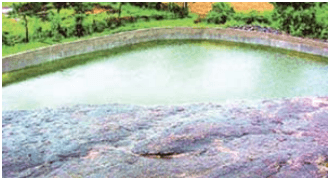
Scarcity of water is becoming more and more pronounced. For fire fighting, water availability is a vital requirement and needs to be addressed. It is of even greater significance in the hill areas where more and more settlements are coming up on different hill features. It is necessary to ensure that sufficient water is readily available for fire fighting near about the habitations. For this purpose all available natural resources of water may need to be surveyed and tapped.
3.4.3.2. Rain water harvesting: Considering the growing water shortages all over the country, rain water harvesting may also be considered wherever possible and required.
Tapping of natural water resource
Rain water harvesting
Scaling, Type of Equipment and Training of Fire Services
3.5Improving outreach of the fire services
3.5.1. Seventy percent of India’s population is in the rural areas while only thirty percent is in the urban areas. The fire fighting capabilities however exist mostly in the urban and semi-urban areas. Covering the rural areas against the fire hazard has always been a serious issue. However, no well conceived and comprehensive steps have been taken to solve this issue and tackle the problem.
3.5.2. Creating fire fighting capabilities right up to the block and GP level may be ideal for rural areas, but going at least up to the sub-divisional level everywhere in the country is absolutely necessary, in order to provide even the most minimal cover against fire hazards to the rural areas. Presently in case of a fire in the villages, assistance is generally available only at the district level. Unfortunately in most cases help is able to reach the villages only when the fire is over and the maximum damage has already occurred. The most affected are generally the marginalized sections of society.
3.5.3. Depending upon the vulnerability, history and the distance from the sub-divisional headquarters, the state government may therefore decide to put up fire posts even at the block or the panchayat level. It must be noted that under Article 243G of the Indian constitution (Eleventh Schedule), the GPs are clearly mandated to ensure social welfare and specially the welfare of weaker sections, schedule castes and schedule tribes. The GPs are also responsible for maintenance of community assets in their area. If required and decided that fire posts should be set up in such vulnerable and strategic locations, the manning of these fire posts may be done either by recruiting CD volunteers from the village itself or by calling up the required number of home guards and placing them at such fire posts.
3.5.4. Converting CD set up from town centric to district centric as recommended by the NDMA in the Policy Approach Paper for the Revamping of CD is already in the process of implementation. The CD organization already has the concept of auxiliary fire services. If Home Guards or CD volunteers are recruited they would need to be trained in fire fighting capabilities by the state fire service or by the state CD set up. The supervision of these rural fire posts will also have to always remain under the State fire officers having jurisdiction in the area.
Scaling, Type of Equipment and Training of Fire Services
National Disaster Management Guidelines: Scaling, Type of Equipment and Training of Fire Services
3.6Provincialisation and formation of state level fire services
3.6.1. The GoI had already approved the provincialisation of fire services in India with a uniform fire legislation in all the states vide MHA letter No. 33/50 CD dated 5th January 1952, but this has not been done everywhere (copy of the compendium giving details regarding provincialization is placed at Annexure - 1A). Due to lack of provincialisation, the fire brigades in some states are still under the command of different municipal corporations and are also not under one command. Thus there are problems in mobilizing them in grave emergencies elsewhere. Compartmentalization under different municipal corporations also inhibits the career progression of the fire service personnel which is definitely not good for their general morale and motivation. Being heterogeneous there is also lack of standardized equipment and proper training in the service. Each state has its own training program. A provincialised fire services must be under the command and control of a professional fire fighter. The state government should consider forming a state level fire service by clubbing all the municipal fire services which should provide for inter ULB transfers on promotion and make mobilization of resources easier during emergencies. The state Fire Act could itself provide for such mobilization if the state governments are not in favour of removing the fire services from the municipal control.
3.7Proper administrative and supervisory structure of fire services in accordance with the administrative structure of the state
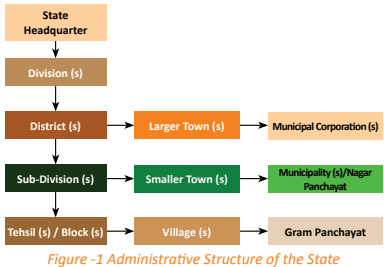
3.7.1. F o r i n t r o d u c i n g a n d standardizing a proper supervisory structure for fire services, the existing administrative structure of the country needs to be kept in mind. For convenience and understanding of the suggested supervisory structure for the fire services, the normal administrative structure in the country is shown in Fig. 1. It shows the existing administrative structure in the state in relation to the
towns and villages, ULBs and PRIs. The state fire supervisory staff should also be placed accordingly. The suggested administrative / supervisory structure for the fire services are indicated in Fig. 2. While creating the required structure for supervision, a proper recruitment
Scaling, Type of Equipment and Training of Fire Services
National Disaster Management Guidelines: Scaling, Type of Equipment and Training of Fire Services
and promotion policy should also be adopted by the state government. Due weightage should be given to both experience and fresh blood in recruitment and promotion.
3.7.2. For closer supervision of the fire services in the subordinate formation of the state, the districts may need to be sub-grouped and placed under a supervisor. The state government may find it convenient to have a group of districts in line with the administrative revenue divisions of the state and place the corresponding cluster of districts under a suitable senior fire officer as supervisor in the divisional towns of the state.
Note:
a. The head fire services at state level will be the senior most supervisor of the state.
b. The divisional fire services chief will supervise the fire services of all the districts in the division.
c. The district fire chief will supervise all the fire stations in the district and sub-division and GP fire post if any.
3.9Fire chief at the district level:
3.9.1. The district fire service should be headed by a district chief fire officer. The fire station should be under a fire station officer with adequate assistant fire officers for shift duties. Depending on the number of fire stations existing in the district and keeping the ideal span of control in mind, adequate number of supervisory officer should also be placed under the district chief fire officer. For other
Figure -2. Suggestive Administrative Structure of the Fire Services of the State
Scaling, Type of Equipment and Training of Fire Services
E mergent Needs and Recent I nitiatives
administrative duties like disciplinary matters, accounting, repair & maintenance work and general upkeep of the campus, etc., appropriate staff should also be provided. Designations, ranks, pay scales, etc., are not being mentioned, as they may differ from state to state. It is however, emphasized that adequate supervisory staff and manpower (as shown in Fig.2) is definitely put in place, not only for maintaining effective supervision but also for a proper career progression in the service. The state government may discuss the issues with the state fire services chief and provide adequate supervisory positions.
3.10Making the fire services a multi-hazard response unit
3.10.1. Constitutionally preventing and fighting fire hazards is a municipal function in India. The Disaster Management Act, 2005 (Section 41) and the National Policy on Disaster Management, 2009 (para 3.2.9) require the local bodies (i.e., PRI, municipalities, district and cantonment boards, town planning authorities) which control and manage civic services to ensure capacity building of their officers and employees for managing disasters. Thus it is logical to make fire services into a multi hazard response unit, well equipped and trained to respond to other local disasters also. This will ensure availability of multi-hazard response unit at numerous locations which could also be mobilized to respond to major disasters elsewhere in the districts or the state if required.
3.11Community participation
3.11.1. Helping out each other, if one can, in times of disaster is a very human and natural behavior. It has been regularly witnessed in India, that the community turns up in large numbers to help out the victims whenever disasters have occurred. World over, fighting against common fire hazard, is a joint community effort. Most of the fire fighting capabilities in the developed western world reside with the community. Community members get themselves trained in fire fighting techniques and even feel proud to be a fire fighter, wear that uniform and help the community to fight the hazard. They even take leave from their regular jobs and work as volunteers during such disasters. Desire to be able to help and self interest of the community are the motivating factor. This should be utilized to organize the community in fire fighting capabilities by providing a local platform for training, helping them and get equipped. In order to continuously remind the people and keep them alert in vulnerable areas there is a very strong need for awareness generation amongst the community regarding the do’s and don’ts to face fire hazards with adequate signages, posters, etc. The fire services could also be trained and equipped to impart basic knowledge to the local community as a routine job at locations
Scaling, Type of Equipment and Training of Fire Services
National Disaster Management Guidelines: Scaling, Type of Equipment and Training of Fire Services
where they exist. The fire services could team up with the NDRF and CD set up and share some responsibility in this regard.
3.11.2. In India, however organized volunteerism in fire fighting and other disaster management has not fully developed. Community Based Disaster Management (CBDM) has a lot of potential, significance and importance. There is an urgent need to develop and improve it. The important thing is to provide a catalyst, which can organize it. The CD organization can easily perform this catalytic function. The NDMA has already submitted a complete revamping report for the CD in the country. If it is implemented comprehensively, the CD can become an important agency not only for general disaster management but also assist in fire fighting. It already has an auxiliary fire service wing. The CD set up or the fire services in the district could be equipped with a mobile training van with training equipment which could move around in the districts and provide training to the community.
1.1.2. For preparing these guidelines, a Core Group was constituted by the NDMA consisting of members of the State Fire Advisory Council (SFAC), Ministry of Home Affairs (MHA), and other experts of the country. Care was taken to ensure that all States were represented. The first meeting of the core group was conducted on 22nd of March, 2010. Various issues concerning the fire services of India were discussed. It was decided to prepare a draft guideline on the basis of issues discussed. A smaller group from amongst the members of the core group was selected to prepare a draft under the supervision and guidance of Shri J.K. Sinha, Hon’ble Member, NDMA. A number of meetings of the smaller group were held and various issues discussed.
1.1.3. On the release of the 13th Finance Commission Report (FCR) during the drafting of these guidelines, it was felt necessary to again call a meeting of the larger core group to
Scaling, Type of Equipment and Training of Fire Services
National Disaster Management Guidelines: Scaling, Type of Equipment and Training of Fire Services
discuss the implications of the recommendations of the FC. The meeting was held on 9th September, 2010 and all the issues concerned with the fire services were again discussed against the backdrop of the 13th FCR. The members and representatives of all the states were verbally explained as to what steps they need to take immediately in order to access the funds awarded by the 13th FC. It was decided that a chapter for the operationalisation of the recommendations of the 13th FC report should also be added in these guidelines.
1.1.4. The final draft prepared was circulated to all the states and stakeholders concerned for their comments. It was finalized only when all the comments and suggestions were received, examined and incorporated in these guidelines. The draft was then discussed and reviewed by the members of the NDMA.
1.1.5. These guidelines are so designed that they will provide direction and guidance to the central and state governments and the Urban Local Bodies (ULBs) on the issues concerned.
a. It will help the state to chalk out a comprehensive strategy for fully accessing the funds allocated by the 13th FC and comfortably spend on the fire services of the state.
b. Since the 13th FC funds may not be adequate for the total requirement of the state as per the norms laid down by the SFAC, it will also enable the state to prepare a comprehensive state five year plan for the remaining requirements for placement before the Planning Commission.
c. This exercise will make India better prepared and more resilient with regard to fire hazards.
1.2.6. Chapter 6 on Training deals with levels of training required right from the entry level, basic training to various in-service promotional, and specialized training. Other disaster management training that may be required has also been enumerated.
1.2.7. Chapter 7 on Scaling of Fire Stations, Equipment and Manpower deals with equipment required for different types of fire hazards, norms for setting up fire stations, response time, etc. It also deals with the requirement of special equipment and its location as per vulnerability analysis of the states concerned.
Scaling, Type of Equipment and Training of Fire Services
National Disaster Management Guidelines: Scaling, Type of Equipment and Training of Fire Services
year plan also have to be prepared quickly.
1920
Creating basic infrastructure, fire stations, water reserves, training centers etc. (Para:3.4.1, 3.4.2, 3.4.3, 3.4.4, 3.4.5, 3.4.6, 3.4.7,3.4.8)
As per the time line of the implementation of the fire hazzard r e s p o n s e a n d mitagation plan.
State Government / ULBs
2122
Improve the outreach of the Fire Services, fire stations / posts should at least be established right up to the sub-divisional level in the beginning and ultimately to the block and the Gram Panchayat (GP) level (Para: 2.3.2) with proper infrastructure, and equipment as per norms laid down by the SFAC (para: 3.5.1, 3.5.2, 3.5.3, 3.5.4, 3.5.6, 3.5.7, 3.5.8)
Blueprint of the plan for the whole state should be prepared within a year and should be implemented in a phased, planned and time bound manner.
State Government / ULBs
22
Provincialisation of the Fire Services and its placement under a professional fighter. (Para:3.6.1)
1 to 2 years
State Government
23
Introduction of a proper supervisory structure for the fire services (para: 3.7.1).
1 to 2 years
State Government / ULBs
23
Creation of supervisory levels of fire services in accordance with administrative structure of the state (Para: 3.7.2)
Along with the creation of the fire stations/fire posts.
State Government / ULBs
24
Head of fire services at state level (Para:3.8.1)
Along with the creation of the fire stations/fire posts.
State Government / ULBs
Scaling, Type of Equipment and Training of Fire Services
National Disaster Management Guidelines: Scaling, Type of Equipment and Training of Fire Services
Page No.
Action Points
Time line
Responsible Agency / ies
24
Fire chief at district level (Para: 3.9.1)
Along with the creation of the fire stations/fire posts.
25
Make fire services into a multi hazard response unit, well equipped and trained to respond to other local disasters as per vulnerabilities. (para: 3.10.1)
1 to 2 years
State Government / ULBs
25
Ensure community preparedness and awareness. Provide a proper platform which would keep the community organized and trained on a regular / permanent basis, to enable them to respond in an effective and organized manner when required through conducting mock exercises. (para: 3.11.1, 3.11.2)
1 to 2 years
State Government / ULBs
26
Research & Development of indigenous less water consuming technologies so that such equipment may be easily available to the Indian fire services at cheaper prices. (para:3.12.1)
It is a continuous and long run process but initiative must be taken immediately.
State Government/ DRDO / IITs / NITs / Private Sector
33
Compliance of 13th FC grant conditionality for accessing the allotment of performance grant and ensuring that ULBs spend money on fire services also. (Para: 4.2.1.2)
Immediately within 1 year
State Government / ULBs
3738
Fixing up accountability and responsibility for the preparation of fire hazard response mitigation plan between the ULB and the other departments that may be running the fire services in the state as the case may be (Para: 4.4.1, 4.4.2).
Immediately within 1 year
State Government / ULBs
Scaling, Type of Equipment and Training of Fire Services
Executive Summary and Action Points for the State Governments and ULBs
Page No.
Action Points
Time line
Responsible Agency / ies
39
Establishing a mechanism / process for smooth transfer of funds from the ULBs to other departments running the fire services in states where fire services are not with the ULBs (Para: 4.5.2 (a), (b), 4.5.3).
Immediately within 1 year
State Government / ULBs
5152
Minimum qualification for the recruitment of Fire men should also be raised to 10 + 2 because it has been already raised for entry to the officer grade level. (para: 6.5.1, 6.5.2).
1 to 2 years
MHA/NFSC
5455
Setting up of a modern training center at state level with adequate infrastructure, faculty and facilities with modern training aids like simulators and adequate equipment in every state for new entrants, in-service and promotional courses (para: 6.8.1, 6.8.2, 6.8.3, 6.8.4).
1 to 2 years
State Government
5758
Scaling of fire station (para: 7.2.1, 7.2.2, 7.2.3, 7.2.4)
1 to 2 years
State Government / ULBs
58
Setting up of a good communication system (Para: 7.3.1, 7.3.2).
1 to 2 years
State Government / ULBs
Scaling, Type of Equipment and Training of Fire Services
The image contains no text or content to process. It is a blank white background with no visible content, text, or symbols. Therefore, the correct OCR output is an empty string.
Scaling, Type of Equipment and Training of Fire Services
National Disaster Management Guidelines: Scaling, Type of Equipment and Training of Fire Services
and killing the people inside them. Crackers, stored in one of the buildings, were being loaded into the van, which was already carrying two gas cylinders. The van was gutted in the fire;
xii. On 4th November, 2004, a blast occurred in Srikakulum, Andhra Pradesh as explosives stored in an unauthorized manner by a cracker manufacturer in China Bazar area caught fire. The incident killed 13 and seriously injured 13 others. Several other nearby houses had been badly damaged. This was an illegal factory and they had no license for manufacturing firecrackers;
xiii. On 16th July 2004, a fire broke out at a school at Kumbakonam resulting in the death of 93 primary school children;
xiv. On 1st November, 2005, several hundreds of tsunami survivors at Nagapattinam, Tamil Nadu were homeless again after fire gutted their temporary shelters. The blaze was started by fireworks being used to celebrate Diwali. The 90 families affected were rehoused in a local hall;
xv. On 15th September, 2005, fire engulfed three illegal firecracker factories in Khusropur village (22 miles east of the state capital Patna, eastern state of Bihar) which accounted for at least 35 deaths and injured at least 50 people. The factories were being run from three houses in the village. The fire was sparked by an electrical short circuit and quickly spread to the flammable material stored in the factories;
xvi. On 22nd February 2006, fire in a fireworks plant in Tamil Nadu killed 10 and seriously injured 19. The fire was caused by an explosion at a stack of 'rockets' being dried, against rules, under trees. Extremely hot climate and friction had triggered the explosion, the resultant fire spread instantly to the shed where 'packed rockets' had been stored and from there, it spread to other sheds;
xvii. On 10th April, 2006, a fire broke out at a trade fair in Meerut, Uttar Pradesh killing more than 57 persons and injuring thousands;
xviii. On 29th October, 2009, a fire broke out at a Jaipur oil depot in which 12 persons died and 150 persons were injured. The fire could not be controlled and died on its own; and
xix. On 9th November, 2011, fire broke out at AMRI Hospital, Kolkata in which 90 patients could not be evacuated and died of suffocation.
2.3.3. In independent India, the SFAC has been deliberating extensively and regularly making various recommendations to the government for improvement of fire services. The SFAC had recommended re-organization of fire services in India way back in 1956 and also recommended
Scaling, Type of Equipment and Training of Fire Services
Fire Services in I ndia and its Present Status
a uniform fire service legislation in all states. The SFAC had also prepared a Model Fire Service Bill and the same was circulated to all the state governments by the MHA, GoI, Letter No. 28/03/56-ER-II, dated 17/10/1958. Some states have still not enacted any Fire Act of their own. For convenience of those states who have not enacted their Fire Act, a copy of Model Fire Service Bill is being enclosed in Annexure – 1 with a direction to enact one within a year or two.
Park Street heritage building on fire, Kolkata
Start of Fire at AMRI Hospital, Kolkata
Conflagration later at AMRI Hospital, Kolkata
2.8. The situation is alarming and needs to be improved immediately. There is an urgent need for all the states to get vulnerability analysis done of all densely populated, important and hazardous locations in various states, assess and fix the requirement of equipment and manpower, spread awareness amongst the people regarding do’s and don’ts so that such incidents are prevented and if they occur, they are tackled promptly.
Scaling, Type of Equipment and Training of Fire Services
The image contains no text or content to process. It is a blank white background with no visible content, text, or symbols. Therefore, the correct OCR output is an empty string.
E mergent Needs and Recent I nitiatives
Emergent Needs and Recent Initiatives
3.2.3. The state government and ULBs should charge a token fee for inspecting and giving fire clearances. Penalties should be charged for violations of rules. The revenue thus generated should be used only for the improvement and upkeep of fire services.
National Disaster Management Guidelines: Scaling, Type of Equipment and Training of Fire Services
3.4.3.3. Water storage tanks: Storage tanks should be constructed at suitable and possible locations within the towns and other vulnerable areas for use in emergencies. Design for tanks and water reservoirs may be prepared by the engineers of state Public Works Department (PWD) as per the local conditions.
3.4.3.4. Detachable water tender: To tackle fire at locations where there is no possibility of creating a water source, the concept of very large detachable water tenders can be a solution. Such water tenders can be left near the fire site and the engine could go to bring another tank.
3.4.3.5. Fire hydrants: Fire hydrants existing in the town also need to be checked regularly and ensured that they are functional. Maps plotting area wise locations of fire hydrants should be available in the local fire station, police station and revenue office etc.
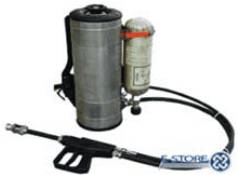
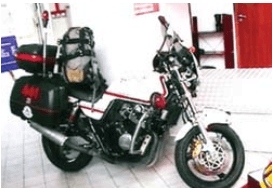
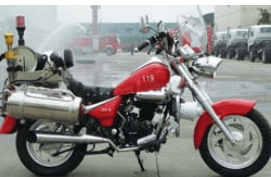
3.4.3.6. Modern technologies: Water mist technology: Scarcity of water being a universal phenomenon, newer technologies which use very little water are being put in place. Water mist technology is one such innovation. The machine is so designed that water converts into mist and, when released on the fire, cuts off oxygen supply to the fire thus putting it out. The machine is small and has various options of the amount of water that it can carry. There are machines which can be mounted on motor cycles, machines that can be mounted on small
Sample underground water storage tank
Detachable Water Tender
Portable /back pack water mist firefighting equipment
vehicles and machines that can be carried by a man on his back. Depending on the magnitude of the fire appropriate equipment could be deployed and used. This innovation has proved very
Scaling, Type of Equipment and Training of Fire Services
E mergent Needs and Recent I nitiatives
useful because it minimizes collateral damage. The conventional fire tenders use a lot of water which tends to damage other objects nearby. A mist fire fighting unit does no such damage. Being available in various sizes it has also proved useful in moving through congested areas. Such motor cycle or small vehicle mounted fire fighting units are ideal for busy, congested towns and localities. They can rush to the site, reach quickly and start fire fighting while larger tenders may follow.
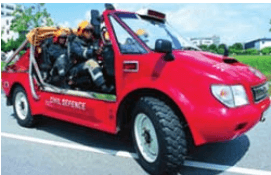
3.5.5. Mobility, usefulness and availability of water should be the main criteria for selecting the equipment for the rural areas. Jeep/tractor mounted portable fire fighting equipment or small and simple fire tenders should be considered depending on the availability of roads and their condition. In water scarce locations, water mist fire fighting unit may also be considered. The help of the officers of the state fire service department should be taken for ascertaining and fixing the type of portable /back pack pumps, water mist fire fighting units that are required.
3.5.6. Since some capital expenditure would be involved for procuring small / portable Jeep or Tractor mounted fire fighting equipment or simple fire tenders etc., the Panchayat Raj Institutions (PRIs) can procure them from the panchayat development funds after discussing and analyzing vulnerabilities of the panchayat with the district fire chief. It must be noted that disaster management now has to be main streamed in all developmental activities as per the National Disaster Management Policy, 2009 (para 2.4.1. and 4.2.1.). The equipment could be located in the GP premises and could be utilized by the local community members in cases of fire. Today every rural area has enough competent persons who can drive tractors, operate pumps and threshers etc. All that is required at the panchayat level is training the volunteers to handle the fire fighting equipment, teaching them techniques of fire fighting and observing precautionary measures. This could be easily organized by the district and sub-divisional fire officers who could also teach them important aspects of maintenance of equipment etc.
3.5.7. Because of lack of capabilities small fires in villages turn into conflagrations and cause serious damages both in terms of lives and properties including agricultural products. If at the GP level in vulnerable areas, village level teams are organized, trained and equipped, they would at least be able to manage many fire incidents and prevent conflagrations. The GP premises could function as a rural fire post. An enlightened GP will easily appreciate the significance and since it will be in their self-interest and safety they would eagerly go forward in this direction. District magistrates need to motivate and enlighten the mukhiya of the GP. For manning of such fire posts he can also think of organizing CD volunteers of which he is the head in the district or for calling of Home Guards for such purposes if CD volunteers cannot be mobilized.
3.5.8. Wide publicity should also be given through posters and sign posts regarding Do’s and Don’ts for prevention of fire hazards in the villages. The 13th FC has given adequate funds for capacity building in disaster management. For easy reference, relevant paras of 13th FCR concerning capacity building state wise fund allotments have been placed at Annexure - 2. It may be noted that capacity building includes buying some equipment also. It may further be kept in mind that fire fighting equipment can also be purchased under the Member of Parliament Local Area Development (MPLAD) scheme. The GP fire post can also be developed into a multi hazard response unit in such vulnerable areas.
Scaling, Type of Equipment and Training of Fire Services
E mergent Needs and Recent I nitiatives
d. The sub-divisional fire service officer will attend to fire not only in the sub-division town but also supervise all the tehsils / blocks in the sub-division wherever and whenever fire fighting facilities are placed.
3.8 Head of fire services at the state level
3.8.1. For effective superintendence and control of the fire services in the state there should be a professional head of the services at the appropriate level depending upon the size of command with adequate personnel to help him in the discharge his duties.
3.12Research and development
3.12.1. Technology has a very important role and its availability helps the responders in a big way when disasters strike. Things that cannot be done manually are easily attainable with the use of appropriate technologies. Unfortunately in India, as far as fire hazard is concerned, many of the modern, useful and effective technologies are imported. The main reason is that there is a lack of Research and Development (R&D) efforts in this area in the country. This makes the equipment prohibitively costly and difficult to procure. It would be very useful, if the DRDO, IITs, NITs and other research organizations are able to utilize their expertise, capabilities and do some R&D work in this area to bring out some small “water mist technology” type or any other such innovative technology. The private sector could also be encouraged to invest in research and development in this area.
3.13Recent initiatives for funding
3.13.1. As mandated, the NDMA took up the alarming and unacceptable inadequacies in fire equipment, manpower, training and financial crunch in the fire services in the country at various levels. The matter was placed before the NDMA meeting chaired by the Prime Minister of India on 18th January, 2010, where the Deputy Chairman of the Planning Commission of India was also present. It was then decided that the Planning Commission would advise the state governments during the process of drawing up their annual plans to prioritize and attend to the upgradation of the fire services and removal of existing deficiencies.
Scaling, Type of Equipment and Training of Fire Services
E mergent Needs and Recent I nitiatives
3.13.2. For revamping and removal of the glaring deficiencies in the fire services all over the country, the NDMA had remained in constant dialogues with the 13th FC. They have fully appreciated this problem and taken necessary steps. The details of the 13th FC recommendations and its operationalisation is discussed in Chapter-4.
3.13.3. With a planned infusion of funds through the above twin pronged approach with the Planning Commission and the 13th FC of India, initiated by the NDMA, the establishment of a uniform fire service with adequate fire stations, with a well thought out career progression of its personnel, appropriate equipment and proper training in rescue techniques and adequate legal provisions, the fire fighting capabilities in the country will become more efficient and effective.
Scaling, Type of Equipment and Training of Fire Services
The image contains no text or content to process. It is a blank white background with no visible content, text, or symbols. Therefore, the correct OCR output is an empty string.
O perationalisation of 13th FC Report; Strategy and Action Plan
Operationalisation Of 13th FC Report; Strategy and Action Plan
4.1Introduction
4.1.1. It would be appropriate to have an overall strategy for accessing funds for fire services as per requirement of the state, a comprehensive and focused approach is required. In order to guide the state government and to ensure the upgradation of fire services all over the country in a comprehensive and focused manner, these guidelines assume a great significance and need to be followed meticulously to make them more resilient and prepared.
4.1.2. Planning and working out the total (urban and rural) requirements of the state, based on the local vulnerabilities and norms laid down by the SFAC is of prime importance. All the existing facilities and equipment already available within the state should be added up and then reduced from the overall requirement calculated as per the state vulnerabilities and norms laid down by the SFAC. Care should be taken that old items which need to be condemned should not be treated as assets. The total requirement of the state government so calculated should be categorized into urban and rural categories and be procured in a prioritized and time bound manner on the basis of vulnerabilities. While utilizing the funds available through the 13th FC, plans should be prepared for placement of demand before the Planning Commission for the remaining requirements of fire services.
4.1.3. The funds provided by the 13th FC (2010-15) for the fire services through the ULBs should be fully utilized. It should also be understood that the funds will be available in a phased manner, as enumerated in the 13th FCR. The procurement and revamping plan of the state under this fund should be made in a similar corresponding phased manner.
4.1.4. It should further be ensured that the funds under the special performance grant of 13th FC be fully accessed by ensuring compliance of all the nine conditions laid down by the 13th FC. The state government should ensure that all nine conditions are fulfilled. The states which do not comply will not get any funds under this head and the total money available will be distributed among the states which have complied with it. It should be kept in mind that
Scaling, Type of Equipment and Training of Fire Services
National Disaster Management Guidelines: Scaling, Type of Equipment and Training of Fire Services
under this head, there is a sum of about Rs. 8000 crores available for the whole country. For convenience, Table – 2 showing details of state wise approximate allocation of basic grants and performance grants made by the 13th FC and calculated as per para 10.147 of 13th FC is as follows.
Table - 2
State-wise Allocation of 13th Finance Commission Grants in crores for Urban Local Bodies
States
Basic Grant
Performance Grant
Total
Andhra Pradesh
1254.59
664.23
1919.82
Arunachal Pradesh
20.83
11.03
31.86
Assam
165.64
87.69
253.33
Bihar
475.44
251.73
727.17
Chhattisgarh
272.68
144.38
417.06
Goa
53.39
28.26
81.65
Gujarat
851.16
450.65
1301.81
Haryana
283.88
150.29
434.17
Himachal Pradesh
53.52
28.33
81.85
Jammu & Kashmir
133.51
70.68
204.19
Jharkhand
278.34
147.35
425.69
Karnataka
1302.51
689.55
1992.06
Kerala
474.91
251.46
726.37
Madhya Pradesh
976.81
517.24
1494.05
Maharashtra
2077.73
1099.99
3177.72
Manipur
53.57
28.36
81.93
Meghalaya
52.43
27.78
80.21
Mizoram
61.40
32.51
93.91
Nagaland
50.17
26.56
76.73
Orissa
324.52
171.82
496.34
Punjab
411.35
217.78
629.13
Scaling, Type of Equipment and Training of Fire Services
O perationalisation of 13th FC Report; Strategy and Action Plan
State-wise Allocation of 13th Finance Commission Grants in crores for Urban Local Bodies
States
Basic Grant
Performance Grant
Total
Rajasthan
780.86
413.40
1194.26
Sikkim
1.69
0.90
2.59
Tamil Nadu
1550.98
821.12
2372.1
Tripura
36.64
19.40
56.04
Uttar Pradesh
1930.59
1022.14
2952.73
Uttarakhand
124.46
65.89
190.35
West Bengal
1056.28
559.22
1615.5
Total
15109.88
7999.74
23110.62
Source: Compiled with the help of ASCI, Hyderabad on the basis of para 10.147 of 13th FCR. The total state wise allocations are approximate. There may be marginal variation in the final figures.
4.1.5. The funds awarded through the 13th FC obviously may not be adequate for the total requirements in the states as per the laid down norms of SFAC. For remainder of the total requirement as calculated earlier (both urban and rural) proposal should be simultaneously prepared to be placed in the state five years plan and demand made before the Planning Commission of India, for sanction.
4.1.6. For the purpose of preparing the plan and calculating the required funds a suggestive minimum scaling of equipment has been discussed in Chapter-7. The approximate price of equipment concerned is enclosed in Annexure – 4. This may change from time to time and therefore the DG S&D rates should be followed. The manpower required for each equipment has been given separately in Chapter-7. The cost involved in pay & allowances for the manpower should be worked out according to the existing pay scales in the concerned State/ULB.
4.1.7. Through the above strategy the revamping of both the urban and rural fire services can take place in a phased but definite manner.
4.2Gist of the important and relevant paragraphs of 13th FCR
4.2.1. During the core group meeting, a comprehensive analysis of recommendations of 13th FC has been done for its operationalisation. The gist of the important and relevant paragraphs of 13th FCR regarding fire services are as follows.
Scaling, Type of Equipment and Training of Fire Services
National Disaster Management Guidelines: Scaling, Type of Equipment and Training of Fire Services
4.2.1.1. “Para 10.145 of 13th FCR”: Keeping these factors in mind, we recommend that grants be given to local bodies as detailed in Table 10.4 as shown in Table - 3.
Table - 3
Table 10.4 of 13th FC - Recommended Grants for Local Bodies
(Rs. crore)
Year
BE2009-10
2010-11
2011-12
2012-13
2013-14
2014-15
2010-15
Percentage of the previous years' divisible pool to be given to all States as grant under Article 275 of the Constitution-General Basic Grant and Total Special Areas Grant
1.50%
1.50%
1.50%
1.50%
1.50%
1.50%
General Performance Grants
0.50%
1.00%
1.00%
1.00%
0.78%
Aggregate Grants to Local Bodies
1.50%
2.00%
2.50%
2.50%
2.50%
2.28%
Projected (Rs crore) Divisible Pool: 2009-14
545463
636183
746179
880156
1038188
1224595
3846169*
General Basic Grant and Total Special Areas Grant
8182
9543
11193
13202
15573
57693
General Basic Grant
8022
9303
10873
12883
15253
56335
General Performance Grant
0
3181
7462
8802
10382
29826
General Basic Grant & General Performance Grant
8022
12484
18335
21685
25635
86161
Total Special Areas Grant
160
239
319
319
319
1357
Special Areas Basic Grant
160
160
160
160
160
798
Special Areas Performance Grant
0
80
160
160
160
559
Aggregate Grants to Local Bodies
8182
12724
18654
22004
25955
87519
* Period 2009-10 to 2013-14. Totals may not tally due to rounding off.
Scaling, Type of Equipment and Training of Fire Services
O perationalisation of 13th FC Report; Strategy and Action Plan
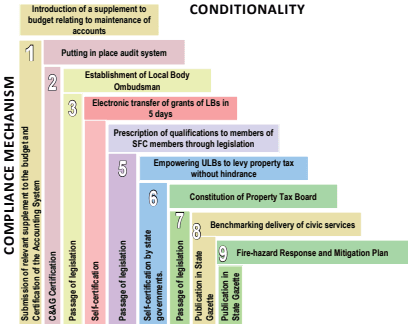
4.2.1.2. Nine conditions: Para 10.161 of 13th FC reads as “For the years 2011-2012, 2012-13, 2013-14 and 2014-15, a state government will be eligible to draw down its share of the general performance grant shown in Annex 10.15b only if it fulfils the following nine conditions; i, …ii, …iii,… condition No. (ix) as depicted in Figure-3 “All municipal corporations with a population of more than 1 million (2001 census) must put in place a fire hazard response and mitigation plan for their respective
Figure. 3 – Nine Conditions and the compliance
jurisdictions. Publication of these plans in the respective state government gazettes will demonstrate compliance with this condition”.
These conditions as shown in Fig. 3. must be met by the end of a fiscal year (31 March) for the state to be eligible to draw down its performance grant for the succeeding fiscal year.
4.2.1.3. Revamping Fire and Emergency Services: Para 10.171 of 13th FC reads as “The National Disaster Management Authority (NDMA) has drawn the Commission’s attention to the dismal state of fire services in the country. NDMA has estimated the deficiency of the services in the country as under”
a. Fire stations - 97.54%
b. Fire fighting and rescue vehicles - 80.04%
c. Fire personnel - 96.28%
Source: Compendium of recommendations of SFAC and 13th Finance Commission Report
4.2.1.4. Para 10.172 of 13th FC reads as “NDMA argued for allocation of grants worth Rs. 7,000 crore to the States to meet these shortages. We accept the need to restructure fire and emergency services across the urban and rural areas of the country and recognise that the stipulation in Para 10.161(ix) is merely a first step. Though this is an important area, we are not imposing an expenditure conditionality on local bodies in view of our approach to conditionality outlined in Para 10.166. We recommend that a portion of the grants provided by us to the urban local bodies be spent on revamping of the Fire services within their respective
Scaling, Type of Equipment and Training of Fire Services
National Disaster Management Guidelines: Scaling, Type of Equipment and Training of Fire Services
jurisdictions. These bodies could provide financial support to the State Fire services Department towards this objective. In this process, they could draw upon the expertise of State agencies and the NDMA, as required”.
4.2.1.5. Para 11.38 of Chapter-11 reads as “The NDMA has focused especially on the current state of fire services in the country and has argued for the upgradation of fire-preparedness and provision of a grant of Rs. 7000 crore to the State Governments for this purpose. We have considered this issue in our chapter on local bodies”.
4.2.1.6. Para 12.8 reads as “Grants for local bodies in line with Para 4(iii) of the ToR and for disaster management in terms of Para 8 of the ToR have been dealt with at length in chapters 10 and 11, respectively. These grants also flow to the States under Article 275 of the Constitution. We have listed these grants in Table 12.1 of this section in order to be comprehensive. The grants-in-aid of the revenues of States, as recommended by us for the award period 2011-15, are shown in Table – 4”.
Table - 4
SL
Table 12.1 of the 13th FC - Grants-in-Aid to States
(Rs. crore)
1
Local Bodies
87519
2
Disaster Relief (including for capacity building)
26373
3
Post-devolution Non-plan Revenue Deficit
51800
4
Performance Incentive
1500
5
Elementary Education
24068
6
Environment (a) Protection of Forests (b) Renewable Energy (c) Water Sector Management
15000500050005000
7
Improving Outcomes (a) Reduction in Infant Mortality Rates (b) Improvement in Supply of Justice (c) Incentive for Issuing UIDs (d) District Innovation Fund (e) Improvement of Statistical Systems at State and District Level (f) Employee and Pension Data base
14446500050002989616616225
Scaling, Type of Equipment and Training of Fire Services
O perationalisation of 13th FC Report; Strategy and Action Plan
SL
Table 12.1 of the 13th FC - Grants-in-Aid to States
(Rs. crore)
8
Maintenance of Roads and Bridges
19930
9
State-specific
27945
10
Implementation of model GST
50000
Total
318581
4.2.1.7. Para 12.117 of 13th FC reads as “The State-wise details of grants-in-aid recommended for needs that are specific to each State are given below.
a. Para 12.123 (Andhra Pradesh): The State has represented for an allocation to strengthen Fire and Emergency Services by providing essential equipment to convert the service into a multi-hazard response unit. We recommend a grant of Rs. 17 crore on this account.
b. Para 12.171 (Haryana): With rapid industrialization of many parts of Haryana, the fire service department has to be upgraded and adequately equipped to face emergencies. We allocate an amount of Rs. 100 crore for this.
c. Para 12.245 (Mizoram): In response to the State Government’s memorandum, we recommend an amount of Rs. 20 crore for building new fire stations to revamp the fire and emergency services in the State.
d. Para 12.261 (Orissa): The State memorandum has highlighted the enormous gap in provision of fire services in the State, based on which, we recommend an amount of Rs. 150 crore for this purpose. The State should ensure that part of this fund is utilized to upgrade the fire service training institution and to provide training to fire service personnel.
e. Para 12.299 (Tripura): As requested by the State Government, we recommend Rs. 15 crore for construction of the headquarters of fire services in the State.
f. Para 12.301 (Uttar Pradesh (Varanasi)): The city of Varanasi is a centre of national and international importance for pilgrims and tourists and thus, needs support to improve its infrastructure. Funds have been requested separately to strengthen fire services in the State. We propose a grant of Rs. 20 crore to upgrade the fire and emergency services in Varanasi.
g. Para 12.319 (West Bengal): Having converted the West Bengal Fire Service Department into the West Bengal Fire and Emergency Department in view of new challenges, the State Government has requested a grant for its upgradation and strengthening. We recommend a grant of Rs. 150 crore to fill the infrastructure and equipment gaps in the Department.
Scaling, Type of Equipment and Training of Fire Services
National Disaster Management Guidelines: Scaling, Type of Equipment and Training of Fire Services
4.2.1.8. It is obvious that the 13th FC has considered the importance and need to re-vamp the fire services in the country. While they have allocated amounts as grants in aid directly to states which had submitted specific proposals before it, taking note of the constitutional position that fire services are municipal functions they have more than doubled the grants (both basic grant & performance grant) to the local bodies in comparison to the allocations made by the 12th FC and simultaneously recommended that the local bodies should spend money on fire services. It is now for the state government and local bodies to see and ensure that the glaring deficiencies in the fire services are removed and the community is provided with better cover and safety against fire hazards. For the convenience and reference of the stakeholders, the allocation made by 13th FC to the different state governments are placed at table 5.
Table – 5
Table 12.6 : Grants-in-Aid for State-specific Needs
(Rs. crore)
State
2010-11
2011-12
2012-13
2013-14
2014-15
2010-15
1
2
3
4
5
6
7
Andhra Pradesh
20.00
312.50
312.50
312.50
312.50
1270.00
Arunachal Pradesh
0.00
75.00
75.00
75.00
75.00
300.00
Assam
0.00
150.00
150.00
150.00
150.00
600.00
Bihar
0.00
461.25
461.25
461.25
461.25
1845.00
Chhattisgarh
0.00
320.25
320.25
320.25
320.25
1281.00
Goa
0.00
50.00
50.00
50.00
50.00
200.00
Gujarat
0.00
325.00
325.00
325.00
325.00
1300.00
Haryana
0.00
250.00
250.00
250.00
250.00
1000.00
Himachal Pradesh
0.00
87.50
87.50
87.50
87.50
350.00
Jammu & Kashmir
1000.00
87.50
87.50
87.50
87.50
1350.00
Jharkhand
0.00
356.25
356.25
356.25
356.25
1425.00
Karnataka
0.00
325.00
325.00
325.00
325.00
1300.00
Kerala
0.00
375.00
375.00
375.00
375.00
1500.00
Madhya Pradesh
0.00
307.75
307.75
307.75
307.75
1231.00
Maharashtra
0.00
308.75
308.75
308.75
308.75
1235.00
Manipur
0.00
75.25
75.25
75.25
75.25
301.00
Meghalaya
0.00
62.50
62.50
62.50
Source: 13th Finance Commission Report
Scaling, Type of Equipment and Training of Fire Services
O perationalisation of 13th FC Report; Strategy and Action Plan
4.3Strategy for operationalisation of recommendations of 13th FC
4.3.1. It can be observed from the recommendations, that the 13th FC has noted with concern the very high level of deficiencies in the fire services of the country. Recognizing the criticality of the fire services, they have clearly underpinned the need to restructure and revamp the fire services. Apart from the fire disasters, the commission has taken cognizance of other disasters in general and has recommended substantial grants to the states for disaster training and related capacity building (Para 11.102 of 13th FC Report). State-wise allocations for capacity building for effective disaster response is being given at Annexure - 2.
4.3.2. For the operationalisation of the recommendations of 13th FC in the correct spirit a clear and comprehensive line of action needs to be decided right from the beginning by both the central and state governments along with the ULBs.
The FC has made two complimentary recommendations:
a. Para 10.161 (ix) of the Report - All Municipal Corporations with a population of more than one million (2001 census) must put in place a fire hazard response and mitigation plan for their respective jurisdictions. The plans for Municipal Corporation areas should be published in the State Gazette as a measure of compliance; and
[This is a mandatory recommendation and is one of the nine conditions stipulated by the commission, for drawing the performance grant. The state governments can access funds under performance grant only if they comply with the nine conditions including putting in place a fire hazard response plan for million plus cities.] (List of the concerned million plus cities placed at Annexure - 3 for convenience). For preparation of fire hazard response and mitigation plan in all million plus cities, the responsibility seems to have been entrusted to the municipal corporations though they are expected to seek expertise from the state fire services or the NDMA. Once the plan is prepared, the municipal corporations need to get the plans published in the state gazette. The FC vide para 10.172 page no. 182 of its’ report has clearly stated that for the preparation of these plans, the expertise of the fire service department or the national disaster management authority¸ may be utilized.
b. Para 10.172 of the Report - The 13th FC has recommended that a portion of the grant allocated by the commission to the Urban Local Bodies may be spent on the revamping the Fire services in their jurisdiction. The ULBs may extend financial support to State Fire services Department in this effort.
[This provision enables coverage of urban areas other than the million plus cities as well.]
Scaling, Type of Equipment and Training of Fire Services
National Disaster Management Guidelines: Scaling, Type of Equipment and Training of Fire Services
4.4Accountability
4.4.1. Since fire services are under the home departments in some states and under the ULBs in others, a broader question arises as to who will be responsible for the preparation and the implementation of the fire hazard response and mitigation plans as well as the revamping of fire services. There will be no problem in such states where the fire services are under the ULBs. For use of ULB funds the problem will arise in those states where the fire services are under the home department. In such states coordination and convergence between the urban and home department will be necessary. For the implementation of the plan a mechanism of coordination and convergence between the two departments will have to be formulated. The state governments need to decide this issue right from the beginning. Broadly the questions that need to be addressed include:
a. Who should prepare the plan – ULB or the fire services department ?
b. If it should be fire services department because of their expertise, what should be the role of ULB in the process? It is important in states where fire services are not with the ULBs.
c. What relations are required between ULB and city fire services agency not under the ULBs to put the process in place, prepare the plan and implement it?
d. Who will be accountable for implementation of the plan?
e. What could be the mechanisms for monitoring and evaluation in such cases?
The state government needs to issue clear cut direction on the above raised points.
4.4.2. In the absence of proper instructions, the municipal corporations may prepare fire hazard response and mitigation plan as they think right and fit. This however would lead to disproportionate and unbalanced growth of fire services in different states and ULBs. It is vital that the NDMA, which has been mandated to lay down policies, plans and formulation of guidelines for disaster management (section-6 of DM Act) should formulate guidelines for the preparation of fire hazard response and mitigation plan for all urban and rural areas. To standardize the fire hazard response and mitigation plan, a comprehensive and suggestive format of the plan is being placed in Chapter-5 for reference. The fire service of state governments/ULBs should refer to the same during the preparation of their response plan. The format is being laid down to help prepare fire hazard response mitigation plan for million plus cities. It will also be helpful in preparing plans for other cities.
4.4.3. These guidelines would motivate, help and guide the municipal corporations and state governments to work out detailed standardized plans for their respective jurisdictions.
Scaling, Type of Equipment and Training of Fire Services
O perationalisation of 13th FC Report; Strategy and Action Plan
4.5Consultative process
4.5.1. The state government may need to issue directions to the concerned municipal authorities on the issues mentioned in para – 10.172 page no. 182 of 13th FCR especially when the funds of the ULBs are to be used for revamping of the fire services. It may not be out of place to mention here that the accountability of all agencies working within the town to the “city council” is one of the mandatory conditions under the Jawaharlal Nehru National Urban Renewal Mission (JNNURM) launched in 2005. All state governments have accepted this condition and also indicated timelines for compliance. The local bodies should therefore have a role in the planning process concerning the city, and the fire hazard response and mitigation plan for a city with 1 million plus population should be finalized in a consultative process through discussion with the “council” or through a presentation on the plan before them. This will also enhance community participation in the revamping of the fire services. Thus it is of utmost importance that the state governments set up a mechanism and process of consultation with the concerned municipal corporation and the department managing the fire services.
4.5.2. The second recommendation of the 13th FC is vital. It is necessary that the state governments and the corporations should ensure allocation of a portion of grants for fire services as suggested by the 13th FC, in a timely manner. This may be done in two ways:
a. The ULBs in the states should be advised by the state governments to allocate a minimum percentage of the grants received by them under 13th FC and use them to strengthen the fire services in the city as per the plan prepared in consultation with the fire service chief. This would involve one allotment to the ULBs by the state governments and then another allotment by the ULBs to the fire service department; or
b. Alternatively, the state government could apportion a percentage of the 13th FC grants received for the ULBs at the state level itself before allocating them to the concerned ULBs and inform the ULBs accordingly. The fund so segregated may be utilized through fire service department to strengthen and revamp the fire services in the urban areas as per plan prepared for the purpose. The ULBs may be kept informed of the amount of funds so spent from their overall allocations and the progress made in the re-vamping process of the fire services in their jurisdictions/areas.
4.5.3. It is felt that under the given financial status of the ULBs, different interests may like to divert the funds for other usages and thus allocations for revamping the fire services,
Scaling, Type of Equipment and Training of Fire Services
National Disaster Management Guidelines: Scaling, Type of Equipment and Training of Fire Services
as suggested by the 13th FC may not be done in a timely and comprehensive manner. It is therefore, desirable that the allocation should take place at state level itself. It should be clearly understood that the 13th FC has increased the allocation of amount to the ULBs considerably in comparison to the allocation made by the 12th FC. It has mainly been done because of the requirement of adequate funds for revamping of the fire services in the country. Even a ten percent allocation would work out to be a substantial amount and would enable and initiate the process of revamping and strengthening the fire services to the bare minimum level in the country as a whole.
4.6Fixing the overall allocation required both for the urban and rural fire services and apportioning the fund requirement between the ULB and state plan
4.6.1. The NDMA, through these guidelines is fixing the basic minimum standard for each fire station so that they can function with a modicum of efficiency and effectiveness to begin with. The state government with the help of fire service departments in their states can calculate the money required for different equipment with the necessary man-power for the upgradation of their fire station. The type of minimum equipment required would depend on the respective vulnerabilities. Approximate cost of equipment is being placed at Annexure - 4. The expenditure on manpower will have to be calculated as per the pay scales of the state/ ULB concerned. The state should then accordingly allocate the funds segregated from the grants to the ULBs for the revamping of fire service in urban areas. Funds available from ULBs may not be adequate to fully meet even the overall urban area requirement as per the norms. To meet the short fall of necessary funds, a comprehensive plan both for the urban and rural areas should be prepared for the remaining deficiencies and taken up in the state plan for approval and allocation by the Planning Commission of India.
Scaling, Type of Equipment and Training of Fire Services
Fire Hazard Response and Mitigation Plan
Fire Hazard Response and Mitigation Plan
5.1Introduction
5.1.1. Fire service setup in any area is mainly based on population, response time and risk hazard analysis. In the absence of risk hazard analysis, it would be improper to decide on the specific and special equipment required at a particular fire station. It should be based on a correct assessment of the possible and potential extent of damage if the fire services do not have the concerned special equipment. There are however, a certain set of equipment, which each fire station should mandatorily have. The plan also needs to be constantly reviewed on the basis of growing hazards and thus needs to be dynamic.
5.1.2. It has already been recommended that a legal regime should be put in place which provides for mandatory fire clearance from the fire department and various other obligations for different types of buildings, colonies, industries and other installations. It should be obligatory for them to have certain fire fighting capabilities etc. The mitigation plan should have details of all such buildings and installations, the names of the fire safety officers for those installations, their address and phone numbers, etc. The detail should also include a list of fire fighting equipment and facilities they have.
5.1.3. The plan should include a calendar of activities for mass awareness and inspection of fire fighting facilities and equipment especially in schools, busy shopping malls, high rise buildings and residential clusters, to reduce the fire accidents by controlling it in time.
5.1.4. As mentioned earlier, one of the mandatory recommendations of the 13th FC for accessing the performance grant by the ULBs is the preparation of a fire hazard response and mitigation plan for million plus cities and its publication in the state gazette. The 13th FC has also directed that for revamping and strengthening of fire services and for preparing and maintaining fire hazard response and mitigation plan, the local bodies can draw expertise in the area from the state level fire agencies as well as the NDMA.
Scaling, Type of Equipment and Training of Fire Services
National Disaster Management Guidelines: Scaling, Type of Equipment and Training of Fire Services
5.2Fire hazard response and mitigation plan
5.2.1. For the convenience of the stakeholders, a broad outline of the plan and its various components are therefore being put together and are as follows ;
a. Background of the city
City overview – population, density, land use, type of buildings, roads and accessibility;
Infrastructure, health care system, business and industrial locations, schools, educational institutions, and other land use, etc. Classify the vulnerable assets, people, housing and critical infrastructure; and
Resource and institutions – public and private that can help and support the fire hazard response system.
b. Planning process, response and mitigation strategy
Goals, objectives and potential actions should be clearly spelt out in the plan;
• Identify hazards by collecting historical hazard information (both natural and manmade);
Risk and vulnerability assessment – identification of city specific hazards and assessment of risks involved (vulnerability analysis); and
Assess own assets and capabilities – (administrative, financial, technical, regulatory, legal) and determine how the ULBs / fire services need to address the requirements.
c. Identification of resource –
Identify role of the government departments, existing institutions, expert agencies, NGOs, etc. along with their capacity assessment;
Identify key stakeholders in the community and surrounding areas;
• Organize resources – identify hazard mitigation teams, agencies, community members;
Decide stages / steps for implementation of plan – key stages, actors, public participation - training and capacity building, Public outreach & sensitization plan, involvement and participation of the community and role of ward committee and area Sabhas/Panchayats etc.;
Review and incorporation of future developmental plans of the city and other information;
Scaling, Type of Equipment and Training of Fire Services
Fire Hazard Response and Mitigation Plan
Preventive actions – property and natural resource protection techniques and strategies, appropriate equipment and facilities of their own at large colonies and high rise buildings, like water, fire extinguishers, escape routes, etc., public information and awareness plans and actions required;
• Potential impact and damages – social, economical and environmental; and
Use of GIS for planning.
d. Evaluation and monitoring
For making the plan dynamic, integration of the community, continuous evaluation and monitoring is necessary. In towns interaction with the municipal council and in villages with the PRIs will prove very helpful. The plans should be discussed with them and suggestions obtained should be incorporated from time to time. Surprise mock exercises for fire emergencies will greatly help in evaluating and monitoring of the plan.
5.3. Basic components and details of fire hazard response and mitigation plan
5.3.1. A basic format of the fire hazard response and mitigation plan is being provided below for convenience which may be prepared on the basis of details discussed above. Preparation of this plan is mandatory for 1 million plus cities 2001 census.
A. Detail of the city / area whose plan is being made a) Name of city b) Population of city: c) Area of city (in sq. kms.): d) Density of population in the city: e) Vulnerability analysis of the city : (mention all the relevant possible hazards)
6. Name of the authority maintaining fire services i.e. state fire service/ local self government such as municipal corporation / municipal council with its detailed address, district & pin code
7. Deficiencies on the basis of the SFAC norms. a) One fire engine for 50,000 population; b) One fire station for 10 sq. km urban area; c) One fire station for 50 sq. km rural area; and d) Response time maximum 5 minutes in urban area and 20 minutes in rural area.
Scaling, Type of Equipment and Training of Fire Services
National Disaster Management Guidelines: Scaling, Type of Equipment and Training of Fire Services
8. State level nodal authority for fire services (in case fire services is not provincialised)
9. Head of fire service : a) Name: b) Designation: c) Address with Pin code: c) Telephone No. (with STD Code): d) Fax No.: e) Mobile No.: f) E-Mail:
10. Details of the emergency operation centre (DDMA)of the concerned city : a) Address with Pin code: b) Telephone No. (with STD Code): c) Fax No.: d) E Mail:
11. Whether fire service is governed by any Fire Act or other Act and rules, if not, how you are going to enforce preventive steps ?
12. Calendar for the fire safety training and awareness programmes for the public. This should be so designed as to cover majority of the population in the vulnerable area of jurisdiction.
13. Plan and calendar of evacuation drills/ mock drills in vital installations/ industrial plants/ government buildings / schools and critical infrastructure like hospitals, etc.
B : Risk assessment, incident prevention and mitigation of city : (Risk evaluation and control plan)
14. Plan for compulsory fire hazard evaluation of all types of buildings old and new.
15. Plan for enforcement of fire approvals as per the provisions contained in National Building Code (NBC) 2005 for new constructions.
16. Plan how data of all fire approvals are maintained in the headquarters or at the central data setup.
17. Plan for introducing and enforcing development control rules of the city for new development projects.
Scaling, Type of Equipment and Training of Fire Services
Fire Hazard Response and Mitigation Plan
The details of potential fire risk in the city
SL.
Particulars
Nos.
Residential
Non-Resdential
a
Buildings
Upto 15 meters
15 to upto 24 meters
Above 24 to upto 36 meters
Above 36 to upto 45 meters
Above 45 to upto 60 meters
Above 60 to upto 75 meters
Above 75 to upto 100 meters
Above 100 to upto 150 meters
Above 150 meters above.
b
Industrial area / chemical zone
c
Cinema halls/ malls/ drama / theatres
d
Public gathering places
e
Hazards storage
f
Pilgrims area ( floating population )
g
Exhibition/ public function grounds where permission for erecting pendals for circus or any other religious / social functions are granted.
h
Other (give details)
Note:- All building should be sub-classified on the basis of following classification as per Part 4 of NBC 2005:
A) Residential buildings a) Lodging or rooming houses b) One or two family private dwelling c) Dormitories d) Apartment houses (flat) e) Hotels f) Hotels (starred)
B) Educational buildings a) School up to senior secondary level b) All other training institutes
Scaling, Type of Equipment and Training of Fire Services
National Disaster Management Guidelines: Scaling, Type of Equipment and Training of Fire Services
C) Institutional buildings a) Hospitals and sanatoria b) Custodial institutions c) Penal and mental institutions
D) Group D assembly buildings E) Group E business buildings F) Group F mercantile buildings G) Group G Industrial Buildings H) Group H storage buildings I) Group J hazardous buildings
19. Road map of the city with the following details : a) Any major National Highway (NH) passing though city b) Any state sighway passing though city c) Any tunnels in the city d) Major bridges in the city e) Accident prone patches f) Roads in hilly areas or hilly/mountain area in the city or near city and g) other related information
20. Railway network a) Mail/express train main stations b) Local train stations c) Metro train stations d) Underground metro stations e) Sky bus f) Mono rail
21. Airport a) Domestic b) International c) Cargo d) Helipad e) Air force airbase
Scaling, Type of Equipment and Training of Fire Services
Fire Hazard Response and Mitigation Plan
22. Sea / river port a) Passenger jetties b) Container jetties c) Bulk material handling jetties d) Petroleum products handling jetties e) Chemical and hazardous goods handling jetties f) Fishing jetties g) Ship breaking areas h) Ship building docks i) Naval base
23. Vital installations in the city a) Secretariat b) Legislation assembly c) Bank headquarters d) Headquarters of major government and semi-government organizations e) Atomic power station f) Chemical factories g) Fertilizer plants h) Major hazardous units i) Cross country pipelines j) Petroleum oil companies like refinery, bulk storages depot, k) Petroleum and flammable gas, LPG filling stations l) Domestic gas pipe network m) Cylinder gas storage-outlets n) and such other points
24. Temporary structures such as exhibition halls, circus tent, pandals erected for religious activities.
25. Dilapidated and unsafe buildings in the city.
26. Unorganized houses like Jhuggi-jhopadi and slum area.
Scaling, Type of Equipment and Training of Fire Services
National Disaster Management Guidelines: Scaling, Type of Equipment and Training of Fire Services
27. Details of other hazards that exist in the city and plans for response and mitigation accordingly. Hazards like geological, metrological, biological, human caused, international and technological.
A. Geological hazards associated with city : a) Earthquake b) Tsunami c) Landslide, mudslide, subsidence d) Glacier, iceberg
B. Meteorological hazards associated with city : a) Flood, flash flood, tidal surge b) Drought c) Fire (forest, range, urban, wild land) d) Snow, ice, hail, avalanche e) Windstorm, tropical, cyclone, hurricane, tornado, water spout, dust/ sand storm. f) Extreme temperatures ( heat, cold ) g) Lightning strikes h) Famine i) Geomagnetic storm
C. Biological hazards associated with city : a) Emerging diseases that impact human or animal ( swine flu, malaria, birds flu, plague, smallpox , anthrax, foot and mouth disease. b) Animal or insect infestation or damage.
D. Human caused events such as the following : Accidental a) Hazardous material ( explosive, flammable liquid, flammable gas, flammable solid, oxidizers, poison, radiological, corrosive ) spill or release. b) Explosion / fire c) Transportation accident d) Building / structure collapse e) Energy / power/ / utility failure f) Fuel/ resource shortage g) Air/ water pollution, contamination h) Water control structure/ dam/ lever failure i) Financial issues (economical depression, inflation, financial system collapse) j) Communication system interruptions k) Mis-information and l) Any other
Scaling, Type of Equipment and Training of Fire Services
Fire Hazard Response and Mitigation Plan
Intentional (assessments of the following threats and plan of the action to meet the situation arising out of) a) Terrorism ( explosive, chemical, biological, radiological, nuclear, cyber ) b) Sabotage c) Civil disturbance, public unrest, mass hysteria, riot d) Enemy attack, war e) Insurrection f) Strike or labour dispute g) Disinformation h) Criminal activity ( vandalism, arson, theft, fraud, embezzlement , data theft) i) Electromagnetic pulse j) Physical or information security breach k) Workplace violence l) Product defect or contamination m) Harassment n) Discrimination o) And any other
Possibility of technological caused events that can be unrelated to natural or human caused events, such as: a) Central computer, mainframe, software, or application ( internal / external) b) Ancillary support equipment c) Telecommunications d) Energy / power / utility. e) And any other
Collect details and analyses of fire & rescue calls of the last five years to draw a probability of hazards.
SL.
Details
Year
Year
Year
Year
Year
a)
Total no. of fire & rescue calls
a) No. of fire calls
b) No of rescue calls
c) No of gas leaks
d) Building collapse
e) Hazards material calls
f) Animal rescue calls
g) Other calls
b)
No. of lives saved
c)
No. of lives lost
Scaling, Type of Equipment and Training of Fire Services
National Disaster Management Guidelines: Scaling, Type of Equipment and Training of Fire Services
SL.
Details
Year
Year
Year
Year
Year
d)
No. of injured
e)
Property saved (Rs. in lakhs)
f)
Property lost (Rs. in lakhs)
Analysis of probable timing of incidents
SL.
Details
Year
Year
Year
Year
Year
a)
Nos. of fire/rescue calls received from 7000 hrs to 1900
b)
Nos. of fire/rescue calls received from 1900 hrs to 7000
C Planning, resource management and incident management (Mutual aid/ assistance, emergency response and operations, developing and implementing emergency response plan, procedures and operationalisation of Dicision Support System)
30. Disaster management plan of the city and the responsibilities of the fire services there in.
31. Plan for availing mutual aid with any central or other state government authority for conducting fire & rescue operations. please provide details
32. Collect all on site and off site disaster management plans for all vital installations, buildings and industrial plants in the jurisdiction and the role of fire services in them.
Addresses of fire stations which can be requested to help.
SL.
Name of fire station
Type of construction of fire station i.e. RCC/metalshade/temporaryshade
Address
Telephone No.
Fax No.
Details of Fire and Rescue Appliances made available in Fire Stations
SL.
Name of fire station
Number of water tenders
Number of rescue tenders
Number of ladders i.e. TTL/ ALP's
Other fire or rescue appliances
Scaling, Type of Equipment and Training of Fire Services
Fire Hazard Response and Mitigation Plan
Summary of fire service
SL.
Type of vehicles
Nos.
a)
Number of fire stations
b)
Water tenders
c)
Rescue tenders
d)
Advance emergency rescue tenders
e)
Flood and rescue tenders
f)
Hazmat vans
g)
Turn table ladders
h)
Hydraulic platforms
i)
DCP tenders
j)
Foam tenders
k)
Smoke blowers
l)
Control post vans
m)
Water tankers
n)
Ambulances
o)
Cars
p)
Jeeps
q)
High pressure portable pumps
r)
Portable pumps
s)
Breathing apparatus sets
t)
Flood rescue boats
u)
Life jackets
v)
Details of others appliances and equipment
w). Detailed address and telephone numbers if any of all the personnel in the fire station.
x) Plan for day to day training requirements of the station personnel like training ground, drill tower, etc.
Details of officers & staff attached to fire & emergency service (right from the state hq to the local fire station) :
SL.
Designation
Name
Office address
Contact details
a)
Telephone (O): Telephone (R): Mobile No.: Fax No.: E Mail:
Scaling, Type of Equipment and Training of Fire Services
National Disaster Management Guidelines: Scaling, Type of Equipment and Training of Fire Services
b)
Telephone (O): Telephone (R): Mobile No.: Fax No.: E Mail:
c)
Telephone (O): Telephone (R): Mobile No.: Fax No.: E Mail:
d)
Telephone (O): Telephone (R): Mobile No.: Fax No.: E Mail:
e)
Others (specify designation)
Telephone (O): Telephone (R): Mobile No.: Fax No.: E Mail:
D. Communication, early warning and operational procedures
This should have details of the type of communication available - wireless, (UHF / VHF), internet, tie up with local radio stations, TV and cable channels, mobile phone service providers, Global Positioning System (GPS), Geographical Information System (GIS) and Standard Operating Procedures (SOPs) as prescribed from time to time.
Scaling, Type of Equipment and Training of Fire Services
Training
6.1 Introduction
6.1.1. The aim of training is to ensure that all fire service personnel are given the necessary exposure to develop the knowledge, skills, attitude, physical fitness, vision and mental alertness that they require to carry out their jobs efficiently and provide every opportunity for career development.
6.2 Capacity building
6.2.1. Capacity building for disaster management has been identified by the 13th FC as a critical area and allocated substantial funds to states under this head. These funds should be utilized for training fire personnel also.
6.3 Training of firemen in fire services
6.3.1. The role of fireman in fire services is to extinguish fire, rescue trapped persons, provide medical first aid and also respond to the various man-made fire accidents and natural disasters. The roles cannot be performed well until and unless sufficient training is imparted to the fire service personnel. The type of training, duration etc. will depend upon the level of entry.
6.4 Levels of entry
6.4.1. Basically there are two levels of training; a) fire men and b) sub officer. Unplanned growth and development of the fire services has led to multiple level of entries to the service in different states. In some states because of non-provincialization of the service, non-availability of adequate officers and lack of proper cadre planning, recruitment is taking place at higher levels also like station officers, divisional officers and chief fire officers.
6.5Basic induction training of firemen/leading firemen/driver
6.5.1. The minimum educational qualification at present for recruitment as a fireman / leading fireman / driver is 10th class / metric pass with driving license for heavy vehicles. The
Scaling, Type of Equipment and Training of Fire Services
National Disaster Management Guidelines: Scaling, Type of Equipment and Training of Fire Services
person should not be more than 25 years of age. The induction training is of 6 months and details of the curriculum and training programme for firemen and leading firemen are placed in Annexure - 5 and 6.
6.5.2. It is important to point out here that at the Nagpur Fire Service College (NFSC), the qualification of next higher position has been raised to 10+2. Therefore the state governments may like to consider raising the basic level entry qualification to 10+2. Otherwise, the firemen who are recruited as 10th pass will have achieve 10+2 qualification for further promotion.
6.6 Basic induction and in-service promotional training courses for officers
6.6.1. Every fireman/fire officer is required to undergo mandatory in-service promotional training courses in order to be promoted to the next higher rank as laid down in the recruitment and promotion rules of the state. The basic training for officers is for 6 months and is conducted at the NFSC, Nagpur, Maharashtra and at other existing state training centers as may be decided from time to time by the MHA/ NFSC.
6.7Training for responding to other disasters
6.7.1. Apart from capabilities to fight fire, fire stations should not only have equipment for rescue, medical first response (first aid, ambulance, etc.) but also trained manpower for performing those duties during fire accidents and possibly to respond to other disasters as well. In view of the present day scenario it would be appropriate to equip and train them in order to be a multi-hazard response unit capable of responding to Nuclear, Biological and Chemical (NBC) emergencies also. Specialized equipment required for such emergencies should be kept in a centrally located fire station where its requirement is probable or from where it can be mobilized easily when required. Vulnerability analysis will help to decide what equipment should be provided and where should it be located. Ideally training of the fire fighter should include training to respond to other probable hazards/disasters also.
6.8Training centre
6.8.1. A training centre for all new entrants and for organizing in-service / promotional courses is absolutely necessary in every state. The state government shall provide adequate infrastructure and facilities at the training centre like classrooms for 30 to 40 participants, training equipment, facilities for outdoor practical training, a fully equipped 70 to 100 seating
Scaling, Type of Equipment and Training of Fire Services
Training
arrangements auditorium with the option of dividing it into two smaller auditoriums, a core assembly area and breakout space adjacent to the main facility, hostel accommodation for the 50 to 100 trainees with kitchen and dining facilities, etc. States where the fire services are under the municipal corporation/council, the state training center could be funded jointly by the municipal corporation and the state government. It would be pertinent to point out that the 13th FC has also made adequate provisions for capacity building in disaster response (para 11.102 of 13th FCR). The state government/ULB may also use the funds available under this head for training of fire service personnel and community, etc. The training centre shall be equipped with required number of fire fighting equipment and appliances that are normally in use by the fire services in field operations of the state. The required number could be worked out based on the number of trainees at one time and the number of periods/sessions allotted for hands-on exercises. Other details of training facilities required at training center has been placed at Annexure - 29.
6.8.2. Each training institute should have requisite number of instructional as well as supporting staff. The number of faculty and staff would be based on the number of trainees that are to be trained so that for every 30 trainees there should be one faculty member for indoor classes and for every 12 trainees there should be one faculty member for outdoor classes. In case of shortage of faculty, the state government may use the services of experienced and retired fire service officers.
6.8.3. To train the fire men, the training institution should have required number of all such equipment that is in use for fire fighting in the state. The state governments and ULBs may like to add modern simulators for different fire emergencies. Simulators will give close to life experience while undergoing training and is very useful for good training of recruits. The bare minimum equipment for hazardous material emergency required for a training institution is given in Annexure - 27.
6.8.4. It has been observed that the fire services because of their expertise in rescue and first aid are regularly called in for other emergencies and disaster situations as well. Hence, in order to provide effective and efficient response in other disasters (man-made and natural), they must be well trained to also perform in all such possible situations. It is important that they should undergo training in different emergencies and must be trained accordingly. Adequate number of equipment for training in other disasters should also be available at the
Scaling, Type of Equipment and Training of Fire Services
National Disaster Management Guidelines: Scaling, Type of Equipment and Training of Fire Services
training center. The details of curriculum and training programmes as depicted in Table – 6 for sub-officers, station officers, divisional officers and other specialized course is given in Annexure - 7 to 26.
Table - 6
SL
Courses
Curriculum
1.
Sub-Officer
Annexure - 7
2.
Station Officer
Annexure - 8
3.
Divisonal Officer
Annexure - 9
4.
Medical First Responder Course
Annexure - 10
5.
Basic Disaster Response Course
Annexure - 11
6.
General Search & Rescue Course
Annexure - 12
7.
Advance Search & Rescue Course
Annexure - 13
8.
Fire Fighting First Responder Course
Annexure - 14
9.
Hazardous Material Emergency First Responder course
Annexure - 15
10.
Weapon of Mass Destruction Course
Annexure - 16
11.
Flood Rescue for First Responder Course
Annexure - 17
12.
Collapsed structure - Search & Rescue Course
Annexure - 18
13.
Chemical Disaster First Responder Course
Annexure - 19
14.
Biological Incident First Responder Course
Annexure - 20
15.
Flood / Cyclone Disaster Response Course
Annexure - 21
16.
Earthquake Disaster Response Course
Annexure - 22
17.
Emergency Response to Rail Transport Accident
Annexure - 23
18.
TOT in Radiological & Nuclear Emergencies
Annexure - 24
19.
Breathing Apparatus Course
Annexure - 25
20.
Fire Prevention Course
Annexure - 26
Scaling, Type of Equipment and Training of Fire Services
Scaling of Fire Station, Equipment and Manpower
7.1Introduction
7.1.1. Operational efficiency of any fire service depends to a large extent upon the location of fire stations in relation to the entire area and population which is required to be protected by the fire station. It has been observed that fire stations, their relative locations and its population are not taken into account while setting it up. Many towns have a single fire station which is located either on the outskirts of the town or outside the town which delays the appliances to reach many fire incidents in time. It is suggested that, as per the norms already laid down by the SFAC, the fire stations should be so equipped and manned that, for all high hazards and closely built up areas, response time of a maximum of 3 minutes should be aimed at and for all other areas, the response time should not exceed five minutes. If fire stations cannot be built at suitable location as per the above norm then each fire station should have required number of suitably equipped fire posts, which can respond in a timely manner. Detail of land and building requirement for fire stations of different size is given in Annexure – 1.
7.2Scaling of fire station
7.2.1. In the cities with population of more than one million, the type of hazard may be termed as either high or moderate. In the areas of high fire risk the scale and type of fire station and additional fire fighting and rescue equipment should be determined by an actual survey
of the area by fire experts.
7.2.2. A general scale of equipment based on population, area and traffic congestion is however, being laid down in these guidelines to cater to the minimum requirements of fire cover for both high and moderate type of fire hazards in the city. A suggestive list of special equipment have also been mentioned. They are however optional and their procurement
Small Motor Cycle water mist fire fighting unit
Scaling, Type of Equipment and Training of Fire Services
National Disaster Management Guidelines: Scaling, Type of Equipment and Training of Fire Services
depends on the possibility and existence of the type of hazard that may require the use of such equipment. It has been laid down that the fire party should reach the incident site between 3 to 5 minutes in urban areas and 20 minutes in Rural areas. Thus, in some towns or cities, more than one fire station may be needed depending upon the congestion in the town. Acquisition and deployment of smaller vehicle / motor cycle mounted water mist fire fighting units at strategic vulnerable locations in densely populated areas on the pattern of police control room vans or setting up of adequate number of fire posts at strategic locations should be considered.
7.2.3. The recommended scale in these guidelines is prepared with the assumption that there are no facilities / fire services and infrastructure available in the city and the state. Thus the already available appliances should be reduced from the total requirements worked out, fix the deficiencies and then calculate the requirement of the funds for the remaining required equipments. It should also be noted that the suggested scale and type of equipment may be different for the north eastern states and other hill states like Assam, Himachal Pradesh and Uttrakhand, etc. The same will also be true for island districts and union territories of Andamans and Lakshadweep etc.
7.2.4. For other parts of the country, the specification of equipment, buildings, communication, etc. is only suggestive and bare minimum. The state governments and ULBs may decide to obtain special equipment on the basis of possible requirement and can also adopt more advanced specifications of design for the appliances, etc. if they have the funds provided for. The procurement of equipment should not be in any case below the suggested specifications and scale.
7.3Communication
7.3.1. The key to proper response in disasters lies equally in a good communication set up. The fire services need to have all possible connectivity like telephone, telefax, computerised voice logger, GIS, HAM radio, static and mobile wireless sets (like tetra system) and satellite based communication. All supervisory and response location (central control room, division fire stations and area fire station) should be linked. It should also be linked to the District Emergency Operation Centre (EOC).
7.3.2. All toll free emergency numbers existing in the state like the police, fire, emergency operation centre, medical support, etc. should not only be linked up, so that if there is any fire incident, the information reaches the fire station but also the EOC of the district administration and the nearest police station to attend to any law and order situation and
Scaling, Type of Equipment and Training of Fire Services
S caling of Fire Station, Equipment and Manpower
also the hospital, ambulance and emergency services to reach the spot and attend to any casualty and transportation of injured. For such coordination the NDMA guidelines on Incident Response System (IRS) and guidelines on the National Disaster Management Information and Communication System (NDMICS) shall be followed.
7.4Scales of appliances and equipment for fire stations
7.4.1. The following scales of appliances are recommended as standard scale for each fire station:
a. Water tender pump
b. Extra heavy water tender
c. Ambulance-1 No.
7.4.2 Hose
a. RRL hose, conforming to type II of IS:636, size 63 mm dia, in 22.5 m or 30 m lengths according to local preference, and fitted with pressure die-cast light allow coupling instantaneous conforming to IS:903-720 m.
b. Controlled percolation hose coated on both sides, or unlined canvas hose in 30 m lengths and fitted with pressure die-caste-light alloy instantaneous couplings conforming to IS:903-240 m.
(Note : Fifty per cent of each type of hose should be carried on the fire appliances at all times and the remaining fifty per cent should be kept as reserve at the fire station for replenishing the wet hose after use.)
7.4.3 Specialized appliances
In addition to the appliances mentioned above, one or more of the following specialized appliances should be provided at selected fire stations according to local circumstances :
a. Turn table ladders – 45 m
b. Turn table ladders – 31 m
c. Hydraulic platform – 31 m
d. Hydraulic platform – 21 m
e. Light rescue tender
Emergency tender
Scaling, Type of Equipment and Training of Fire Services
National Disaster Management Guidelines: Scaling, Type of Equipment and Training of Fire Services
g. Extra heavy pumping appliance of not less than 10,000 litres per minute pumping capacity
h. Hose laying tender
i. Lighting van
j. Control post van
k. Canteen van
l. Mobile workshop for repair of fire appliances
m. Mobile workshop for telecom equipment
n. Breakdown van
7.4.4. Each fire station should also be equipped with a required number of motor cycle mist
fire fighting unit in congested cities and cities which have narrow lanes so that they can rush to the fire incident quickly and take immediate step, while the bigger tender may arrive later.
7.4.5. A minimum of 500 litres of foam compound should be stocked at every fire station and two foam making branches, each with a pick up tube, size-2, conforming to IS:2097 should be kept per mobile pumping appliances.
Big Motor cycle with back pack mist fire fighting unit
7.4.6. The following is the scale for determining the number of water tender/pumping unit required on the basis of population is depicted in Table – 7 as follows ;
Table - 7
SL
POPULATION
WATER TENDERS
1.
50,000
01 No.
2.
1,00,000
02 Nos.
3.
3,00,000
06 Nos.
4.
* Additional 1 lacs.
01 Nos.
Source: Compendium of recommendations of SFAC
* One additional fire tender per one lakh of additional population or a fraction thereof plus a reserve of 20% of the total water tenders. In industrial cities and areas of high fire risk, the scale and other equipment should be determined on the basis of actual survey of the area to be protected. One rescue tender per 3 to 10 lakhs population while it should be augmented by additional rescue tender for every additional 10 lakhs population
Scaling, Type of Equipment and Training of Fire Services
S caling of Fire Station, Equipment and Manpower
7.4.7. Non availability of water at vulnerable locations is a serious problem and is an important requirement. Water needs to be transported to long distances. The only solution appears to be having adequate number of detachable super tankers (10 to 20 thousands liters capacity) which can be carried to strategic locations where it is needed. Detachable tenders are being
Detachable water tender
recommended because the tankers can be left behind and the prime mover unit can go back to bring more detachable tankers. The number of such detachable tender can be worked out on the basis of vulnerability analysis and worst case scenario. The Kolkata Bada Bazar case may be taken into consideration on. It will be useful in hill states also where water scarcity is a problem. The tanker left at the location will function as a mother tanker from which the smaller fire tenders attending to the fire incidents can quickly re-fill and rush back to the site of fire.
7.4.8. In view of the traffic congestion and high density of population in many cities, fire parties on small vehicles with not less than 500 litres capacity water mist fire fighting unit can be added in big and congested cities or can also be partially substituted to a water tender in order to reach the incident site within minutes and start fire fighting activities. The bigger tenders may follow as required.
Small vehicle with 500 litres capacity water mist fire fighting unit
7.4.9 Each mobile pumping appliance should be
equipped with two sets of compressed air breathing apparatus; each foam/crash tender should be issued with sets of compressed air breathing apparatus; each light rescue tender should be equipped with 4 sets of compressed air breathing apparatus; each turn table ladders should be equipped with four sets of compressed air breathing apparatus and each emergency tender should be equipped with 4 sets of compressed air breathing apparatus. In addition, each operational officer from sub-officer upwards should be equipped with a personal breathing apparatus set.
7.5Personal protective equipment
7.5.1. Apart from the above basic appliances, the following personal protective equipment as shown in table – 8 are also equally important as follows ;
Scaling, Type of Equipment and Training of Fire Services
National Disaster Management Guidelines: Scaling, Type of Equipment and Training of Fire Services