1.2.1. These guidelines consist of seven chapters, the details of which are as follows.
1.2.2. Chapter 2 on Fire Services In India and its Present Status provides a brief history of the evolution of fire services in India, the increasing trend of fire incidents, shortcomings in the fire services, basic norms for setting up of fire stations, overall shortages of fire stations, equipment and fire personnel in the country, the slow pace of growth of fire services in India, enumerating the glaring deficiencies noticed even in the recent fire incidents.
1.2.3. Chapter 3 on Emergent Needs and Recent Initiatives deals with the various immediate needs of the fire services in the country like need for a comprehensive plan for revamping of
Executive Summary and Action Points for the State Governments and ULBs
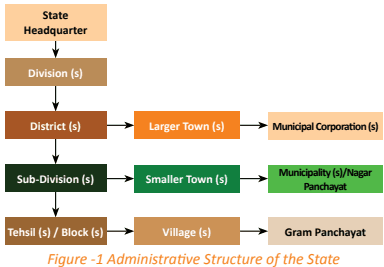
the fire services for the entire state, need for enactment of Fire Act in every state, need for provincialisation wherever it has not already been done, setting up a complete administrative structure for fire services, need for creating required infrastructure, adoption of new technologies, need for research and development etc. Keeping the other disaster vulnerabilities of the country in mind, the possibility of converting the fire service into a multi-hazard unit has also been discussed. While dealing with recent initiatives taken, this chapter also deals with a complete strategy for improvement of fire services in the whole country.
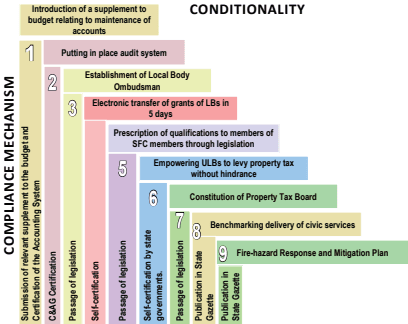
1.2.4. Chapter 4 on Operationalisation of the 13th Finance Commission Report; Strategy and Action Plan gives a complete gist of the recommendations made by the 13th FC regarding fire services in the country. It deals with the various direct Grants in Aid (GIA) made to different states and also the allocations made to the ULBs by the 13th FC with directions for spending on fire services in their jurisdiction. The conditionalities laid down for accessing the performance grant by the ULBs and a complete set of actions that need to be taken for the purpose has been pointed out in this chapter.
1.2.5. Chapter 5 on Fire Hazard Response and Mitigation Plan discusses various issues involved in order to help states prepare their plans. It will not only help in preparing plans for all the districts in the country, but will also be helpful in preparing the plans for all million plus cities. It was felt necessary because specifically, preparation of Fire Hazard Response Mitigation Plan and its publication in the state gazette, is one of the nine conditions that need to be fulfilled by the states in order to be eligible for drawing their share of the performance grant. Along with other steps as enumerated in the 13th FCR, if this plan is not prepared by the concerned states for all million plus (2001 census) cities in their states and notified in the state gazette, the state will not be able to draw the performance grant they would otherwise be entitled to. A complete detailed format of the plan has been given so that the state may find it convenient to prepare its plan and get it notified. The list of cities with million plus population (2001 census) has been placed at Annexure – 3.
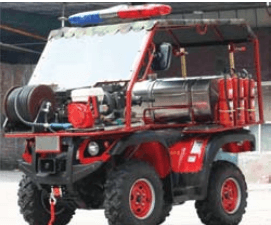
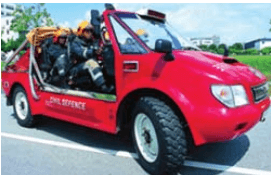
1.2.6. Chapter 6 on Training deals with levels of training required right from the entry level, basic training to various in-service promotional, and specialized training. Other disaster management training that may be required has also been enumerated.
1.2.7. Chapter 7 on Scaling of Fire Stations, Equipment and Manpower deals with equipment required for different types of fire hazards, norms for setting up fire stations, response time, etc. It also deals with the requirement of special equipment and its location as per vulnerability analysis of the states concerned.